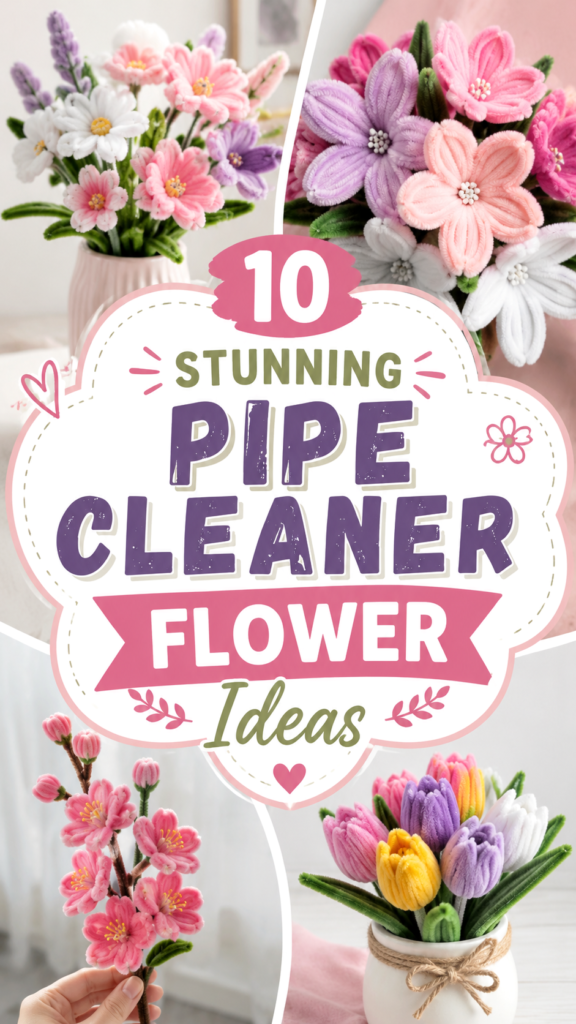
There is something wonderfully satisfying about turning a few simple craft supplies into flowers that look cheerful, colorful, and surprisingly detailed. A flower bouquet DIY made with pipe cleaners is an easy way to explore handmade decor without needing advanced crafting skills. With soft pastel colors, playful flower shapes, and flexible stems, these handmade blooms can become a charming centerpiece, a thoughtful gift, or a creative weekend project.
Pipe cleaner flowers are especially appealing because they combine simplicity with plenty of room for creativity. You can create daisies, tulip-inspired blooms, small blossoms, lavender-like stems, and other decorative flowers simply by shaping and twisting the material. Once several flowers are finished, arranging them together creates a bouquet with personality and color.
Key Takeaways
- Pipe cleaner flowers are beginner-friendly and highly customizable.
- Pastel pink, purple, white, green, and yellow shades create a soft bouquet aesthetic.
- Different flower shapes make a DIY bouquet look fuller and more interesting.
- Handmade flowers can be used for room decor, gifts, craft projects, and seasonal displays.
- Mixing flower sizes and textures gives the finished arrangement a more natural appearance.
- A thoughtful arrangement can make simple handmade flowers feel polished and decorative.
Why Pipe Cleaner Flowers Make a Great DIY Bouquet
A traditional fresh flower bouquet is beautiful, but it eventually fades. A pipe cleaner flower bouquet offers a completely different kind of charm. The flowers can stay on display for a long time, and you can adjust their shapes whenever you want to refresh the arrangement.
The material is also flexible, lightweight, and easy to manipulate. That makes it possible to experiment with petals, stems, leaves, and small decorative details without requiring complicated equipment. For beginners, this makes pipe cleaner flowers an approachable introduction to handmade floral crafts.
Another advantage is the freedom to choose your own color story. A bouquet can be monochromatic with several shades of pink, bright and cheerful with yellow and white flowers, or soft and dreamy with lavender, blush, cream, and pale green. The visual possibilities are almost endless.
Important: The most attractive DIY bouquets do not need every flower to look identical. Small differences in petal size, shape, and color can make the arrangement feel more handmade and visually interesting.
Choosing Colors for Your Flower Bouquet DIY
Color is one of the easiest ways to give a handmade bouquet a specific mood. The soft floral arrangement shown in the design works especially well because it combines several gentle shades rather than relying on one dominant color.
Soft Pastel Bouquet
For a delicate look, combine blush pink, lavender, white, pale peach, and soft green. This palette works beautifully for bedroom decor, spring-inspired crafts, nursery accents, and understated handmade gifts.
Bright and Cheerful Bouquet
If you want something more playful, introduce yellow, hot pink, coral, and brighter green. Keep a few white flowers in the arrangement to create visual breathing room. This combination is ideal when you want the bouquet to feel energetic and cheerful.
Elegant Purple and White Bouquet
Purple and white create a simple, sophisticated combination. Add a little pale pink for warmth and use green stems and leaves to balance the lighter flowers. This approach works well for minimalist decor and handmade floral displays.
Essential Materials for DIY Pipe Cleaner Flowers
You do not need a large craft collection to begin. The basic supplies are straightforward, and many crafters may already have some of them at home.
- Pipe cleaners: Choose several colors for petals, stems, and leaves.
- Small scissors: Useful when trimming excess material or refining details.
- Floral wire: Optional if you want extra support for larger stems.
- Small vase or container: A simple pot, jar, or decorative vase can hold the finished bouquet.
- Craft glue: Optional for securing small decorative details.
- Ribbon or twine: Useful for wrapping a bouquet as a handmade gift.
The beauty of this craft is that you can begin with just a few pipe cleaners and gradually expand your color collection as you discover which flower designs you enjoy making most.
10 Flower Ideas to Try With Pipe Cleaners
A mixed bouquet becomes much more appealing when it contains different types of blooms. Instead of repeating one flower throughout the arrangement, try creating several recognizable shapes and combining them into one display.
1. Simple Daisy Flowers
Daisies are a natural starting point for beginners. Use white pipe cleaners for rounded petals and add a contrasting yellow center. A few green leaves around the stem help complete the classic flower appearance.
Make several daisies in slightly different sizes. The variation will prevent the bouquet from looking too uniform and can create a fuller arrangement.
2. Pink Blossom Flowers
Pink blossoms bring a soft and cheerful feeling to a bouquet. Create rounded petals and place a small contrasting center in the middle. Several small pink flowers grouped together can resemble a flowering branch.
3. Tulip-Inspired Blooms
For a tulip-inspired design, shape the petals upward around the center rather than spreading them completely flat. Pink, purple, yellow, and white work particularly well for this type of flower.
Vary the height of the stems so that some tulip-inspired flowers sit higher and others appear closer to the base of the arrangement.
4. Lavender-Inspired Stems
Long purple pipe cleaner shapes can add height and texture to the bouquet. Instead of creating a large open flower, build small clustered details along a slender stem. These vertical elements help break up rounded blossoms.
5. Layered Pink Flowers
Layered petals create a fuller flower with more visual depth. Use two or more shades of pink to make the petals stand apart. A lighter center can provide a gentle contrast.
6. Purple Petal Blooms
Purple flowers can become a focal point in a pastel bouquet. Experiment with lavender, violet, and soft lilac shades. Larger petals can be shaped around a compact center to create a bold but delicate-looking bloom.
7. Small Branch Blossoms
For a different silhouette, create several small blossoms along a single stem. This gives the bouquet a branching shape and works especially well with pink or white flowers.
8. White Accent Flowers
White flowers are useful for balancing a colorful arrangement. They help separate darker or brighter blooms and can make pastel colors look even softer.
9. Tiny Filler Flowers
Small flowers are perfect for filling gaps between larger blooms. Instead of making every flower a statement piece, create a handful of tiny blossoms and place them around the edges of the bouquet.
10. Mixed Floral Stems
For the fullest look, combine several flower styles in one arrangement. Use larger flowers as focal points, medium blooms around them, and smaller blossoms or leafy stems to fill empty areas.
Expert Insight
Think of your handmade bouquet as a collection of shapes rather than a collection of identical flowers. Combine round blooms, taller stems, small blossoms, and leafy elements to create contrast. This simple approach can make a small DIY arrangement look considerably more dimensional.
How to Build a Balanced Pipe Cleaner Bouquet
Once your flowers are finished, the arrangement process becomes just as important as making the individual blooms. A beautiful bouquet should have a sense of height, movement, and balance.
- Start with the tallest stems. Place your longest flowers toward the back or center.
- Add your focal flowers. Position the larger and most colorful blooms where they can be easily noticed.
- Fill the middle layer. Add medium-sized flowers around the main blooms.
- Use small flowers as fillers. Tuck smaller blossoms into open spaces.
- Add leaves and greenery. Green elements can separate flowers and make the bouquet feel more complete.
- Adjust the spacing. Step back and look at the bouquet from different angles before making final changes.
Do not worry about making the arrangement perfectly symmetrical. Slightly uneven heights often make a handmade bouquet look more natural and lively.
Creative Ways to Display Your DIY Flowers
A finished pipe cleaner flower bouquet does not have to stay in a traditional vase. The flexible stems make it possible to experiment with different displays and containers.
Use a Small Decorative Vase
A simple ceramic or glass vase lets the flowers remain the main attraction. Choose a neutral container if the bouquet contains many colors, or use a coordinating pastel container for a more intentional color palette.
Create a Handmade Gift
Wrap a small bouquet with ribbon, twine, or decorative paper. A handmade flower arrangement can be a sweet craft project for birthdays, classroom activities, celebrations, or simply as a thoughtful gesture.
Decorate a Shelf or Desk
A small arrangement can add color to a desk, bookshelf, craft room, or bedside table. Because the flowers do not require watering, they can be placed in areas where fresh flowers may be inconvenient.
Tips for Making Handmade Flowers Look More Detailed
The difference between a very simple pipe cleaner flower and a polished-looking craft often comes down to small details. Take time to shape each petal instead of leaving the material completely straight.
- Curve petals gently so they have a more natural silhouette.
- Use contrasting colors for flower centers.
- Mix large and small blooms instead of making everything the same size.
- Twist green pipe cleaners carefully to create stems and leaves.
- Leave small gaps between petals when you want a lighter, more open flower.
- Combine different textures and shapes for visual variety.
- Reposition individual flowers after the bouquet is assembled.
Pro Tip: Before finalizing your arrangement, spread the flowers out on a table and group them by size and color. This makes it much easier to see which blooms will work as focal points and which ones are better suited as fillers.
Why Handmade Flower Crafts Are So Enjoyable
DIY flower crafts offer more than a decorative result. They provide an opportunity to slow down, experiment with color, and create something entirely by hand. There is no requirement for every flower to be perfect, which makes the process accessible to beginners.
Children can enjoy creating simple flower shapes with adult supervision, while experienced crafters can challenge themselves by developing more elaborate petals and arrangements. The same basic materials can support many different skill levels.
There is also something satisfying about building a bouquet one flower at a time. A single pipe cleaner may not look like much at first, but several carefully shaped pieces can become a colorful display with personality.
Flower Bouquet DIY Ideas for Different Occasions
Once you have learned the basic techniques, you can adapt your bouquet to different occasions simply by changing the colors, flower shapes, and presentation.
- Spring decor: Choose pastel pink, lavender, white, and fresh green.
- Birthday gifts: Use cheerful colors and a mixture of large and small blooms.
- Kids’ craft projects: Keep the flower shapes simple and use bright colors.
- Room decor: Match the bouquet to the colors already used in the room.
- Handmade keepsakes: Choose a meaningful color palette and display the finished bouquet in a small container.
- Craft room decoration: Mix several colorful flowers for a playful, creative arrangement.
At a Glance
- Choose 3 to 5 complementary flower colors.
- Mix large blooms with small filler flowers.
- Add green leaves and stems for contrast.
- Vary stem heights for a fuller silhouette.
- Display your finished bouquet in a simple decorative container.
Conclusion: Create a Bouquet That Feels Like Yours
A flower bouquet DIY project is a simple way to turn colorful pipe cleaners into cheerful handmade decor. The biggest appeal is the freedom to experiment. You can make soft pastel flowers, bright seasonal blooms, tiny filler blossoms, or a mixed arrangement that combines several styles.
Start with a few basic flowers and focus on shaping the petals carefully. As your confidence grows, experiment with different colors, sizes, textures, and stem heights. A bouquet does not need to be perfectly symmetrical to look beautiful. In fact, the small variations are often what give handmade flowers their character.
Whether you are creating a craft for yourself, decorating a room, preparing a handmade gift, or simply looking for a relaxing creative project, pipe cleaner flowers offer an approachable place to begin. Gather your favorite colors, shape a few blooms, and let the bouquet develop naturally as you create.
Most importantly, enjoy the process. Your finished arrangement can be as simple or elaborate as you like, and every flower adds another small piece of handmade personality to the final bouquet.