Creating a simple skincare ritual at home can be an enjoyable way to slow down and give your skin a little extra attention. DIY face masks are especially appealing because many recipes use familiar ingredients such as honey, yogurt, turmeric, green tea, cucumber, aloe vera, clay, and activated charcoal. Whether your goal is a refreshed complexion, added hydration, or a cleaner-feeling skin surface, there are plenty of easy combinations to explore. The key is choosing ingredients that suit your skin, keeping the recipes simple, and treating homemade masks as a gentle addition to your routine rather than a replacement for everyday skincare.
Key Takeaways
- Choose a DIY face mask according to your skin’s current needs.
- Simple ingredients can create refreshing, hydrating, soothing, or purifying mask ideas.
- Always patch test a new homemade mixture before applying it to your entire face.
- Keep contact time reasonable and stop immediately if burning or significant irritation occurs.
- Use fresh ingredients and clean bowls, utensils, and hands when preparing a mask.
Why DIY Face Masks Are So Popular
Homemade face masks have become a favorite self-care idea because they are easy to personalize. Instead of reaching for one complicated formula, you can focus on a few straightforward ingredients and create a relaxing skincare moment at home. The visual appeal is part of the experience too. A bowl of creamy honey and yogurt, a bright turmeric mixture, fresh cucumber slices, or a smooth clay mask can make an ordinary evening feel more like a mini spa session.
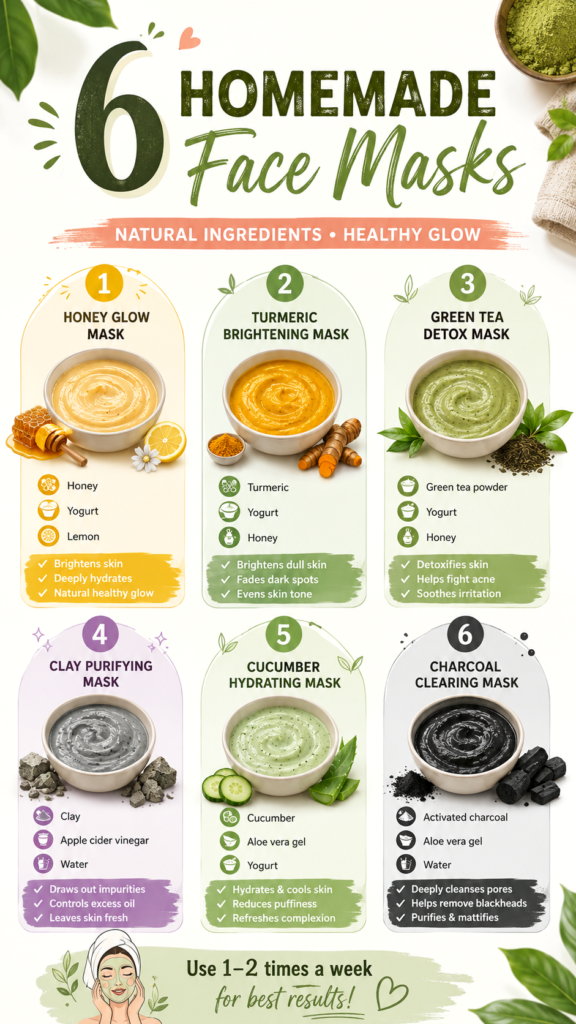
The six ideas featured here cover several popular skincare goals. Honey, yogurt, and lemon are presented as a glow-focused combination. Turmeric, yogurt, and honey create a brightening-inspired mask. Green tea powder is paired with yogurt and honey for a refreshing option, while clay and activated charcoal are included for purifying routines. Cucumber and aloe vera create a cooling, hydration-focused choice.
Important: Natural does not automatically mean suitable for every face. Skin can react to botanical ingredients, acids, fragrances, or concentrated powders just as it can react to conventional skincare products. Start with a small patch test and keep your first application simple.
1. Honey Glow Face Mask
A honey-based mask is an easy place to begin if you want a simple homemade skincare idea. The pictured combination uses honey, yogurt, and lemon. The creamy texture makes it visually appealing and easy to spread, while the ingredients are familiar additions to many kitchen cupboards.
What You Need
- Honey
- Plain yogurt
- A small amount of lemon
For a simple preparation, combine the ingredients into a smooth mixture and apply a thin layer to clean skin, avoiding the eye area. Because lemon can be irritating for some people and can make skin more sensitive to sunlight, it is worth being particularly cautious with this combination. If your skin is sensitive, consider leaving lemon out rather than assuming more ingredients will produce better results.
Best For a Simple Glow-Focused Routine
The appeal of this mask is its simplicity. It can fit nicely into a weekend self-care routine when you want something uncomplicated. After rinsing, gently pat the skin dry and follow with your usual moisturizer.
2. Turmeric Brightening Face Mask
The vivid golden color of turmeric makes this one of the most eye-catching DIY face mask ideas. The combination shown includes turmeric, yogurt, and honey. Turmeric has long been used in beauty traditions, while yogurt and honey create a creamy base that is easy to mix.
How to Approach Turmeric
Use only a small amount of turmeric when preparing a facial mixture. The strong pigment can temporarily stain skin or fabrics, so use an old towel and rinse carefully. Keep the application gentle and avoid aggressive rubbing when removing the mask.
Pro Tip: When trying a colorful ingredient such as turmeric for the first time, patch test it before a full facial application. A small test area can help you discover irritation or staining before committing to the entire mask.
3. Green Tea Detox-Inspired Face Mask
Green tea brings a fresh, botanical feel to a homemade skincare routine. The recipe shown combines green tea powder, yogurt, and honey. Its soft green color and creamy texture make it particularly appealing for a relaxing at-home facial.
To make the mask, mix a small amount of finely powdered green tea with the yogurt and honey until the texture is smooth. Apply an even layer without scrubbing the powder into the skin. The goal is a comfortable mask rather than an abrasive treatment.
A Refreshing Choice for Self-Care
A green tea mask can be especially enjoyable when paired with other calming parts of a skincare ritual. Put your phone aside, prepare a clean towel, and give yourself a few quiet minutes. The relaxing routine itself can be just as valuable as the mask.
Why This Matters
A good DIY skincare routine is not about using as many ingredients as possible. A short ingredient list makes it easier to understand what your skin is being exposed to and helps you identify which ingredients work well for you.
4. Clay Purifying Face Mask
Clay masks are a classic choice for people who enjoy a deep-cleaning skincare ritual. The image pairs clay with apple cider vinegar and water. The result is a smooth gray mixture that can be spread over the skin in a thin layer.
Keep the Formula Gentle
Clay can feel drying, particularly on already dry or sensitive skin. Apple cider vinegar is also acidic and can cause irritation if it is too concentrated. For that reason, a cautious approach is important. Beginners may prefer a simple clay-and-water mixture before experimenting with additional ingredients.
Do not wait for a clay mask to become extremely tight or uncomfortable. A short, comfortable application is preferable to pushing the skin until it feels excessively dry. Rinse gently and follow with a moisturizer suited to your skin type.
5. Cucumber Hydrating Face Mask
Cucumber is one of the most recognizable ingredients for a refreshing skincare routine. The pictured mask combines cucumber, aloe vera gel, and yogurt. The pale green mixture has a light, cooling appearance that works beautifully for a relaxing self-care session.
A Fresh Option for Dry or Tired-Looking Skin
Cucumber and aloe vera are commonly associated with a cooling skincare experience, while yogurt provides a creamy texture. If you make this mask at home, use fresh ingredients and prepare only what you intend to use. Apply a thin layer to clean skin and rinse gently when finished.
This type of mask is particularly easy to incorporate into a relaxing evening routine. Keep the preparation simple, avoid the eye area, and finish with your normal moisturizer. If your skin feels tight, itchy, or uncomfortable at any stage, remove the mask immediately.
6. Activated Charcoal Clearing Face Mask
Activated charcoal gives this mask its dramatic black appearance. The recipe shown combines activated charcoal with aloe vera gel and water. It is designed around the idea of a purifying skincare treatment and can be appealing to anyone who enjoys a more intensive-looking face mask.
How to Use a Charcoal Mask Carefully
Charcoal powder can be messy, so protect clothing and surfaces before mixing it. Create a smooth paste rather than a gritty mixture, then apply a thin layer. Avoid the lips and eye area, and rinse thoroughly without harsh scrubbing.
If your skin is naturally dry, a charcoal mask may feel more intense than a cucumber or aloe-based option. Choosing the mask based on how your skin feels that day is more useful than following a fixed schedule for every recipe.
How to Choose the Right DIY Face Mask
The best homemade face mask is not necessarily the most complicated one. Start by identifying what you want from your skincare session. If your skin feels dry, a simple cucumber, aloe, and yogurt combination may be more appealing. If you prefer a cleansing-focused routine, clay or charcoal may fit better. For a glow-focused ritual, honey or turmeric can provide an attractive ingredient theme.
- For a refreshing routine: consider cucumber and aloe vera.
- For a creamy glow-focused mask: honey and yogurt are simple starting points.
- For a botanical-inspired option: green tea can create a fresh-looking mixture.
- For a purifying ritual: clay or activated charcoal can be used thoughtfully.
- For a bright golden mask: turmeric offers a colorful DIY option, but use it cautiously.
Important DIY Face Mask Safety Tips
Homemade skincare deserves the same thoughtful approach as any other beauty product. Before using a new ingredient on your face, test a small amount on an inconspicuous area. This is particularly important for ingredients that are acidic, highly pigmented, fragranced, or unfamiliar to your skin.
Avoid applying homemade masks to broken, irritated, sunburned, or freshly exfoliated skin. Do not scrub aggressively while removing a mask, even if the mixture has dried. Lukewarm water and gentle fingertips are usually enough to loosen the product.
Important: Ingredients such as lemon juice and undiluted apple cider vinegar can be irritating when applied directly to facial skin. If you are unsure whether an ingredient is appropriate for you, leave it out or choose a gentler recipe instead.
Keep Your Ingredients and Tools Clean
Wash your hands before preparing a mask and use a clean bowl and spoon. Fresh homemade mixtures do not have the same preservation system as commercially formulated skincare products, so it is better to prepare small batches and avoid storing leftover mixtures for extended periods.
Do Not Overuse Face Masks
The featured routine suggests using face masks one to two times per week. That can be a useful reminder that more is not always better. Your everyday skincare habits, including gentle cleansing, moisturizing, and appropriate sun protection, remain more important than repeatedly applying masks.
How to Turn a Face Mask Into a Relaxing Routine
A DIY face mask can become more enjoyable when you treat it as a complete self-care ritual. Start by cleansing your face gently. Prepare your chosen mask in a clean bowl, gather a towel, and apply the mixture evenly. While the mask is on, use the time to relax rather than constantly checking the mirror.
When it is time to remove the mask, rinse patiently and avoid vigorous rubbing. Pat the skin dry with a clean towel, then apply a moisturizer that works for your skin. Keeping the rest of the routine uncomplicated allows you to notice how your skin responds to each new homemade recipe.
At a Glance
- Pick one mask based on your current skincare goal.
- Patch test new ingredients before full application.
- Keep acidic ingredients especially gentle and cautious.
- Rinse without scrubbing and moisturize afterward.
- Use homemade masks as an occasional self-care step.
Final Thoughts on Homemade Face Masks
DIY face masks can make skincare feel simple, creative, and enjoyable. The six ideas in this collection offer a useful starting point, from honey and turmeric blends to refreshing cucumber mixtures and purifying clay or charcoal options. Each one has a different texture, appearance, and purpose, making it easy to choose something that matches your mood and your skin’s current needs.
The most effective approach is to keep your expectations realistic and your routine gentle. Homemade masks can complement a consistent skincare routine, but they do not need to replace products designed for daily skin health. Pay attention to how your skin responds, introduce one new ingredient at a time, and stop using a mixture if it causes discomfort.
Whether you are looking for a relaxing weekend ritual, a refreshing hydration-focused treatment, or a simple homemade beauty idea, these DIY face mask recipes can give you plenty of inspiration. Choose your ingredients carefully, keep the process clean, and enjoy the ritual as much as the recipe itself.
Tags
DIY Face Masks Homemade Skincare Natural Skincare Face Mask Recipes Glowing Skin Self Care At Home Beauty