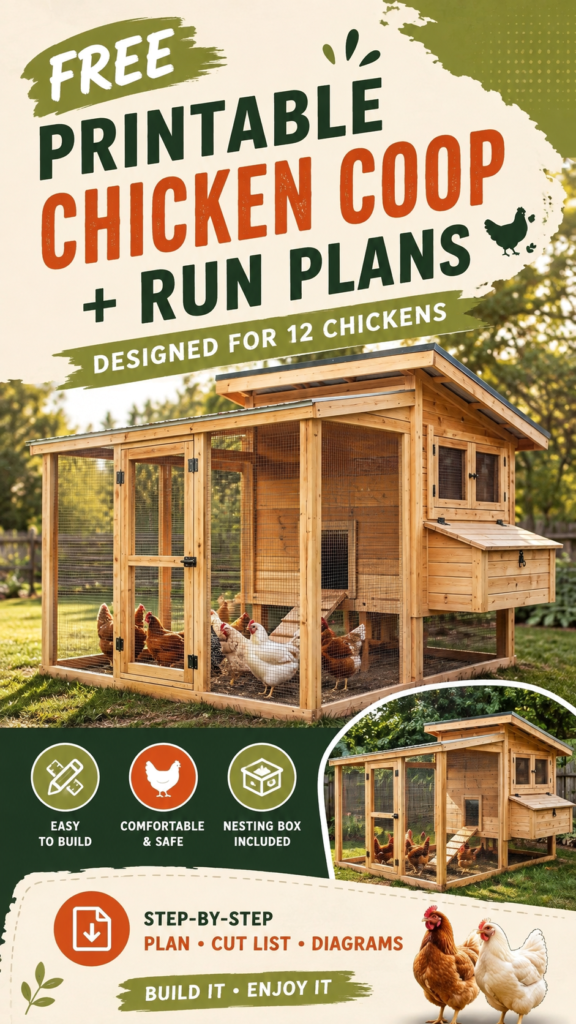
A well-designed DIY chicken coop can make backyard chicken keeping feel much easier, more organized, and enjoyable. The right setup gives your flock a sheltered place to rest, secure space to move around, and convenient access for daily care. A thoughtful chicken coop and run combination can also become an attractive feature in the backyard rather than something that simply needs to be tucked away.
The design shown here combines a spacious wooden coop with an enclosed run, multiple access points, screened openings, and a practical nesting area. It is a great source of inspiration for anyone looking for DIY chicken coop plans, backyard chicken housing ideas, or a functional chicken run that balances safety, comfort, and appearance.
Key Takeaways
- A good chicken coop should provide shelter, ventilation, security, and convenient access.
- An enclosed chicken run gives hens additional outdoor space while helping protect them.
- Raised or well-drained areas can make cleaning and maintenance easier.
- Dedicated nesting spaces keep egg collection more organized.
- Simple wood construction can create a warm, attractive backyard chicken setup.
- Planning the layout before building helps make the finished coop easier to use.
Planning a DIY Chicken Coop
Before cutting lumber or assembling panels, spend time thinking about how the coop will work from day to day. A chicken coop is not only a shelter. It needs to support feeding, watering, cleaning, egg collection, ventilation, and routine flock checks.
The pictured design offers a useful combination of enclosed indoor space and a covered run. This arrangement is especially appealing because chickens can move between sheltered areas and the outdoor enclosure without requiring a completely separate structure.
Important: The best chicken coop is one that works for both the flock and the person caring for it. Easy access, sensible cleaning areas, secure doors, and practical nesting spaces can matter just as much as the exterior appearance.
Choose the Right Location
Location is one of the first decisions to make when planning a backyard chicken coop. Look for an area with enough room for the coop and run while leaving convenient access for maintenance. The setting shown in the design uses a green backyard environment surrounded by mature vegetation, creating a natural-looking setting for the wooden structure.
A practical location should also make it easy to reach the coop in different weather conditions. Consider drainage, sunlight, shade, access to fresh water, and the route you will take when carrying feed or collecting eggs.
Think About the Coop and Run Together
One of the strongest features of this chicken coop design is the integrated run. Instead of treating the coop and outdoor enclosure as unrelated pieces, the two areas are visually and structurally connected.
A chicken run can give hens additional room to move, scratch, explore, and spend time outdoors while keeping them within a defined area. Wire mesh panels create visibility and airflow while forming a physical barrier around the open space.
Why an Enclosed Run Is Useful
- It creates a designated outdoor area for the flock.
- It can help keep chickens contained within the intended space.
- Mesh construction provides visibility and airflow.
- A covered or partially covered run can offer additional protection from changing weather.
Design Features Worth Including
The visual design provides several useful ideas that can be adapted to a homemade chicken coop. The warm timber construction gives the structure a classic backyard appearance, while the large doors and screened sections make the space feel accessible and functional.
Large Doors for Easier Maintenance
Access is easy to overlook when planning a DIY chicken coop. A structure may look beautiful when finished, but narrow openings can make cleaning, repairs, and flock checks frustrating.
The broad screened doors in this design provide a useful example of making access part of the overall layout. When planning your own coop, think about which areas need frequent access and position doors accordingly.
Built-In Nesting Space
The attached nesting box is another practical feature. A dedicated nesting area gives hens a defined place for laying and makes egg collection more convenient. In the pictured structure, the nesting box is positioned along the exterior side of the coop, creating a clearly defined functional zone.
When designing nesting boxes, prioritize easy access for cleaning and collecting eggs. The exterior-access approach can be particularly convenient because it allows routine egg collection without requiring constant entry into the main coop.
Ventilation and Screened Openings
Fresh airflow is an important consideration in any chicken housing project. The screened sections shown throughout the coop and run allow the structure to remain visually open while providing controlled enclosure.
Good ventilation should be planned rather than added as an afterthought. Openings should support airflow without creating uncomfortable drafts directly where chickens rest. Roof overhangs can also help shield openings from rain while contributing to the overall appearance of the coop.
Expert Insight
When comparing chicken coop plans, look beyond the exterior style. Pay close attention to how easily you can open doors, reach nesting areas, clean the interior, refill supplies, and inspect the flock. These small details have a major effect on how practical the coop feels after construction.
Choosing Materials for a Backyard Coop
The pictured coop uses a warm wood finish that blends naturally with the surrounding garden. Wood is a popular choice for DIY chicken coop projects because it can be cut, assembled, repaired, and customized using common building techniques.
For any building project, choose materials appropriate for outdoor exposure and local conditions. Pay attention to moisture, drainage, fasteners, mesh strength, and the durability of doors and hinges. A good finish can also help extend the useful life of exposed wooden surfaces.
Build With Maintenance in Mind
Chicken keeping naturally creates mess, so maintenance should influence the design from the beginning. Smooth, accessible surfaces and removable or easily reached areas can make routine cleaning much less demanding.
- Make frequently cleaned areas easy to reach.
- Use durable materials around doors and high-contact areas.
- Plan for drainage around the coop and run.
- Keep feed and water areas practical to access.
- Inspect mesh, hinges, latches, and wooden joints regularly.
Creating a Comfortable Chicken Run
The run is more than an extension of the coop. It becomes an important part of the flock’s everyday environment. The design shown uses a generous enclosed area with transparent mesh panels, allowing plenty of visibility while keeping the chickens inside a defined boundary.
When planning a run, consider how chickens naturally move through the space. They need room to walk and explore, and the enclosure should be designed so that routine cleaning and access remain straightforward.
Add Practical Protection
Security is an important part of chicken housing. Doors should close securely, mesh should be properly attached, and potential weak points should be checked regularly. The goal is to create an enclosure that is sturdy and dependable without making daily access difficult.
Pro Tip: Walk around the finished coop from a chicken keeper’s perspective. Check every door, corner, latch, opening, and low section of mesh. Thinking through the structure this way can reveal maintenance or security issues before they become problems.
Making the Coop Attractive and Functional
A DIY chicken coop does not have to look like a purely utilitarian structure. The design pictured demonstrates how thoughtful proportions, natural wood, a simple roofline, framed doors, and consistent materials can create a polished backyard feature.
You can adapt the visual style to suit your own outdoor space. A natural timber appearance works beautifully in gardens, while painted siding, contrasting trim, or a different roof finish can give the same basic structure a completely different personality.
Keep the Layout Simple
The most successful backyard projects often combine simple construction with thoughtful planning. You do not need unnecessary decorative features to make a chicken coop attractive. Strong lines, consistent framing, useful doors, and a cohesive material palette can create an appealing result.
The visual emphasis on natural wood and greenery also shows how a coop can be integrated into an existing backyard landscape. Plants, grass, fencing, and surrounding trees can soften the structure and make it feel like part of the garden.
From Chicken Coop Plans to Finished Project
A printable set of chicken coop plans can be especially useful when turning an idea into a real structure. Before building, review the dimensions, make a materials list, determine which tools are required, and understand how each section will connect.
- Choose the location and determine the available footprint.
- Sketch the coop, run, doors, nesting area, and roof layout.
- Prepare a complete materials and hardware list.
- Build the main frame carefully and check that it remains square.
- Add wall panels, doors, mesh, roof components, and nesting spaces.
- Inspect every opening and connection before introducing chickens.
Take your time during the framing stage. Accurate measurements and sturdy connections make later steps easier and can help the finished structure look cleaner. It is also worth reviewing the layout as you build rather than waiting until the entire project is complete to discover that an access point is inconvenient.
At a Glance
Quick Points
- Structure: Combine a sheltered coop with a secure outdoor run.
- Access: Include doors that make cleaning and flock checks convenient.
- Nesting: Provide a dedicated, accessible area for laying.
- Airflow: Use appropriate screened openings and thoughtful ventilation.
- Style: Natural wood and simple lines create a timeless backyard look.
Conclusion: Build a Chicken Coop That Works for You
A great DIY chicken coop brings together practical construction, comfortable flock housing, convenient maintenance, and a design that fits naturally into the backyard. The combination of a wooden shelter, enclosed chicken run, screened doors, and built-in nesting space shown here offers plenty of inspiration for creating a similar setup.
Whether you are building your first chicken coop or improving an existing setup, focus on the features you will use every day. Easy access, secure construction, sensible ventilation, durable materials, and a manageable cleaning routine can make chicken keeping considerably more enjoyable.
With thoughtful planning and a practical set of DIY chicken coop plans, you can create a welcoming backyard space that gives your flock shelter while adding character to your outdoor area. Start with the layout, build around everyday needs, and let functionality guide the final design.