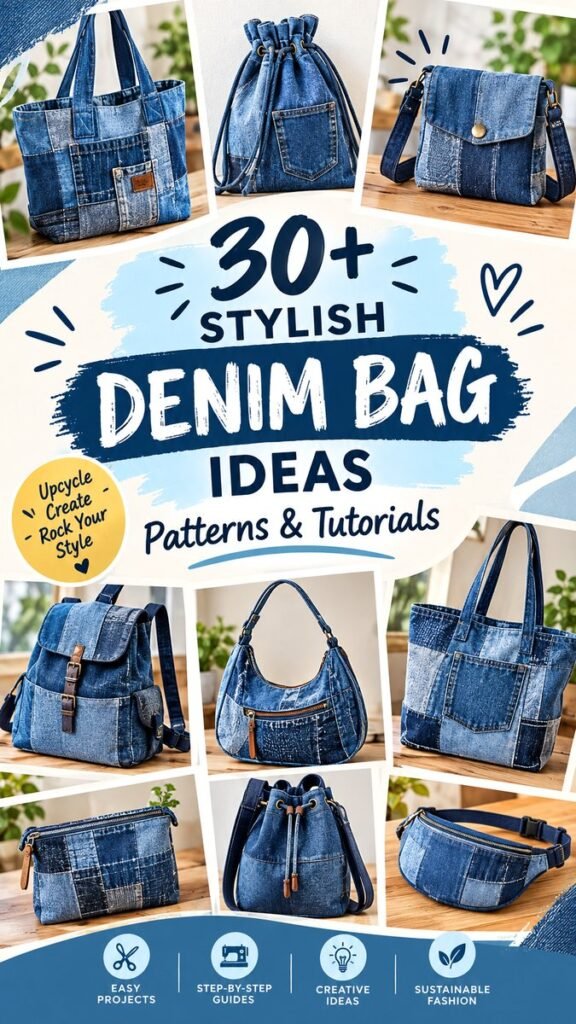
Looking for fresh inspiration for your next handmade project? These DIY bag designs show just how much creativity can come from simple denim, fabric scraps, and thoughtful details. From roomy totes and compact crossbody bags to drawstring styles, clutches, backpacks, and practical waist packs, there are plenty of shapes to explore. The collection has a relaxed, handmade feel while proving that useful everyday accessories can also be stylish and completely personal.
Key Takeaways
- Denim is a versatile material for creating durable and stylish handmade bags.
- Patchwork details can give simple bag shapes more personality and texture.
- Different silhouettes work well for different everyday needs.
- Old jeans and leftover fabric can become practical upcycled accessories.
- Small details such as pockets, straps, closures, and contrast stitching can transform a basic design.
Why DIY Bag Designs Are So Appealing
A handmade bag offers something that many store-bought accessories cannot: the opportunity to shape the design around your own taste and needs. You can choose the size, fabric combination, pocket placement, handle length, closure style, and decorative details. Even when starting with a simple pattern, small changes can create an entirely different finished piece.
The designs shown in this collection are especially inspiring because they explore denim in several different ways. Some use panels of similar shades, while others combine lighter and darker pieces for a patchwork effect. Visible seams, pockets, metal hardware, zippers, buttons, and drawstrings add both function and visual interest.
Important: The most successful DIY bag projects balance appearance with everyday practicality. Before adding decoration, think about how the bag will be carried, what it needs to hold, and how much structure the finished design requires.
Explore Different DIY Bag Designs
One of the best ways to plan a sewing project is to compare different bag silhouettes before choosing a pattern. The collection features a useful mix of shapes, making it easy to find inspiration for casual outings, shopping trips, organization, or everyday use.
Denim Tote Bags
A tote is one of the most approachable DIY bag designs because of its straightforward construction. A rectangular body, sturdy handles, and an open or lightly secured top create a practical shape that can be adapted in countless ways.
Denim totes look particularly interesting when made with contrasting panels. You can combine dark denim with faded sections or use existing jean pockets as decorative and functional features. A front pocket can hold small essentials while giving the bag a distinctive handmade appearance.
For a more structured tote, consider adding a firm lining or lightweight interfacing. If you prefer a relaxed everyday look, softer denim can create a casual shape that folds easily when the bag is not being used.
Drawstring and Bucket Bags
Drawstring bags bring a softer silhouette to a denim collection. The gathered opening adds movement, while long cords or straps make the bag comfortable to carry. This style can work beautifully with denim because the fabric gives the relaxed shape enough visual weight.
A front jean pocket can be reused as an exterior pocket, creating a convenient place for keys, cards, or other small items. Mixing different denim washes can also emphasize the gathered construction and make the design feel more creative.
Crossbody Bags
Crossbody bags are a useful choice when you want to keep your hands free. Their compact proportions make them suitable for projects where you have a smaller amount of denim available.
Try experimenting with a flap, zipper, snap, or button closure. A longer adjustable strap can make the finished bag more versatile, while a contrast panel can add a subtle focal point without making the project overly complicated.
Patchwork Denim Bags
Patchwork is one of the most creative directions for DIY bag designs. Instead of treating mismatched denim as a problem, turn those differences into part of the design. Small pieces can be arranged into geometric sections, stripes, blocks, or intentionally varied panels.
Different denim shades naturally create contrast, so you do not need complicated decoration to make a patchwork bag stand out. Strong seams and carefully arranged panels can become the main visual feature.
Backpacks and Larger Carry Bags
A denim backpack can be a more ambitious sewing project, but the result can be extremely practical. Multiple compartments, adjustable straps, flap closures, and side pockets provide opportunities to combine function with creative design.
For larger bags, pay attention to reinforcement. Areas that receive frequent stress, such as handles, strap attachments, and the base, benefit from extra stitching or additional fabric layers. Planning these areas before sewing can make the finished bag more dependable.
Clutches and Small Denim Bags
Small bags are excellent projects when you want to experiment without committing to a large amount of fabric. A clutch, zipper pouch, or compact shoulder bag can often be completed using smaller denim sections or reclaimed jean panels.
These projects also provide a chance to test decorative ideas. Try adding a contrasting flap, visible stitching, a simple patch, a metal zipper, or a reused pocket. Small details can have a big effect when the overall design is compact.
How to Turn Old Denim Into a Handmade Bag
Upcycling denim is a natural fit for DIY bag designs. Old jeans can provide several useful components, including sturdy fabric sections, pockets, belt loops, seams, and waistbands. Instead of treating these features as scraps, consider how they could become part of the finished bag.
- Choose the bag shape. Decide whether you want a tote, crossbody, pouch, backpack, bucket bag, or another silhouette.
- Plan your fabric. Look at the available denim pieces and determine which areas are large enough for the main panels.
- Keep useful details. Existing pockets, seams, belt loops, and hardware can add character while reducing the need to create every feature from scratch.
- Prepare the pieces. Wash and dry reclaimed fabric before cutting, then check for weak or damaged sections.
- Reinforce important areas. Handles, corners, closures, and strap attachments deserve extra attention.
- Add the finishing touches. Complete the design with lining, pockets, closures, decorative stitching, or other personal details.
Choosing the Right Denim for Your Project
Not every piece of denim behaves in the same way. Lightweight denim can be easier to sew and works nicely for softer bags, while heavier denim can provide more structure. Stretch denim may feel comfortable in clothing, but it can behave differently when used for a bag, especially if the design needs to hold its shape.
When combining several denim pieces, consider their weight as well as their color. Similar weights generally make construction easier. If one panel is significantly heavier than another, the finished bag may have an uneven feel.
Pro Tip: Before cutting your favorite denim, make a simple paper or fabric mock-up of the bag. This lets you check the proportions, opening size, strap placement, and pocket position before committing to your final materials.
Small Details That Make a Big Difference
A basic bag shape can become much more interesting with a few thoughtful additions. The visual collection demonstrates how pockets, contrasting panels, closures, and different strap styles can completely change the character of a design.
- Pockets: Reused jean pockets are practical and instantly recognizable as part of an upcycled design.
- Contrast stitching: Visible stitching can emphasize panel shapes and add a handcrafted appearance.
- Closures: Zippers, buttons, snaps, buckles, and drawstrings each create a different look and level of security.
- Straps: Short handles create a tote-like feel, while longer straps work well for shoulder and crossbody designs.
- Mixed denim: Combining washes can create texture and visual depth without requiring elaborate embellishment.
Why This Matters
A bag is more enjoyable to use when its decorative details also serve a purpose. A pocket can become a design feature, reinforced stitching can become a visual accent, and a reused waistband can become a strap component. Look for ways to make every element work twice.
- Combine style with useful storage.
- Use existing denim details to save fabric and add character.
- Keep proportions and comfort in mind before adding decoration.
Easy Ways to Personalize DIY Bag Designs
The beauty of making your own bag is that there is no need to reproduce a design exactly. Use the collection as a starting point, then adapt the elements you like. You might combine the body shape of one bag with the pocket arrangement of another or change a shoulder strap into shorter handles.
Color is another simple way to personalize a project. A collection of blue denim can be varied through light washes, dark washes, faded areas, and patterned fabric accents. If you prefer a calmer appearance, stick with two or three complementary tones. For a bolder result, add a small amount of contrasting fabric to the lining, pocket, flap, or strap.
You can also adjust the size. A compact version may work as an evening or travel pouch, while a larger version can become an everyday tote. The key is to consider what you actually want to carry before finalizing the dimensions.
Tips for a Cleaner Handmade Finish
Good preparation makes DIY sewing projects easier. Take time to mark your pieces accurately, press seams when appropriate, and test stitching on a spare piece of the same fabric. These small steps can make the finished bag look more polished.
When working with thick denim layers, avoid forcing too many bulky seams together at once. Plan where layers overlap and consider trimming or grading seam allowances where appropriate. A suitable needle and strong thread can also make sewing through heavier fabric more manageable.
For bags that will carry weight, reinforce stress points rather than relying on a single row of stitching. Handles and straps are particularly important because they experience repeated pulling. A little extra reinforcement during construction can improve both durability and peace of mind.
Making Your Next DIY Bag Project More Sustainable
Upcycling gives ordinary fabric a second purpose. Denim from unwanted clothing can become a useful accessory rather than remaining unused. Reusing existing pockets and seams can also preserve interesting details that would be difficult to recreate from new fabric.
Sustainability does not mean your project needs to look rustic or unfinished. The patchwork styles shown throughout this inspiration collection demonstrate how reclaimed materials can look intentional when colors, proportions, and construction are carefully planned.
Start with what you already have. Before buying new materials, check your fabric stash, old clothing, spare buttons, zippers, straps, and other sewing supplies. Sometimes the most creative design begins with a small collection of leftover materials.
At a Glance
- Choose a silhouette that matches how you plan to use the bag.
- Mix denim shades for natural patchwork contrast.
- Reuse pockets and seams for practical decorative details.
- Reinforce handles, straps, corners, and other stress points.
- Personalize the final design with closures, stitching, pockets, and fabric accents.
Conclusion: Find a DIY Bag Design to Make Your Own
DIY bag designs are a wonderful way to combine creativity, practical sewing, and upcycling. Whether you are drawn to a roomy denim tote, a compact crossbody, a relaxed drawstring bag, a structured backpack, or a colorful patchwork purse, the possibilities are wide open.
The most inspiring projects do not necessarily require complicated construction. A thoughtful combination of denim shades, a useful pocket, strong stitching, and a comfortable strap can be enough to create a bag that feels distinctive. Start with a shape you enjoy, adapt it to your needs, and let the materials guide the final look.
Remember: Your first version does not have to be perfect. Each handmade bag is an opportunity to practice, experiment, and discover new techniques. Save your favorite ideas, gather some denim, and turn inspiration into a useful accessory you will be proud to carry.
From simple beginner-friendly projects to more detailed patchwork creations, there is always another DIY bag design worth trying. Keep experimenting with shapes, textures, pockets, straps, and reclaimed materials, and you may find that your next favorite bag is one you make yourself.
Tags
DIY Bag Designs Denim Bags DIY Bag Patterns Sewing Projects Upcycled Bags Patchwork Bags Handmade Bags Denim Upcycling