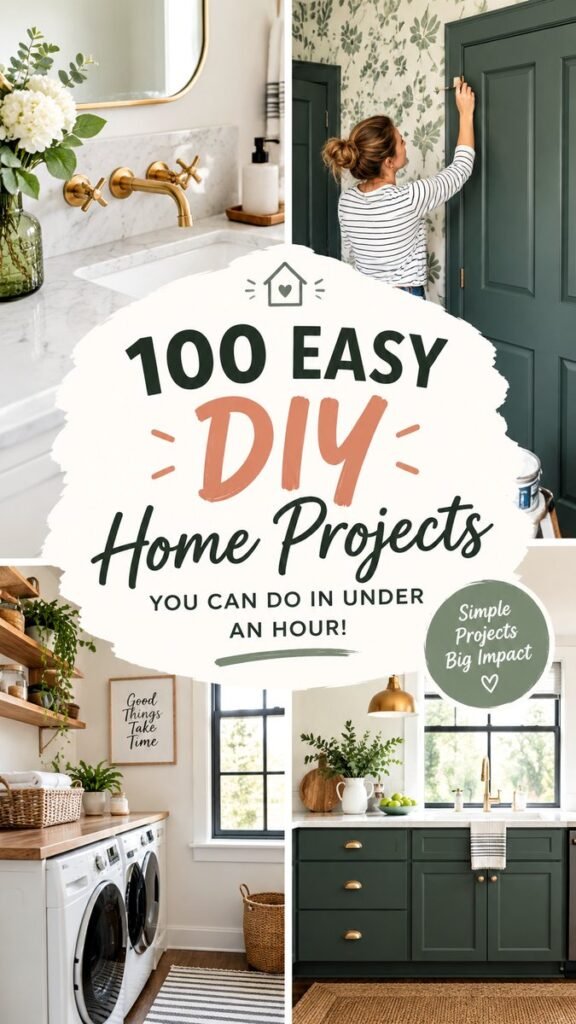
Small home updates can make a surprisingly big difference. You do not always need a full renovation, a large budget, or an entire weekend to make your space feel fresher. Easy home DIY projects are a practical way to add personality, improve everyday spaces, and create a home that feels more intentional. From updating cabinet hardware and refreshing a door to organizing a laundry area or adding simple decorative touches, many improvements can be completed in an hour or less.
The inspiration here centers on approachable projects that combine function and style. Think warm wood, natural textures, green cabinetry, brass details, fresh flowers, painted doors, organized storage, and clean, welcoming spaces. The goal is not perfection. It is about finding simple changes that give your home a noticeable lift without making the process complicated.
Key Takeaways
- Choose small DIY projects that create an obvious visual or functional improvement.
- Paint, hardware, organization, and styling can transform rooms without major construction.
- Start with one manageable project and build confidence as you go.
- Use materials and finishes that complement the existing character of your home.
- Keep a basic DIY toolkit ready for quick weekend and one-hour updates.
Why Easy Home DIY Projects Are So Appealing
There is something satisfying about finishing a project in a single afternoon and immediately seeing the result. Quick DIY projects remove much of the pressure associated with home improvement. Instead of planning a complete room makeover, you can focus on one surface, one piece of furniture, or one small problem that needs attention.
That approach also makes decorating more flexible. You can experiment with colors, textures, finishes, and layouts before committing to a larger change. If you love the result, you can continue the look throughout the room. If you decide it is not quite right, the investment of time and materials is usually much smaller.
The best quick DIY projects are not necessarily the most complicated ones. A thoughtfully chosen paint color, new hardware, improved organization, or carefully styled corner can have more everyday impact than a project that takes weeks to complete.
Start With High-Impact, Low-Effort Updates
When deciding which home DIY project to tackle first, look for something that is visually noticeable and relatively easy to complete. Doors, cabinets, shelves, walls, mirrors, and small storage areas are excellent places to begin because even a modest change can stand out.
Refresh a Door With Paint
A painted interior door can instantly change the personality of a hallway, bedroom, entryway, or utility space. Deep green, soft blue, warm gray, creamy white, and other muted shades can give an ordinary door a more intentional appearance.
Before painting, clean the surface thoroughly and protect the surrounding area. Remove or carefully cover hardware, lightly prepare the surface when needed, and apply thin, even coats. Allow appropriate drying time between coats rather than trying to rush the finish.
A door is also a useful place to experiment with a stronger color because it creates a defined visual boundary. If you are nervous about using a bold shade throughout an entire room, a single door can provide a similar decorative effect on a much smaller scale.
Change Cabinet Hardware
Replacing cabinet knobs or pulls is one of the simplest ways to update a kitchen, bathroom, laundry room, or storage area. Brass, black, brushed metal, and other finishes can create very different moods without requiring you to replace the cabinetry itself.
Measure existing hardware carefully before buying replacements. If the new pulls have different hole spacing, you may need to fill old holes and make new ones. For a particularly quick update, choose hardware that fits the existing mounting points.
Give a Bathroom Vanity a Decorative Lift
The bathroom scene suggests another useful DIY principle: functional spaces can still be beautiful. A clean marble-look surface, warm metallic fixtures, a simple mirror, and fresh greenery or flowers can make a vanity feel polished without changing its entire structure.
Try replacing outdated accessories, improving countertop organization, updating a mirror frame, or adding a small decorative vessel. Keep the surface practical and uncluttered so the room feels calm rather than crowded.
Easy DIY Projects for the Kitchen
Kitchens naturally attract attention, so they are excellent candidates for small home improvement projects. You do not have to replace countertops or install new cabinets to create a noticeable change. Focus instead on details that are easy to see and easy to use.
Update Cabinet Details
New handles and knobs can give older cabinets a refreshed appearance. For an even bigger visual shift, consider painting suitable cabinetry in a rich, timeless color. Deep green is especially effective when paired with warm wood, brass hardware, white surfaces, and natural textures.
Always check whether your cabinet material and existing finish are suitable for painting. Proper cleaning and surface preparation are just as important as the paint itself. A rushed preparation stage can undermine an otherwise attractive update.
Style Open Shelves
Open shelving can become a quick decorative project when you combine practical storage with intentional styling. Arrange frequently used dishes, jars, cutting boards, baskets, and small plants so the shelves feel useful rather than purely decorative.
Vary heights and textures while leaving some open space. Too many objects can make shelves look cluttered, while a small collection of coordinated pieces creates a calmer appearance.
Create a Simple Countertop Refresh
Instead of changing the countertop itself, refresh what surrounds it. Add a wooden cutting board, a ceramic container, a small vase, or a bowl of fresh produce. Move appliances that are rarely used into storage and group everyday essentials together.
This type of kitchen styling is inexpensive, reversible, and easy to adjust as your needs change. It also demonstrates how organization can function as part of the decor.
Why This Matters
A successful DIY update should make your home either easier to use, nicer to look at, or both. When a project improves function and appearance at the same time, even a small change can continue to feel valuable long after the project is finished.
Simple Laundry Room DIY Ideas
Laundry rooms are often overlooked when decorating, yet they can benefit enormously from small organizational improvements. The visual inspiration of a bright laundry space with wooden shelving and woven baskets highlights how practical storage can also contribute to a warm, welcoming atmosphere.
Add or Improve Shelf Storage
A simple shelf can create valuable space above a washer and dryer or along an unused wall. Use baskets to group cleaning supplies, towels, clothespins, or other small items. Keeping similar products together makes everyday tasks easier and helps prevent visual clutter.
If you already have shelves, you may not need to build anything. Rearranging the storage containers and adding matching baskets can create the impression of a completely refreshed area.
Use Labels for Everyday Organization
Simple labels can turn open storage into an easy-to-maintain system. Label baskets according to their contents and place the items you use most frequently where they are easiest to reach.
This is particularly helpful in busy homes because everyone can quickly see where things belong. The result is a laundry room that feels more orderly without requiring expensive storage furniture.
Decorating With Natural Textures
One of the strongest visual themes in this style of home DIY is the combination of painted surfaces with natural materials. Wood, woven baskets, glass, greenery, linen, marble-look finishes, and warm metal accents create contrast without making a room feel overly busy.
You can recreate this look without buying everything at once. Start with one natural texture that fits your space. A woven basket may soften a laundry room, a wooden cutting board can warm up a kitchen, or a glass vase can add lightness to a bathroom vanity.
Mix Materials Thoughtfully
A room becomes more visually interesting when smooth and textured materials are balanced. Consider pairing painted cabinetry with brass hardware, polished surfaces with woven storage, or clean white walls with warm wood.
The key is repetition. If you introduce a material or finish in one area, repeating it elsewhere can make the room feel cohesive. Even two or three small connections can create a more deliberate decorating scheme.
How to Choose a DIY Project You Can Finish Quickly
The phrase “under an hour” can be motivating, but not every project will fit neatly into sixty minutes. Drying, curing, measuring, shopping, cleaning, and preparation can add time. The best strategy is to separate preparation from the actual hands-on work.
- Pick one clearly defined task. Avoid combining several unrelated projects at once.
- Gather everything first. Having your tools and materials ready prevents unnecessary interruptions.
- Prepare the workspace. Protect nearby surfaces and remove obstacles before starting.
- Read product instructions. Paints, adhesives, finishes, and hardware may have different requirements.
- Allow realistic drying time. A project can be quick to complete without being instantly ready to use.
- Clean as you finish. Returning tools and materials to their places makes the next project easier.
Build a Small DIY Toolkit
You do not need a workshop full of specialized equipment to handle many beginner-friendly home DIY projects. A basic toolkit can cover a surprising number of small repairs, decorating tasks, and organization projects.
- Measuring tape
- Screwdriver set
- Small level
- Utility knife
- Painter’s tape
- Sandpaper or sanding block
- Paint brushes and a small roller
- Cleaning cloths
- Protective gloves and suitable safety equipment
Keep commonly used supplies together in one accessible container. When a small DIY idea comes to mind, you will be more likely to act on it when the basic tools are already organized and ready.
Pro Tip: Take a quick “before” photo whenever you begin a project. It helps you notice the difference afterward and can reveal small improvements that are easy to overlook while you are working.
Make Small Changes Feel More Intentional
A collection of random DIY updates can sometimes make a home feel disconnected. Instead, think about the overall atmosphere you want. The visual style here works because several elements repeat: earthy green tones, warm metallic details, light surfaces, natural wood, greenery, and simple decorative forms.
You can apply the same principle to your own home. Choose a small palette of two or three colors and a couple of materials that you genuinely enjoy. Then let those choices guide future projects.
For example, if you love a warm modern farmhouse look, combine creamy neutrals with natural wood and aged or brushed metal. If you prefer a cleaner contemporary style, use fewer decorative objects, simple hardware, and restrained colors. The DIY project itself matters, but consistency is what makes several projects feel like part of one home.
Quick Home DIY Projects to Add to Your List
Once you start looking at your home through a DIY lens, there are plenty of small improvements worth saving for later. Consider refreshing a mirror frame, painting a small accent area, replacing drawer pulls, reorganizing a cabinet, styling open shelving, updating a planter, adding labels to storage baskets, or creating a more useful entryway drop zone.
You can also make existing items feel new through thoughtful styling. Move furniture, rearrange accessories, group similar objects, remove unnecessary clutter, or bring a little greenery into a room. Not every home improvement project requires buying something new.
- Refresh an interior door with paint.
- Replace outdated cabinet knobs or pulls.
- Reorganize a bathroom vanity.
- Style kitchen shelves with useful decorative pieces.
- Add baskets to laundry room storage.
- Label household storage containers.
- Refresh a mirror or picture frame.
- Create a simple countertop display.
- Group plants and decorative objects into a cohesive arrangement.
- Declutter one small storage area.
At a Glance
- Choose small projects with visible results.
- Prioritize paint, hardware, storage, and styling updates.
- Mix natural textures with clean, practical finishes.
- Keep your basic tools organized and ready.
- Save ideas that match your home’s existing style.
Conclusion: Make Your Home Better One Small Project at a Time
Home improvement does not have to begin with a major renovation. Some of the most satisfying changes are small enough to finish in an afternoon but meaningful enough to improve the way a room looks and functions every day.
Whether you paint a door, replace cabinet hardware, organize a laundry shelf, refresh a bathroom vanity, or simply style an overlooked corner, each project is an opportunity to make your home feel more personal. Start with something manageable, use materials that complement your existing space, and give yourself permission to experiment.
The beauty of easy home DIY projects is that there is always another idea to try. Save your favorites, create a simple project list, and tackle one update whenever you have the time and motivation. A series of small improvements can gradually create a home that feels more organized, comfortable, and completely your own.