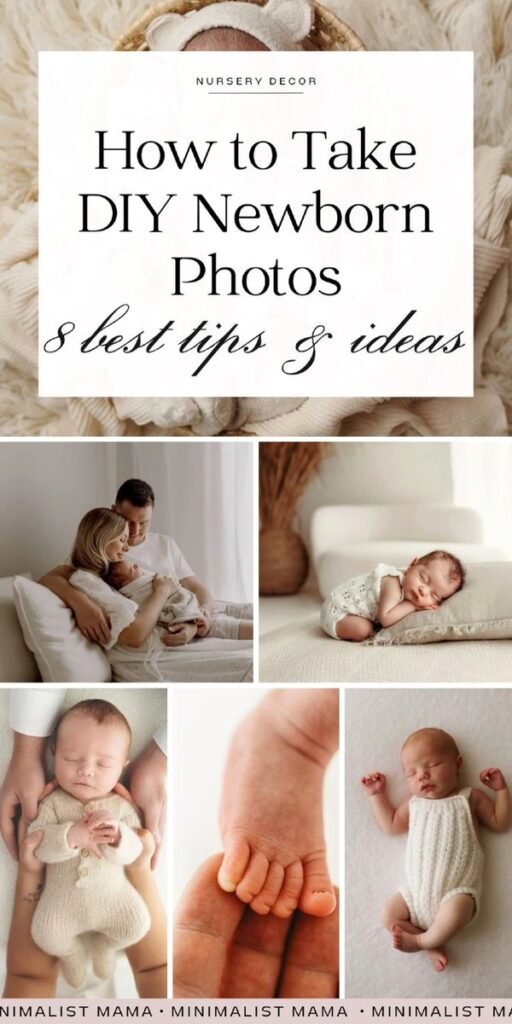
Taking beautiful newborn pictures at home does not require a professional studio, expensive camera, or complicated props. With a quiet room, soft natural light, a few cozy blankets, and a little patience, you can create warm, timeless photos that capture the tiny details and peaceful moments of those first days. The reference style centers on neutral colors, simple textures, relaxed family portraits, and close-up images of newborn hands, feet, and sleepy expressions.
Key Takeaways
- Natural window light can create soft, flattering newborn photos.
- Neutral blankets and simple outfits keep attention on your baby.
- Close-up details make meaningful additions to a newborn photo collection.
- Family photos can be relaxed, intimate, and beautifully simple.
- Baby safety should always come before getting the perfect shot.
How to Take DIY Newborn Pictures at Home
DIY newborn photography is really about preserving the feeling of this special season. Babies change incredibly quickly, so even simple photographs can become treasured memories. You do not need to recreate elaborate studio poses. In fact, some of the most beautiful newborn pictures come from natural moments such as a baby sleeping peacefully, resting in a parent’s arms, stretching after a nap, or holding a tiny hand close to the camera.
Start by choosing a comfortable area with plenty of natural light. A bedroom, nursery, or living room can work beautifully. Look for a space with soft colors and minimal visual clutter. The goal is to create a calm background that lets your newborn remain the main focus.
Important: The simplest setup is often the most effective. Soft light, neutral textures, and a relaxed baby can create photographs that feel more timeless than a heavily decorated scene.
1. Find the Best Natural Light
Lighting is one of the biggest factors in creating beautiful newborn photos at home. Instead of worrying about complicated lighting equipment, start with a large window. Natural daylight can produce a soft appearance that works especially well with the gentle mood of newborn photography.
Place your baby near the window rather than directly in harsh sunlight. Soft, indirect light can help create gradual shadows and preserve delicate details. If the sunlight feels too strong, a sheer curtain can soften it.
Try taking several photographs from different angles. Move slightly to one side, step back, and take a few closer images. Small changes in your position can dramatically change how the light falls across your baby’s face.
2. Keep the Background Simple
The reference image uses a soft, neutral aesthetic that keeps the overall composition calm and uncluttered. You can achieve a similar feeling with items you already have at home. A cream blanket, white sheet, knitted texture, or neutral-colored wrap can provide an attractive background without distracting from your baby.
Before taking pictures, scan the edges of your frame. Remove unnecessary objects, bright colors, cables, toys, or anything that pulls attention away from the subject. A clean background makes even an ordinary room feel more polished.
Neutral colors such as cream, beige, warm white, soft gray, and light brown are particularly versatile. They also pair naturally with newborn clothing and create a cozy, timeless appearance.
3. Choose Comfortable Newborn Outfits
You do not need a large wardrobe for a newborn photo session. One or two comfortable outfits are enough. Simple knitted rompers, soft onesies, neutral bodysuits, or cozy wraps can work beautifully.
When choosing clothing, prioritize comfort and simplicity. Avoid outfits that are difficult to put on or remove, especially if your baby is already settled and sleepy. A comfortable baby is much easier to photograph naturally.
Texture can add visual interest without making the photograph feel busy. Knits, soft cotton, muslin, and other gentle fabrics can create depth while maintaining the minimalist look.
4. Capture the Tiny Details
One of the easiest ways to make a newborn photo collection feel personal is to photograph the tiny details that disappear surprisingly quickly. Think about little fingers, toes, eyelashes, lips, wisps of hair, curled hands, and tiny feet.
These images do not need complicated posing. Simply photograph your baby’s natural position while they are comfortable. A close-up of a tiny hand resting against a parent’s hand can communicate just how small your newborn was during those early days.
Try mixing wide photographs with close-up images. A wider photo can show the whole scene, while a close-up reveals details that might otherwise be missed. Together, they create a more complete visual story.
Expert Insight
Do not worry about photographing every moment perfectly. A small collection of varied images often feels more meaningful than dozens of nearly identical poses.
- Photograph details alongside full-body images.
- Leave room for natural movement and expressions.
- Take breaks whenever your baby becomes unsettled.
5. Include Relaxed Family Photos
Newborn pictures do not have to focus exclusively on the baby. Some of the most emotional photographs include parents and their newborn together. The reference image shows how a simple family scene can feel intimate without requiring a complicated setup.
Try sitting together on a bed, couch, or comfortable chair near a window. Keep the interaction natural. Parents can gently hold the baby, look at one another, or simply focus on their newborn. These small interactions often create photographs that feel authentic rather than posed.
Coordinating clothing can help create a cohesive image. Neutral shades and soft fabrics work especially well when you want the baby to remain the visual focus.
6. Photograph Your Baby While Resting
Sleepy newborn photographs can have a wonderfully peaceful quality. If your baby naturally falls asleep during the session, use that quiet opportunity to capture relaxed images rather than trying to create a complicated pose.
Place your baby comfortably on a safe, stable surface and photograph from above or from the side. You can also photograph simple resting positions on a suitable bed or blanket. Keep the environment calm and avoid unnecessary movement around the baby.
Some of the best images may happen between planned photographs. A tiny stretch, a sleepy expression, a curled foot, or a brief yawn can become a favorite photograph.
7. Try Simple Newborn Photo Ideas
Once you have your basic setup, experiment with a few different compositions. The goal is not to create elaborate poses, but to build variety into your newborn photo collection.
- Baby on a neutral blanket: Create a clean, minimal portrait using soft textures and natural light.
- Parent and baby: Capture the connection between parent and newborn through gentle holding and cuddling.
- Tiny hands and feet: Take close-ups that emphasize just how small your baby is.
- Full-body portrait: Photograph your newborn comfortably lying on a simple surface.
- Sleeping close-up: Focus on facial details and peaceful expressions.
- Everyday moments: Photograph natural interactions instead of only planned setups.
Changing your camera position can also create variety. Photograph from slightly above, at baby’s level, and from a close side angle. You can often create several distinct images without changing the setup at all.
8. Put Safety Before the Photograph
Newborn photography should always be approached with safety first. Babies are delicate and should never be placed in an unstable position simply to achieve a particular image. Avoid elevated surfaces, unsupported poses, loose items around the face, or any setup where the baby could roll or fall.
An adult should remain close and attentive throughout the session. If a pose requires support, keep that support in place and consider taking it out of the final image during editing rather than attempting an unsafe setup.
Never leave a newborn unattended for a photograph. If your baby becomes uncomfortable, stop the session and allow them to settle. There is no photograph worth compromising your baby’s comfort or safety.
Pro Tip: Let your baby’s comfort guide the session. Natural movements and expressions are often more beautiful than a carefully arranged pose, and a relaxed baby makes the entire experience easier for everyone.
How to Make DIY Newborn Photos Look More Professional
You can improve the overall appearance of your photographs with a few simple composition techniques. First, keep your frame intentional. If an object does not contribute to the story, consider moving it out of the scene.
Second, watch your exposure. Newborn clothing and bedding are often light in color, so make sure the image is bright without losing important details. If your phone or camera allows you to adjust exposure, take a few test photographs before settling on the final setting.
Third, avoid relying on heavy filters. A soft, natural edit usually works better for newborn photography. Slightly adjusting brightness, contrast, warmth, and cropping can be enough to create a polished result while keeping skin tones and textures natural.
Creating a Cozy DIY Newborn Photography Setup
A beautiful setup can be surprisingly simple. Begin with one main neutral surface, such as a clean blanket or soft bedding. Add one or two subtle textures if desired. You might use a knitted blanket, woven basket nearby as decor, or a soft fabric layer, provided everything around the baby is safe and appropriate.
Keep decorative elements secondary. The baby should remain the central subject. Too many props can make the photograph feel crowded and can also make the setup more difficult to manage.
Think about the overall mood you want. For a minimalist nursery-inspired look, use pale neutrals and clean lines. For a warmer lifestyle appearance, include natural textures and cozy fabrics. The key is consistency rather than complexity.
A Simple DIY Newborn Photo Session Plan
If you are unsure where to begin, create a short sequence rather than trying to photograph everything at once. Start with a few full-body photographs while your baby is comfortable. Move closer for facial portraits, then capture tiny details such as hands and feet.
- Prepare a clean, comfortable space near soft natural light.
- Choose a simple neutral outfit and background.
- Take several relaxed full-body photographs.
- Move closer for facial and detail photographs.
- Include a few parent-and-baby moments.
- Take breaks whenever your newborn needs feeding, changing, or comforting.
- Finish with a few spontaneous photographs instead of forcing additional poses.
This approach gives you variety while keeping the session relaxed. You can always return to the same setup later if your baby settles again.
At a Glance
- Use soft natural window light.
- Keep backgrounds neutral and uncluttered.
- Photograph both family moments and tiny details.
- Keep every setup comfortable and supervised.
- Focus on authentic moments rather than perfect poses.
Final Thoughts on DIY Newborn Pictures at Home
DIY newborn pictures at home are a wonderful way to preserve the small details of your baby’s earliest days. You do not need a studio or elaborate equipment to create photographs with warmth and personality. A little natural light, a simple background, comfortable clothing, and genuine family interaction can be more than enough.
Most importantly, give yourself permission to keep things simple. Your newborn does not need to hold a perfect pose or look directly at the camera. A sleepy expression, tiny curled fingers, a peaceful stretch, or a parent’s gentle embrace can tell a much more meaningful story.
Take your time, follow your baby’s cues, and capture the moments that feel real to your family. These photographs are not just about creating attractive images. They are a visual record of a fleeting chapter that you will be able to revisit long after those tiny fingers and sleepy expressions have changed.