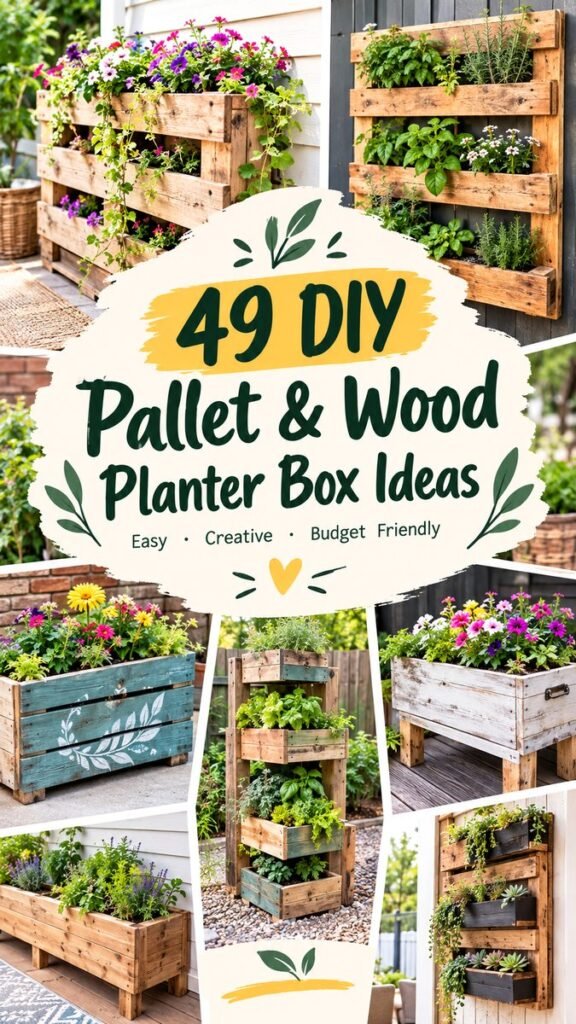
DIY planter boxes are one of the easiest ways to give a patio, porch, balcony, deck, or backyard a fresh garden makeover. They combine practical growing space with the warmth and character of natural wood, making them a wonderful choice for anyone who enjoys hands-on projects. From simple rectangular boxes to tiered planters, vertical designs, rustic pallet creations, and colorful painted containers, there are countless ways to turn basic wood into something beautiful and useful.
The ideas featured here show just how versatile DIY planter boxes can be. Some designs are compact enough for a doorway or balcony, while others create generous planting areas for flowers, herbs, and trailing greenery. Whether you love a rustic farmhouse look, modern outdoor decor, or a colorful garden style, a wooden planter can be customized to fit your space.
Key Takeaways
- DIY planter boxes can add both growing space and decorative appeal.
- Reclaimed pallet wood is a practical material for rustic garden projects.
- Vertical and tiered planters work especially well in smaller spaces.
- Paint, stain, and simple hardware can completely change the look of a wooden planter.
- Choose plants according to the planter’s size, location, and available sunlight.
- Good drainage is essential for keeping container plants healthy.
Why DIY Planter Boxes Are So Popular
A planter box offers a simple solution when you want more greenery without creating a traditional garden bed. It can be placed along a wall, beside a front door, on a deck railing, around a patio, or in a small outdoor corner. Because the container defines the planting area, it is also easier to organize flowers, herbs, and foliage exactly where you want them.
Wood adds another advantage: it naturally brings texture and warmth to outdoor spaces. Even a straightforward box made from a few boards can look attractive when paired with colorful flowers. Adding a coat of paint or stain can make the same basic construction feel completely different.
Important: The most successful planter boxes balance appearance with function. Before choosing a design, think about drainage, plant size, sunlight, watering needs, and where the finished planter will sit.
Creative DIY Planter Box Ideas
1. Classic Wooden Window Box
A simple wooden window box is a timeless choice for adding flowers directly beneath a window. A long rectangular shape gives plants plenty of room to spread while creating a neat visual frame around the house. Choose natural wood for a rustic appearance, or paint the box to coordinate with your exterior.
Trailing flowers and leafy plants work particularly well because their stems can spill over the front edge. For a fuller appearance, combine plants with different heights and textures rather than filling the entire container with one variety.
2. Rustic Pallet Planters
Pallet wood is a favorite material for DIY garden projects because it can create a relaxed, reclaimed appearance. A pallet can be transformed into a freestanding planter, wall-mounted planter, tiered garden, or long rectangular container.
The weathered texture of reclaimed boards pairs beautifully with bright flowers and green foliage. Sand rough areas before assembling your project, and make sure any reclaimed wood you use is appropriate for gardening.
3. Tiered Wooden Planter
Tiered planters are a smart way to grow several plants while using a relatively small footprint. Stacking planting boxes at different heights creates a strong vertical feature and makes the plants easier to see.
This style is particularly attractive with herbs, compact flowers, and trailing plants. You can keep each level coordinated with similar plants or create a colorful collection with different foliage and blooms.
4. Vertical Wall Planter
If floor space is limited, take the garden upward. A vertical wooden planter can turn an empty wall or fence into a living display. Several narrow planting compartments can be attached to a sturdy frame, creating an organized arrangement of greenery.
Vertical designs are also useful for creating privacy or adding interest to an otherwise plain outdoor wall. Keep the arrangement visually balanced by placing taller plants toward the upper areas and trailing greenery where it can naturally hang downward.
5. Painted Wooden Planter Boxes
Paint is one of the easiest ways to personalize a planter box. A bright color can make the container a focal point, while white, gray, cream, or muted green can create a softer garden aesthetic.
You can also paint individual boards in alternating shades for a playful striped effect. Simple leaf patterns or geometric details can add personality without requiring advanced artistic skills.
6. Raised Wooden Garden Box
A raised planter box provides a defined area for flowers, herbs, or compact vegetables. The design can be as simple as a rectangular frame supported by sturdy legs. Raising the container also creates a more structured appearance and can make gardening more convenient.
Keep the proportions appropriate for the available space. A long, narrow box works nicely along a railing or wall, while a deeper square design can become a central feature on a patio.
7. Compact Porch Planter
A small wooden planter beside the front door can instantly make an entrance feel more welcoming. Choose a box that fits comfortably without blocking the walkway, then fill it with flowers or foliage suited to the amount of sunlight the area receives.
Pairing two matching boxes on either side of an entrance creates a balanced look. For a more relaxed style, use one larger planter and combine several plant shapes within it.
8. Rustic Vertical Herb Garden
Wooden planters are especially useful for growing herbs because separate compartments make it easy to organize different plants. A vertical arrangement can hold several small planting boxes without taking up much floor space.
Place herbs where they receive the amount of light they need, and position frequently used varieties somewhere convenient. A compact herb planter can be both decorative and practical.
9. Decorative Deck Planter
A long planter box can work beautifully along the edge of a deck or balcony. It helps soften hard architectural lines and introduces natural texture to an outdoor living area.
Consider mixing upright plants with trailing varieties. The contrast creates depth and makes a simple box appear much fuller. Matching the wood finish to existing outdoor furniture can also help create a cohesive look.
Choosing the Right Wood for a DIY Planter
The material you choose affects both the appearance and longevity of your planter. Cedar and other naturally durable woods are popular for outdoor projects, while reclaimed boards can create a distinctive rustic appearance. Standard construction lumber can also be used when properly protected for outdoor conditions.
Inspect every board before construction. Avoid pieces that are badly cracked, unstable, or contaminated with unknown substances. For reclaimed pallet projects, selecting suitable, clean material is especially important.
The thickness of the boards should also suit the size of the planter. Larger boxes hold more soil and therefore need stronger construction. Reinforced corners, sturdy supports, and a solid base can help prevent the structure from shifting or bowing.
Essential Features for Functional Planter Boxes
Drainage Comes First
One of the most important details in any DIY planter box is drainage. Excess water needs a way to escape so the growing medium does not remain saturated for long periods. A poorly drained container can create difficult conditions for plant roots.
Build the bottom with appropriate drainage openings and position the planter where excess water can safely run away. If the planter sits directly on a delicate surface, consider using feet or another method to allow airflow and drainage beneath it.
Think About Weight
Soil becomes surprisingly heavy when wet. A large wooden planter filled with growing medium and mature plants can be difficult to move. Decide where the planter will live before filling it, especially if it is intended for a balcony, railing, or elevated platform.
Protect the Wood
Outdoor wood is exposed to rain, sunlight, humidity, and temperature changes. A suitable outdoor finish can help protect the material and preserve its appearance. Follow the product instructions when applying any stain, paint, or protective coating.
Expert Insight
A beautiful planter does not need complicated construction. Strong proportions, clean edges, reliable drainage, and a finish that complements the surrounding space can make a simple wooden box look professionally designed.
How to Style Your DIY Planter Boxes
The plants you choose can completely change the personality of a wooden planter. Bright annual flowers create a cheerful and colorful display, while herbs bring a useful garden element. Succulents can suit compact containers, and trailing greenery adds movement to vertical or elevated designs.
Try combining three basic plant shapes: an upright element for height, a fuller plant for volume, and a trailing variety to soften the edges. This simple combination can make a container look layered and intentional.
Color is another easy design tool. Warm wood looks beautiful with vivid flowers, while painted boxes can be coordinated with cushions, outdoor furniture, doors, or other garden accents. You do not need everything to match perfectly. Repeating one or two colors throughout the space is often enough to create visual harmony.
DIY Planter Box Ideas for Small Spaces
Small gardens do not have to mean giving up on creative planting. Narrow window boxes, compact square containers, railing planters, and vertical wooden designs can add greenery without consuming much floor area.
A vertical pallet planter is particularly useful because it makes use of wall space. Another option is a narrow rectangular box placed against a fence or railing. For balconies, keep the overall weight and attachment method in mind before installing elevated planters.
For a tiny entryway, one tall wooden planter can provide the impact of several smaller containers while keeping the walkway open. Add trailing foliage near the top for a softer silhouette.
Simple Ways to Customize a Wooden Planter
- Add handles to create a portable planter.
- Use different wood tones for a layered reclaimed look.
- Paint the outside while leaving selected wood sections natural.
- Add small feet to lift the box slightly from the ground.
- Use simple stencils for leaves, stripes, or geometric patterns.
- Build multiple boxes in different sizes for a coordinated garden display.
Pro Tip: Before building, measure the exact location where the planter will sit. A few extra minutes of planning can prevent a box from being too wide, too tall, or difficult to access for watering and maintenance.
Planning Your DIY Planter Box Project
Start by deciding what you want the planter to accomplish. Is it primarily decorative, a place to grow herbs, a way to brighten an entrance, or a solution for limited gardening space? Your answer will guide the size and shape of the project.
- Measure the intended location.
- Choose a planter shape that suits the space.
- Select suitable wood and hardware.
- Plan drainage before assembling the box.
- Sand rough surfaces and check the structure for stability.
- Apply paint or an appropriate outdoor finish if desired.
- Add suitable growing medium and plants.
- Place the finished planter where the plants receive appropriate light.
Keeping the design simple is often the best approach for a first project. Once you understand how the materials fit together, you can experiment with more advanced shapes, multiple levels, decorative finishes, and larger garden installations.
Making Your Planter Look More Expensive
A polished appearance often comes down to small details rather than expensive materials. Consistent spacing between boards, clean corners, a carefully chosen finish, and attractive plant combinations can make a basic DIY planter feel much more refined.
Consider adding a contrasting trim around the top edge or using slightly different wood tones to create visual depth. Simple black or metal-colored hardware can provide a modern accent against warm timber, while a distressed finish works nicely with rustic garden decor.
Plants themselves are part of the design. Repeating similar flower colors across several wooden boxes can make separate DIY projects look like one coordinated garden collection.
Quick Points
- Measure first and build around your available space.
- Prioritize sturdy construction and drainage.
- Mix plant heights and textures for a fuller display.
- Use paint or stain to personalize basic wood.
- Try vertical designs when floor space is limited.
Final Thoughts on DIY Planter Boxes
DIY planter boxes are a simple way to combine creativity, gardening, and outdoor decorating in one project. The examples in this collection show how many different directions you can take with basic wooden materials. A straightforward box can become a colorful flower container, a practical herb garden, a vertical wall feature, or a rustic focal point for a patio.
The best project is one that works naturally with your space and your gardening style. Start with a manageable design, pay attention to drainage and durability, and personalize the finish with colors and details you love. As your confidence grows, experiment with tiered arrangements, reclaimed wood, vertical gardens, and mixed planting displays.
Whether you are refreshing a front porch, adding life to a balcony, or creating a more inviting backyard, a handmade planter can make a surprisingly big difference. With thoughtful planning and a little creativity, ordinary wood can become a beautiful home for flowers, herbs, and greenery.