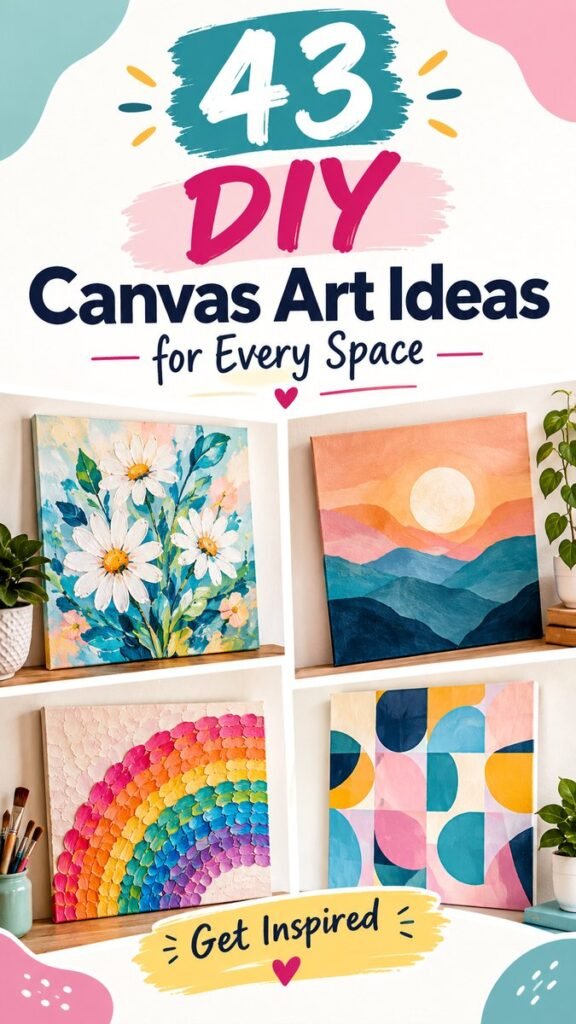
DIY canvas art is one of the easiest ways to bring personality, color, and creativity into your home without needing complicated supplies or advanced painting skills. A blank canvas can become a cheerful floral design, a peaceful landscape, a colorful abstract piece, or a playful geometric composition with just a few basic materials. The ideas featured here show how different painting styles can work beautifully together while still feeling fresh and approachable.
Important: Easy canvas art does not have to look basic. Simple shapes, expressive brushstrokes, layered colors, and thoughtful composition can create artwork that feels polished while remaining completely achievable for a beginner.
Key Takeaways
- Start with simple canvas painting ideas that match your comfort level.
- Acrylic paint is a practical choice for colorful DIY wall art projects.
- Abstract, floral, landscape, and geometric designs offer plenty of creative freedom.
- Layering colors can add depth and visual interest without complicated techniques.
- Use your canvas artwork to refresh shelves, bedrooms, living rooms, offices, or creative spaces.
- Experiment with color combinations before committing to the final composition.
Why DIY Canvas Art Is So Easy to Love
Canvas painting gives you a large creative surface without requiring a long list of specialized tools. Even a simple collection of paint, brushes, and a few canvases can produce many different styles. That makes DIY canvas art especially appealing for weekend projects, craft nights, room makeovers, and anyone looking for affordable wall decor.
Another advantage is flexibility. You can follow a reference idea closely, simplify a more complicated painting, or create something completely spontaneous. There is no need to make every brushstroke perfect. In fact, visible texture and slightly imperfect details can give handmade artwork its charm.
The colorful examples in this collection demonstrate several approachable directions. Floral painting creates a lively botanical feel, while layered landscapes offer a calmer look. Abstract color blocking feels modern and graphic, and rainbow-inspired textures can make a room feel playful and energetic.
Easy DIY Canvas Art Ideas for Beginners
If you are new to painting, choose a project that lets you focus on color and composition rather than complicated realism. The goal is to enjoy the process while creating a finished piece you will be happy to display.
1. Colorful Floral Canvas
Flowers are a wonderful starting point because they can be represented with simple shapes. Instead of trying to paint every petal realistically, use loose brushstrokes to create blooms, leaves, stems, and small accents.
Begin with a light background and add larger flowers first. Layer different shades over the petals to create dimension, then add green leaves and smaller decorative details. A combination of blue, turquoise, pink, yellow, and white can create a cheerful contemporary look.
Simple Floral Technique
- Paint the background and allow it to become touch-dry.
- Block in the largest flowers using loose shapes.
- Add darker or lighter paint to define the petals.
- Paint stems and leaves between the flowers.
- Finish with tiny highlights or accent flowers.
This style works particularly well when you want handmade wall decor that feels bright and welcoming.
2. Simple Sunset Landscape
A landscape does not need to contain dozens of details. A few horizontal layers can suggest mountains, sky, sunlight, and distant scenery. This makes a sunset landscape an excellent easy canvas art project for beginners.
Try building the background from lighter colors toward darker foreground shapes. Warm peach, soft pink, cream, and golden tones can create the feeling of a glowing sky, while blue and deep teal layers can define mountains or distant hills.
The key is to think in broad shapes. Rather than painting every tree or rock, allow the overlapping layers to create the visual story. A circular sun or moon-like shape can become a strong focal point when placed against a contrasting background.
3. Textured Rainbow Canvas
For a playful project, try creating a rainbow using textured brushstrokes or small repeated marks. This approach is especially useful when you want a colorful statement piece without having to paint detailed objects.
Choose several colors that transition naturally from one shade to another. Apply them in curved rows, allowing some texture to remain visible. You can use a brush, palette knife, sponge, or another simple tool to vary the surface.
Do not worry about making every mark identical. Variation is part of what gives textured canvas art its handmade character.
4. Modern Geometric Canvas
Geometric painting is another beginner-friendly option because the design can be based on circles, squares, arches, rectangles, and curved sections. A carefully selected palette can make a very simple arrangement look sophisticated.
Start by lightly sketching the composition or use painter’s tape to create clean sections. Fill individual areas with contrasting colors, then remove the tape once the paint has set appropriately. For a softer handmade appearance, you can also paint the shapes freehand.
Try combining two or three strong colors with a neutral shade. Teal, navy, pink, yellow, cream, and white can create an energetic palette while still working well with contemporary interiors.
Expert Insight
- Limit your main palette to a few colors so the finished artwork feels cohesive.
- Use different values of the same color to create depth without making the design complicated.
- Leave some breathing room between major shapes so the composition does not feel crowded.
Basic Supplies for Easy Canvas Painting
You can keep your supply list surprisingly simple. The exact materials depend on your preferred technique, but a few basics will cover most beginner canvas art projects.
- Canvas: Choose a size that fits your wall and gives you enough room to experiment.
- Acrylic paint: A small selection of colors can be mixed to create many additional shades.
- Paint brushes: Keep a few sizes available, including a wider brush for backgrounds and smaller brushes for details.
- Palette: A disposable palette, ceramic plate, or other suitable mixing surface can work well.
- Water container: Useful for rinsing brushes between colors.
- Paper towels: Keep them nearby for quick cleanup and removing excess paint.
- Painter’s tape: Helpful for geometric designs and crisp sections.
You do not need expensive equipment to begin. Focus on having colors you enjoy and tools that feel comfortable in your hands.
How to Plan Your Canvas Before Painting
A little planning can make an easy DIY painting feel much more intentional. Before opening your paint, decide where the artwork will go and consider the colors already present in that room.
Choose a Simple Focal Point
Every canvas benefits from having one area that naturally attracts attention. This might be a large flower, a bright sun, a colorful rainbow, or a bold geometric shape. Once you have selected the focal point, arrange supporting details around it.
Think About Color Balance
Color is one of the easiest ways to transform handmade artwork. If your room is neutral, a vibrant canvas can become an eye-catching accent. If your space already has several bold colors, softer shades may create a more balanced result.
Pro Tip: Before painting the entire canvas, place small amounts of your chosen colors together on scrap paper. This quick test makes it easier to spot combinations that work well and prevents unnecessary repainting.
Easy Techniques That Add More Interest
You can make a simple painting look much more dimensional by combining a few basic techniques. You do not need advanced artistic skills. Small changes in texture, layering, and brush direction can have a big visual effect.
Layering
Build your artwork gradually instead of trying to complete every detail at once. Start with broad background colors, then add larger shapes, secondary details, and finally small highlights. Layering helps keep the composition organized.
Dry Brush Texture
A brush with only a small amount of paint can create interesting broken textures. This is useful for abstract backgrounds, mountains, leaves, or decorative accents.
Color Blocking
Color blocking simply means placing larger areas of contrasting color beside each other. It is one of the easiest ways to achieve a modern canvas painting style without complicated drawing.
Loose Brushstrokes
Instead of blending everything until the surface is perfectly smooth, let some brush marks remain visible. This creates energy and gives the artwork a distinctly handmade quality.
Ways to Display Your DIY Canvas Art
Once your painting is complete and fully dry, think about how it will interact with the surrounding space. A single large canvas can act as a focal point above a console, desk, shelf, or sofa. Smaller paintings can also be grouped together to create a colorful gallery-style arrangement.
Try coordinating the artwork with nearby cushions, plants, books, vases, or other decorative pieces. The goal is not necessarily to match every color exactly. Repeating one or two shades from the canvas elsewhere in the room can be enough to make the space feel connected.
For a creative workspace or craft corner, colorful canvas art can bring energy to an otherwise simple wall. In a bedroom, softer floral or landscape designs can create a calmer atmosphere. Abstract and geometric pieces can work particularly well when you want a contemporary decorative accent.
Common Beginner Mistakes to Avoid
Easy painting projects become much more enjoyable when you give yourself permission to experiment. Still, a few common mistakes can make the process harder than necessary.
- Using too many colors: A huge palette can make the finished artwork feel disconnected. Start with a small group of colors.
- Adding details too early: Establish the large shapes and background before working on tiny elements.
- Overworking the paint: Excessive blending can muddy bright colors. Let layers settle before adding more.
- Ignoring composition: Take a moment to decide where the main subject or strongest color should sit.
- Expecting perfection: Handmade art should have personality. Small variations often make it more interesting.
Make Each Canvas Your Own
The best part of DIY canvas art is that there is no single correct version. Use the ideas as starting points rather than strict instructions. Change the colors, simplify the shapes, combine techniques, or create a completely different composition inspired by your favorite elements.
You might turn a floral idea into a minimalist botanical painting, transform a landscape into a bold abstract scene, or combine geometric shapes with expressive brush textures. Even small adjustments can create a piece that feels personal to your home.
If you are making several canvases, consider creating a loose collection instead of making every piece identical. Repeating one color throughout the set can help the artwork feel coordinated while allowing each canvas to have its own personality.
At a Glance
- Pick a simple subject such as flowers, landscapes, rainbows, or geometric shapes.
- Use a limited color palette for an effortless coordinated look.
- Build the painting from large areas to smaller finishing details.
- Experiment with texture and loose brushstrokes for extra personality.
- Display finished pieces where their colors can complement your existing decor.
Conclusion
Easy DIY canvas art is a simple, creative way to transform a blank wall into something colorful and personal. From cheerful floral paintings and textured rainbows to peaceful landscapes and modern geometric designs, there are countless directions to explore without making the process complicated.
Start with a canvas, a few favorite colors, and one approachable idea. Let yourself experiment with layers, shapes, textures, and brushstrokes rather than worrying about making every detail perfect. The result can become more than simple DIY wall decor. It can be a handmade reflection of your style and a fun project you will enjoy creating.
Whether you are refreshing one small corner or planning a whole collection of handmade artwork, these easy canvas painting ideas offer plenty of inspiration to get started. Choose the design that catches your eye, gather your supplies, and make it your own.
Tags
DIY Canvas Art Easy Canvas Painting DIY Wall Art Canvas Painting Ideas Beginner Painting DIY Home Decor Abstract Canvas Art Acrylic Painting Ideas