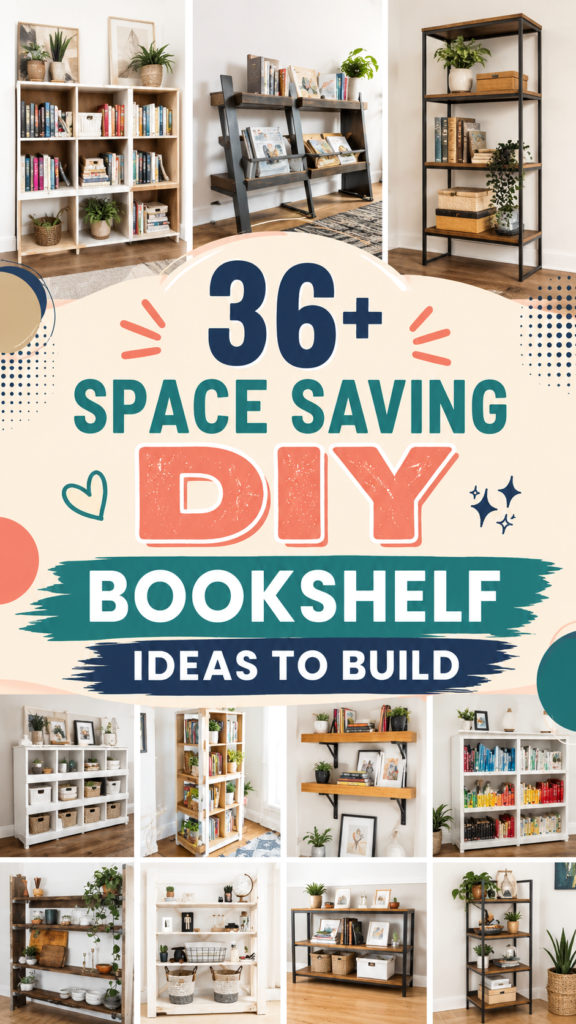
A good bookshelf does much more than hold your favorite reads. It can transform an empty wall, organize a cluttered corner, display plants and baskets, and add personality to almost any room. The DIY bookshelf ideas featured here show just how many creative ways you can build useful storage without sacrificing style. From compact floating shelves and ladder-style bookcases to roomy cubbies and modern open shelving, these designs make it easier to find a solution that fits your space, budget, and decorating style.
Key Takeaways
- Vertical bookshelves can make excellent use of narrow or unused wall space.
- Open shelving keeps books accessible while creating room for plants and decorative pieces.
- Cubbies and baskets combine book storage with practical organization.
- Floating shelves offer a clean solution for small rooms and minimalist interiors.
- Choosing the right height, depth, and placement can make a DIY bookshelf feel built-in.
- Mixing books with decor helps an open bookcase look intentional rather than cluttered.
Why DIY Bookshelves Are So Useful
Bookshelves are one of those home projects that can solve several problems at once. They provide storage, fill awkward spaces, and create an opportunity to introduce texture and character into a room. A DIY bookshelf can also be adapted to the exact dimensions of your home instead of forcing a standard piece of furniture into an inconvenient corner.
The designs shown in this collection demonstrate a useful principle: storage does not have to look purely functional. A simple wooden shelf can become part of the room’s decoration when it is styled with books, greenery, baskets, artwork, and small accessories.
Important: The most effective DIY bookshelf is not necessarily the largest one. A thoughtfully sized shelf that uses vertical space efficiently can provide more practical storage while keeping a room feeling open and comfortable.
Space-Saving DIY Bookshelf Ideas
When floor space is limited, look upward. Several of the bookshelf styles represented here use vertical layouts to create generous storage without taking up a wide footprint. This approach works particularly well in bedrooms, home offices, hallways, reading corners, and compact living spaces.
1. Tall Freestanding Bookcases
A tall, narrow bookcase is a practical choice when you have more wall height than floor width. Multiple open levels can hold books while leaving space for baskets, plants, framed artwork, or decorative objects. A dark frame paired with natural wood shelves can create a modern industrial appearance, while an all-white version feels lighter and more traditional.
2. Ladder-Style Shelving
Ladder bookshelves are visually interesting because their profile naturally draws the eye upward. They are especially useful when you want storage that feels less bulky than a conventional cabinet. Wider shelves toward the bottom can accommodate larger books or baskets, while the upper shelves work well for smaller collections and decorative accents.
3. Floating Bookshelves
Floating shelves create a clean, streamlined look because the supporting structure is visually minimized. They can be installed individually or arranged in a vertical composition. This makes them a flexible option for displaying a smaller book collection, children’s books, favorite titles, or a combination of books and decor.
4. Narrow Corner Shelves
Corners are often overlooked when planning storage. A slim DIY shelf can turn an unused corner into a functional reading or display area. Consider a vertical design with shallow shelves if you want to preserve walking space while still gaining useful storage.
DIY Bookshelf Styles for Different Rooms
One reason DIY bookshelf projects are so versatile is that the same basic construction can be adapted to different rooms. Think about what you need to store before deciding on the final design.
Living Room Bookshelves
In a living room, an open bookshelf can become part of the overall decor. Use several shelves for books and reserve a few spaces for plants, framed prints, baskets, and small objects. A balanced arrangement prevents the bookcase from looking too crowded.
A wide low bookcase can also work beneath artwork or along a long wall. This style offers substantial storage while keeping the visual height of the room relatively low.
Home Office Storage
A home office benefits from shelves that combine books with practical organization. Open cubbies can hold notebooks and reference materials, while baskets provide a convenient place for smaller supplies. Keeping frequently used books at an easy-to-reach level makes the workspace more efficient.
Kids’ Rooms and Playrooms
For children’s spaces, accessible shelving can make books easier to see and reach. Low shelves or forward-facing display sections can encourage children to choose books independently. Rounded baskets and clearly separated storage areas can also make cleanup simpler.
Kitchen and Dining Areas
Open shelves are not limited to books. A sturdy shelving unit can hold cookbooks alongside dishes, baskets, cutting boards, plants, and decorative kitchenware. Wood shelves with a simple dark frame can add warmth to an otherwise bright kitchen.
Choosing the Right DIY Bookshelf Design
Before building anything, measure the space carefully. The available width is important, but depth and height matter just as much. A shelf that extends too far into a walkway can make a small room feel cramped, while a very shallow shelf may not accommodate the books or baskets you want to store.
Think About What You Need to Store
Start by grouping the items that will live on the bookshelf. Standard books, oversized art books, magazines, baskets, plants, and decorative objects may require different amounts of space. Planning around the contents helps you avoid creating shelves that are too restrictive.
- Use adjustable or varied shelf heights for mixed collections.
- Include deeper lower shelves for baskets and larger items.
- Keep frequently used books within comfortable reach.
- Leave some open space so the finished shelf can breathe visually.
Match the Materials to Your Decor
The material and finish can completely change the personality of a bookshelf. Natural wood creates a warm and relaxed feeling, painted shelves can blend into the wall, and dark metal frames can give an otherwise simple design a modern edge.
If your room already contains several wood tones, choose a finish that complements the existing furniture rather than introducing another competing color. For a more unified look, repeat a material or finish already found elsewhere in the room.
Expert Insight
A bookshelf looks more polished when storage and styling are planned together. Instead of filling every shelf completely, combine horizontal stacks, vertical rows, baskets, and a few decorative pieces. The empty areas create visual breathing room and make the entire unit feel more intentional.
How to Style an Open DIY Bookshelf
Once the bookshelf is built, styling is where the project really comes to life. The examples in this collection show a variety of ways to combine books with greenery, storage baskets, framed pieces, and simple decorative objects.
Mix Horizontal and Vertical Book Stacks
Avoid arranging every book in exactly the same way. Stand some books vertically and place smaller horizontal stacks on other shelves. Horizontal stacks can also create a base for a small plant or decorative object.
Add Baskets for Hidden Storage
Baskets are especially useful on lower shelves. They can hold items that do not need to remain on display while adding texture to an otherwise open design. Woven baskets work particularly well with natural wood shelving and neutral interiors.
Bring in Greenery
Plants can soften the straight lines of a bookcase and add a fresh decorative element. A trailing plant can work beautifully from an upper shelf, while compact plants can fill small gaps between books.
Use Decor Sparingly
A few carefully chosen accessories are usually more effective than filling every available space. Try small artwork, simple pottery, framed photographs, or other pieces that complement the colors already present in the room.
Pro Tip: Step back several feet after styling each section of your bookcase. Viewing the entire unit at once makes it easier to spot crowded areas and redistribute objects for a more balanced appearance.
Simple Ways to Make a Bookshelf Feel Built In
You do not necessarily need a complicated construction project to achieve a built-in look. Repeating shelf dimensions, keeping the finish consistent, and positioning the unit thoughtfully can make a freestanding bookshelf feel much more integrated with the room.
For a seamless appearance, consider matching the shelf color to nearby furniture or the wall. Another option is to use multiple shelving sections side by side so they create the visual impression of one larger storage system.
Keep the Visual Lines Consistent
Consistent shelf spacing creates a calmer appearance. If the bookshelf contains several different objects, the repeated horizontal lines help bring everything together. This is particularly effective in modern and minimalist rooms.
DIY Bookshelf Ideas for Small Spaces
Small homes do not have to mean small storage possibilities. Wall-mounted shelves, narrow bookcases, corner units, and tall vertical designs can all provide useful storage while preserving valuable floor area.
- Use wall space above desks or consoles for floating shelves.
- Choose a tall narrow unit for tight corners.
- Use shallow shelves in hallways where floor space is limited.
- Combine bookshelves with baskets to make one unit serve multiple purposes.
- Place low shelving beneath windows when the available height allows it.
Making Your DIY Bookshelf Practical and Stylish
The best bookshelf ideas balance appearance with everyday function. Before finalizing the design, consider how often you will access the items, whether children will use the shelves, and whether the unit needs to accommodate more books in the future.
It is also helpful to think about stability and appropriate installation for the chosen design. Tall or wall-mounted shelving should be installed securely using hardware suitable for the wall and the expected load. A beautiful bookshelf is much more useful when it is stable, accessible, and designed around real-life needs.
At a Glance
- Go vertical when floor space is limited.
- Mix books with baskets, plants, and simple decor.
- Choose shelf depth based on the items you actually need to store.
- Leave intentional empty space for a cleaner finished look.
- Match the bookshelf finish with your existing room style.
Conclusion: Build a Bookshelf That Works for Your Space
A DIY bookshelf can be as simple or ambitious as you want it to be. The collection of ideas here proves that useful storage can also become a major part of your home’s style. Whether you prefer a compact floating shelf, a tall ladder bookcase, a spacious cubby unit, or an open wood-and-metal design, the right bookshelf can make an unused area feel purposeful.
Start by measuring your space, deciding what you need to store, and choosing a design that complements your existing decor. Then have fun with the details. Arrange your favorite books, add a few baskets, introduce some greenery, and leave enough breathing room to keep the display looking fresh.
The perfect DIY bookshelf does not need to be complicated. It simply needs to make smart use of your space while reflecting your personal style. Save your favorite bookshelf ideas, gather your materials, and turn that empty wall or forgotten corner into functional storage you will enjoy every day.