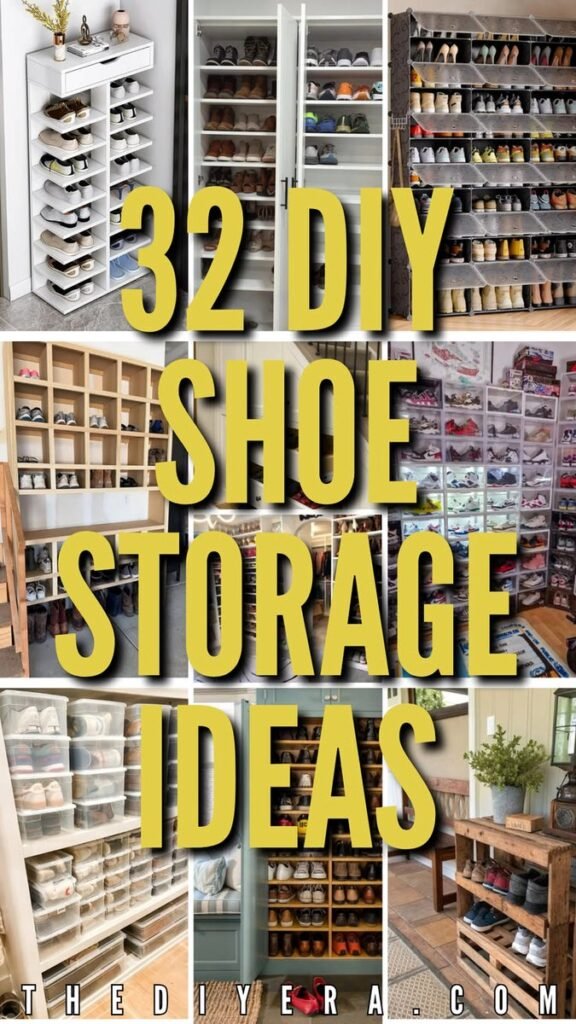
A messy shoe collection can quickly take over an entryway, closet, or bedroom, but the right DIY shoe storage idea can make every pair feel organized and easy to reach. The inspiration here shows just how many ways you can store shoes without sacrificing style. From slim vertical cabinets and open cubbies to wall-mounted shelves, clear boxes, and rustic benches, there is a practical solution for almost every home.
The best part is that shoe organization does not have to mean buying an expensive storage system. With a little creativity, unused walls, narrow corners, shelves, cabinets, and entryway spaces can become hardworking storage areas. Whether you own a few everyday pairs or need a system for a large collection, these ideas can help you create a cleaner and more functional space.
Key Takeaways
- Use vertical space to store more shoes without taking over the floor.
- Open shelves make frequently worn shoes easy to see and grab.
- Clear containers help protect shoes while keeping pairs visible.
- Entryway benches can combine seating with convenient shoe storage.
- Adjustable shelves work well for collections with different shoe heights.
Why DIY Shoe Storage Makes Such a Difference
Shoes are awkward to organize because they come in many shapes and sizes. Sneakers, boots, sandals, heels, slippers, and everyday shoes all need different amounts of space. When pairs are left in a pile, it becomes harder to find what you need and easier for the entryway or closet to look cluttered.
A thoughtful shoe storage setup gives every pair a designated home. Instead of searching through a crowded floor, you can quickly spot the pair you want. Good organization also makes better use of the space you already have, which is especially useful in apartments, small bedrooms, compact closets, and busy family entryways.
Important: The most effective shoe storage is not necessarily the biggest system. It is the one that fits your available space, matches the way you use your shoes, and makes putting shoes away simple enough to maintain every day.
32 DIY Shoe Storage Ideas to Try
1. Build a Slim Vertical Shoe Cabinet
A tall, narrow cabinet is an excellent solution when floor space is limited. The vertical design uses wall height instead of spreading storage across the room. Multiple shallow shelves can hold sneakers, flats, sandals, and other everyday footwear while keeping the overall footprint compact.
2. Create Open Shoe Cubbies
Open cubbies offer a simple way to give each pair its own section. They are especially useful near an entryway because shoes can be placed directly into a compartment when you come home. Choose cubby sizes according to the shoes you wear most often and reserve taller spaces for boots.
3. Use Adjustable Closet Shelves
Closet shelving becomes much more useful when shelf heights can be adjusted. Lower sections can accommodate flats and sneakers, while taller sections can be opened up for boots. This flexible approach prevents wasted vertical space.
4. Turn a Narrow Wall Into Shoe Storage
A narrow wall that normally goes unused can become valuable storage. Install shallow shelves or compact compartments along the wall to keep shoes organized without making a walkway feel crowded.
5. Add Clear Shoe Boxes
Clear boxes are practical when you want shoes protected from dust while remaining visible. Stack them carefully to create a neat shoe wall, or arrange them inside a closet. Because the contents are easy to see, you can find a pair without opening every container.
6. Make an Entryway Shoe Bench
A storage bench can solve two problems at once. It provides a comfortable place to sit while putting on shoes and creates a dedicated spot underneath for footwear. Wooden slats, open compartments, or baskets can be incorporated into the lower section.
7. Install Tiered Shoe Shelves
Tiered shelves allow multiple pairs to remain visible while using a relatively small amount of floor space. They are particularly useful for everyday sneakers and casual shoes that you want to grab quickly.
8. Repurpose a Wooden Shelf Unit
A basic wooden shelving unit can easily become a shoe organizer. The open design makes it easy to customize the number of sections, while a coat of paint or natural wood finish can help it blend with your existing decor.
9. Organize Shoes by Frequency of Use
Not every pair needs to be equally accessible. Keep daily shoes at eye level or near the entrance, while occasional footwear can go on higher shelves. Seasonal pairs can be stored farther back or in containers until they are needed.
Expert Insight
Think about your daily routine before choosing a storage design. If shoes are worn every day, open shelves may be easier to maintain. If you prefer a visually tidy room, closed cabinets or matching storage boxes can keep the collection hidden while still giving every pair a defined place.
10. Try a Floor-to-Ceiling Shoe Wall
If you have a large collection, use the entire height of one wall. A floor-to-ceiling arrangement can turn shoe storage into an organized feature while freeing up valuable floor space elsewhere.
11. Create a Mudroom Shoe Station
A mudroom is naturally suited to shoe organization. Combine low shelves, cubbies, hooks, and a bench to create a practical drop zone for the whole household. Keeping storage close to the entrance encourages everyone to put shoes away immediately.
12. Use Under-Bench Storage
The space underneath a bench is often overlooked. Add open shelves, baskets, or simple compartments underneath to create discreet storage without requiring another piece of furniture.
13. Build a Corner Shoe Organizer
Corners can be difficult to use efficiently, but a custom corner shelf can transform an awkward area into useful storage. This works particularly well in walk-in closets or entryways where every bit of space matters.
14. Add Small Floating Shelves
Floating shelves can provide lightweight shoe storage without the visual bulk of a large cabinet. Install several in a vertical arrangement to display favorite pairs and keep them off the floor.
15. Create a Family Shoe Zone
When several people share a home, individual sections can make organization much easier. Assigning each person a shelf, cubby, or basket reduces confusion and makes it easier to identify where shoes belong.
16. Use Matching Containers
Uniform containers instantly create a more cohesive look. If you choose opaque boxes, add simple labels so you can identify the contents quickly. Clear containers eliminate the need for labels while keeping the shoes visible.
17. Store Boots in Taller Compartments
Boots need more vertical room than most footwear, so avoid forcing them into short shelves. A storage system with a few taller sections can accommodate boots while keeping smaller shoes organized separately.
18. Use a Low Entryway Rack
A low rack is ideal for everyday footwear. It keeps shoes accessible and creates a simple drop zone near the door. Add a small tray or basket nearby for accessories such as shoe-care items.
How to Choose the Right DIY Shoe Storage
Before building or buying anything, measure the space you want to organize. Note the available width, height, and depth. Then consider how many pairs you need to store and which types take up the most room.
- Measure first: Check the available wall and floor dimensions.
- Count your shoes: Estimate how much storage you actually need.
- Separate shoe types: Consider sneakers, boots, sandals, and special-occasion pairs.
- Choose accessibility: Put frequently worn pairs in the easiest-to-reach locations.
- Plan for growth: Leave a little extra room instead of filling every shelf immediately.
The images of compact cabinets, open shelving, clear boxes, and wooden entryway storage all demonstrate an important principle: there is no single perfect shoe organizer. The right choice depends on your room, collection, lifestyle, and preferred visual style.
Make Small Spaces Work Harder
Small homes often benefit most from vertical storage. Instead of placing a wide rack across the floor, look upward. Tall shelves, narrow cabinets, and stacked boxes can hold many pairs while leaving walkways clear.
Pro Tip: Keep your most frequently worn shoes between waist and eye level. Use higher shelves for seasonal or occasional pairs and lower areas for heavier footwear. This simple arrangement can make a storage system feel much more convenient.
Keep Your Shoe Storage Looking Organized
Even a well-designed organizer can become cluttered if there is no simple routine for maintaining it. Try returning shoes to the same location every time. Pair shoes together, avoid overcrowding shelves, and periodically remove pairs that are no longer worn.
For an especially polished appearance, group similar footwear together. Sneakers can share one section, boots another, and seasonal sandals can be placed together. Matching containers or consistently spaced shelves can also make the entire storage area feel intentional.
DIY Shoe Storage Ideas for Different Rooms
Entryway
Choose low shelves, a storage bench, or a compact cabinet. The goal is quick access without blocking the entrance. A small dedicated area can prevent shoes from spreading throughout the home.
Bedroom
A tall cabinet, under-bed containers, or a narrow shelving unit can keep footwear organized without dominating the room. Closed storage is especially useful when you prefer a calmer, less visually busy space.
Closet
Closets offer plenty of opportunities for customized shoe organization. Adjustable shelves, clear boxes, and vertical compartments can help use every available section efficiently.
Mudroom
A combination of cubbies and seating works especially well here. Keep everyday shoes near the floor and use higher storage for less frequently worn pairs.
At a Glance
- Go vertical when floor space is limited.
- Keep everyday footwear within easy reach.
- Use clear boxes when visibility matters.
- Add benches or cabinets to combine storage with function.
- Customize shelf heights for different shoe styles.
Conclusion
Great DIY shoe storage is about making your space work smarter. A narrow cabinet, a wall of cubbies, a collection of clear boxes, or a simple wooden bench can completely change how a room feels and functions. The strongest ideas are the ones that fit naturally into your daily routine and make it easy to put every pair back where it belongs.
Start by choosing one problem area, measure the available space, and decide which shoes need the easiest access. From there, you can create a storage solution that is practical, attractive, and suited to your home. With the right layout, even a large shoe collection can look neat, accessible, and intentional.
Tags
DIY Shoe Storage Shoe Storage Ideas Shoe Organization Entryway Organization Small Space Storage Closet Organization Home Organization