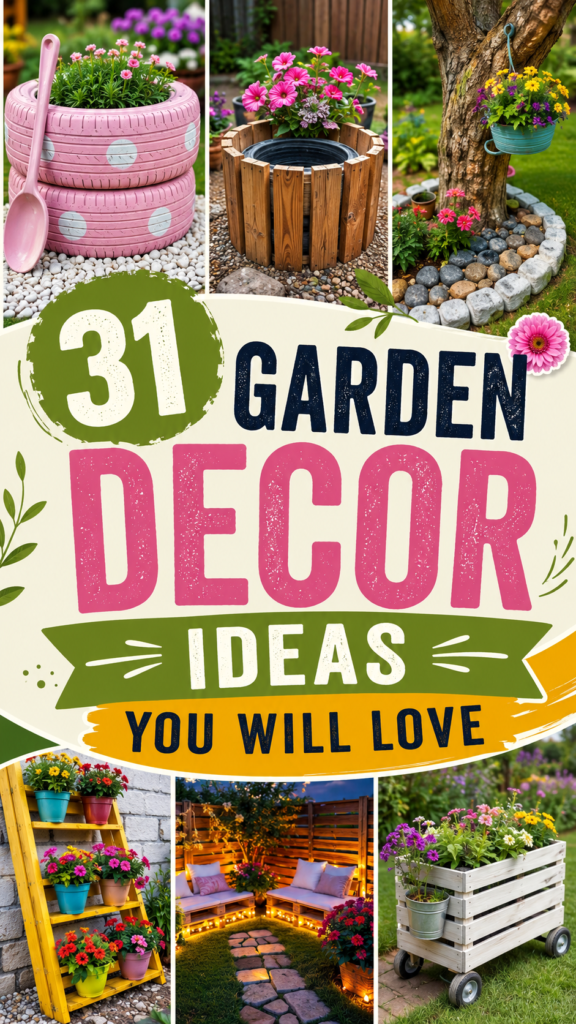
Garden crafts DIY projects are a wonderful way to turn an ordinary outdoor space into something colorful, personal, and full of character. The ideas featured here show how simple materials can become eye-catching planters, flower displays, garden pathways, seating areas, and decorative features. With a little creativity, old tires, wooden boards, crates, pallets, containers, and other everyday materials can take on a completely new purpose in the garden.
What makes these garden craft ideas especially appealing is their combination of practicality and personality. You do not need a perfectly landscaped yard to create an inviting outdoor space. A few handmade touches, colorful flowers, and thoughtfully arranged materials can make a garden feel much more welcoming. Whether you have a large backyard, a compact patio, or a small corner that needs attention, these DIY garden projects offer plenty of inspiration.
Key Takeaways
- Repurposed materials can become attractive garden planters and décor.
- Colorful flowers instantly bring handmade garden projects to life.
- Vertical displays are useful when garden space is limited.
- Wood, tires, crates, and containers can create distinctive outdoor features.
- A consistent color palette helps different DIY projects feel connected.
- Small decorative details can make a simple garden feel intentional and inviting.
Why Garden Crafts DIY Ideas Are So Inspiring
DIY garden décor gives you an opportunity to create an outdoor environment that reflects your own taste instead of relying entirely on ready-made decorations. The examples shown combine rustic materials with bright flowers, creating a relaxed look that feels creative rather than overly formal.
One of the biggest advantages of garden crafts is flexibility. A project can be as simple as painting an old container or arranging a few flowerpots, or it can become a larger weekend project involving wood, recycled materials, and a more detailed design. You can choose ideas according to your available space, budget, tools, and gardening experience.
Important: The most successful garden crafts do not have to be complicated. Focus on choosing useful materials, adding plants that suit your space, and creating a finished look that feels intentional.
Creative Tire Planters for Colorful Garden Displays
One of the most noticeable ideas in the collection is the use of old tires as oversized planters. A stack of painted tires can become a playful focal point, especially when filled with flowering plants. The rounded shape gives the planter visual interest, while a fresh coat of paint can completely change the appearance of an otherwise ordinary tire.
Pink is particularly eye-catching when paired with green foliage and small flowers. However, the same concept can be adapted to almost any garden style. Try soft sage green for a natural appearance, white for a clean look, or deeper shades for a more dramatic outdoor display.
How to Make a Tire Planter Stand Out
Rather than placing a tire planter randomly in the yard, think about where it can contribute to the overall design. A colorful planter can frame an entrance, brighten a dull corner, or become a centerpiece surrounded by gravel and smaller plants.
- Clean the tire thoroughly before painting.
- Choose an outdoor-friendly finish suitable for the material.
- Use contrasting foliage to make colorful flowers more noticeable.
- Surround the planter with stones or gravel for a finished appearance.
Rustic Wooden Planters With a Handmade Look
Wood is another standout material for garden crafts DIY projects. The image collection features wooden boards arranged around a round container to create a rustic planter with a much more substantial appearance. This is a clever way to combine a simple planting container with a decorative outer structure.
The vertical wooden slats create texture and give the planter a handcrafted character. Natural wood tones work beautifully with pink, purple, yellow, and white flowers, making this style particularly suitable for cottage-inspired or rustic gardens.
Choosing Wood for Outdoor Crafts
When building outdoor décor, choose materials appropriate for exterior conditions. Wood that is exposed to moisture and changing weather will eventually need maintenance, so consider how the project will be positioned and protected. A raised structure can also help keep the decorative wood away from constantly wet ground.
For a more polished appearance, keep the wooden pieces relatively consistent in width and height. For a relaxed rustic look, slight variations can add charm. The goal is not perfection. It is creating a cohesive feature that looks intentionally handmade.
Expert Insight
Think of every DIY planter as part of the garden rather than an isolated object. Repeating a material, color, or flower type in different areas can make individual projects look like one coordinated outdoor design.
Turn Vertical Spaces Into Garden Décor
Not every gardener has room for large flower beds. Vertical garden crafts can solve that problem while adding height and structure to an outdoor area. The bright ladder display shown in the collection is a great example of how an unused wooden structure can become a multi-level plant stand.
A ladder provides several surfaces for arranging pots at different heights. This makes the flowers easier to see and creates a layered effect that can make a small space feel fuller without taking up a large footprint.
Simple Vertical Garden Ideas
- Lean a sturdy decorative ladder against a suitable wall or fence.
- Place lightweight flower containers across different levels.
- Mix flower colors while keeping the overall palette coordinated.
- Use trailing plants on lower levels to create additional visual movement.
- Leave enough space between containers so each plant remains easy to maintain.
Vertical displays are especially useful around patios, fences, sheds, balconies, and narrow side gardens. They can also be moved or rearranged more easily than permanent garden beds.
Create a Colorful Flower-Filled Garden Corner
Flowers are what bring these garden craft projects to life. The examples feature abundant blooms in shades of pink, purple, yellow, red, and white. Rather than treating flowers as an afterthought, use them as part of the design from the beginning.
Color can transform even a simple handmade planter. A plain wooden structure becomes more vibrant when filled with colorful flowers, while a bright painted container can be balanced with softer foliage. Think about the relationship between the planter and the plants instead of selecting each element separately.
Use Color to Guide the Garden Design
A limited color palette can make a collection of different DIY projects feel surprisingly cohesive. For example, pink accents can be repeated in painted containers and flowers, while green foliage provides a natural connecting color throughout the space.
If you prefer a calmer appearance, choose two or three related colors. If you want something energetic and playful, combine several bright flower shades against neutral wood, stone, or greenery.
Make a Garden Path More Interesting
Garden crafts do not have to be limited to planters. The image also highlights decorative landscaping around trees, with stones forming a curved border and colorful plants filling the surrounding space. This approach can turn an ordinary tree base into a deliberate garden feature.
Stone borders are particularly effective because they provide structure while contrasting with soft foliage and flowers. Different shades and sizes of stones can create additional texture. A simple curved arrangement often looks more natural than a perfectly straight line.
For a cohesive result, repeat similar stones or edging materials elsewhere in the garden. This creates visual continuity and helps individual craft projects feel connected.
Build a Cozy Outdoor Seating Area
Garden décor can also improve how you use your outdoor space. One of the featured scenes shows a welcoming seating area surrounded by plants, wooden elements, and warm outdoor lighting. This demonstrates an important principle of garden design: decoration becomes more meaningful when it supports everyday activities.
A simple seating corner can become a relaxing destination with a few comfortable chairs, potted plants, and subtle lighting. You do not need a large patio to create this effect. Even a small lawn corner can be transformed into a cozy retreat when the elements are arranged thoughtfully.
Pro Tip: Add height around a seating area with plant stands, hanging containers, or vertical displays. This creates a more enclosed and comfortable feeling without building permanent walls.
Repurpose Crates Into Mobile Garden Features
Wooden crates can be surprisingly versatile in outdoor decorating. A crate can function as a planter, plant stand, storage feature, or movable garden accent. The wheeled planter concept shown in the image is particularly practical because mobility allows you to change the arrangement as your garden evolves.
A movable container can also be useful when you want to reposition plants for better presentation or adjust their location as conditions change. Larger planters may be difficult to move once filled, so adding suitable wheels before planting can make a big difference.
Give Old Materials a Second Life
Repurposing is one of the most enjoyable parts of garden crafts DIY. Instead of immediately throwing away an old container, wooden structure, tire, or crate, consider whether it could become part of the landscape.
The key is to look at an object for its shape and function rather than its original purpose. A tire can become a planter. A ladder can become a vertical display. A crate can become mobile garden storage or a flower box. Wooden boards can become decorative borders or planter surrounds.
Why This Matters
- Repurposing can reduce waste and give unused items a creative purpose.
- Handmade features make an outdoor space feel more personal.
- Mixing textures such as wood, stone, metal, and greenery adds visual interest.
How to Plan Your Own Garden Crafts DIY Project
Before starting a project, take a few minutes to consider the space where it will go. Measure the available area, observe how much sunlight it receives, and think about how the finished project will fit with existing plants and décor.
Then choose the project according to the space. A vertical planter may be better for a narrow area, while a large tire or wooden planter could work well as a focal point in an open yard.
A Simple DIY Planning Checklist
- Choose the location: Decide where the finished project will live.
- Select the material: Look for sturdy items that suit outdoor use.
- Pick the color: Match the project with your flowers and existing garden décor.
- Plan the plants: Consider the visual size, color, and growth habit of your chosen plants.
- Add finishing details: Use stones, gravel, paint, or other simple accents to complete the look.
Small Details That Make DIY Garden Décor Look Better
The difference between a collection of random objects and a cohesive garden often comes down to small details. Repeating colors is one of the easiest ways to create unity. If you use pink in one planter, consider adding a few pink flowers elsewhere. If you use natural wood, repeat that texture through another garden feature.
Spacing matters too. Give each decorative element enough room to be appreciated. Overcrowding can make even beautiful projects look messy, while thoughtful spacing allows flowers, planters, and pathways to stand out.
Finally, consider the view from different angles. A garden is experienced while walking through it, sitting in it, and looking at it from inside the house. Place taller elements toward the back and colorful focal points where they can be easily noticed.
At a Glance
- Turn tires into bold, colorful flower planters.
- Use wooden boards to create rustic planter surrounds.
- Transform ladders into attractive vertical plant displays.
- Use stones and flowers to frame trees and garden pathways.
- Repurpose crates and other materials into useful outdoor features.
Final Thoughts on Garden Crafts DIY
The best garden crafts DIY projects are the ones that make your outdoor space feel more like your own. The ideas featured here show just how much character can come from ordinary materials when they are combined with thoughtful design and beautiful plants.
Whether you start with one painted tire, a simple wooden planter, a vertical flower display, or a cozy seating corner, you can build your garden gradually. There is no need to transform everything at once. Choose one neglected area, give it a creative purpose, and let that project inspire the next.
Remember: A memorable garden is not necessarily the most expensive or perfectly landscaped one. Personal touches, creative reuse, colorful plants, and thoughtful arrangements can create an outdoor space that feels welcoming, cheerful, and uniquely yours.
With a little imagination, materials that might otherwise be overlooked can become beautiful garden features. Start small, experiment with color and texture, and enjoy the process of making your outdoor space more inviting one DIY project at a time.
Tags
Garden Crafts DIY DIY Garden Decor Upcycled Garden Ideas Garden Planters Outdoor DIY Projects Vertical Garden Ideas Backyard Decor Creative Gardening