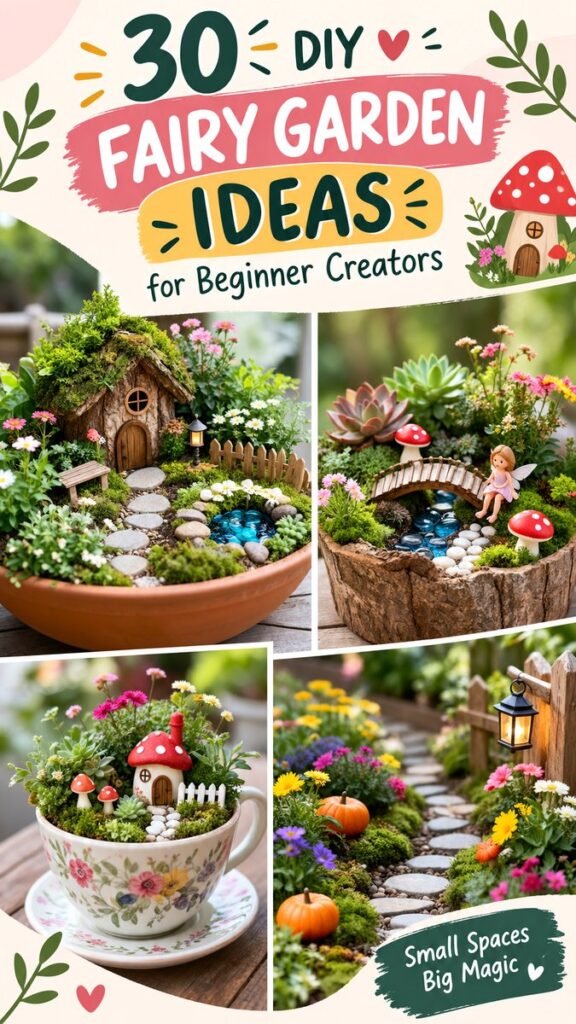
Creating a fairy garden DIY project is a wonderful way to turn an ordinary container, planter, or small corner of the garden into a charming miniature world. You do not need a large outdoor space or advanced crafting skills to get started. With a few plants, moss, pebbles, miniature accessories, and a little imagination, you can create a tiny garden scene that feels playful, colorful, and full of personality.
The ideas featured here focus on beginner-friendly fairy garden designs, including container gardens, succulent arrangements, miniature pathways, tiny cottages, bridges, mushrooms, fences, and cozy garden details. Whether you are decorating a patio, balcony, windowsill, or backyard, these DIY fairy garden ideas offer plenty of inspiration for creating a small space that feels special.
Key Takeaways
- Choose a container or garden area that matches the size of your plants and decorations.
- Use moss, pebbles, succulents, and flowers to create natural-looking miniature landscapes.
- Add pathways, tiny houses, bridges, fences, and other details to give the garden a story.
- Keep the design simple when starting so every element has room to stand out.
- Refresh seasonal details to keep your fairy garden interesting throughout the year.
What Is a Fairy Garden DIY Project?
A fairy garden is a miniature landscape designed with small plants and decorative elements that create the feeling of a tiny enchanted garden. The design can be as simple as a small bowl filled with succulents and stones or as detailed as a miniature woodland scene with a cottage, pathway, bridge, fence, and tiny accessories.
The beauty of a fairy garden DIY project is its flexibility. There is no single correct layout. You can work with whatever container, plants, stones, or decorative pieces you already have and build the scene gradually.
For beginners, the easiest approach is to think in layers. Start with the plants and growing medium, establish a pathway or central feature, and then add decorative details. This keeps the garden from becoming overcrowded and makes the finished arrangement look intentional.
Important: The most successful miniature gardens usually have a clear focal point. A tiny house, colorful plant grouping, winding path, or small bridge can give the entire arrangement a visual center without requiring dozens of decorations.
Choose the Right Space for Your Miniature Garden
Before buying supplies, decide where your fairy garden will live. A small container works beautifully for balconies, patios, porches, and indoor displays, while a larger planter can support several plants and more detailed scenery.
Look at the amount of natural light available in your chosen location. Your plants should be selected according to the conditions of the space rather than simply choosing the most decorative options. A garden that suits its environment will be easier to maintain.
Small Containers for Beginners
Bowls, shallow planters, decorative pots, wooden boxes, and even unusual containers can become miniature garden settings. A teacup-style container can create a particularly charming display because its small scale naturally encourages a simple design.
When working with a compact container, avoid adding too many large accessories. Choose one main feature and a few small accents so the plants remain visible.
Larger Outdoor Fairy Gardens
A larger garden area gives you more freedom to create pathways and different sections. You can use stones to form a winding walkway, group plants into little beds, and place miniature structures along the route.
Leaving some open space is just as important as adding decorations. Open areas help the miniature features stand out and make the overall composition feel more natural.
Essential Materials for a DIY Fairy Garden
You can create a beautiful fairy garden without an enormous supply list. Begin with a container or suitable garden space, then gather materials that provide different textures and heights.
- Potting medium appropriate for your chosen plants
- Small succulents, ground-cover plants, or flowering plants
- Moss or other natural-looking ground cover
- Small pebbles and decorative stones
- Miniature houses or garden structures
- Tiny fences, benches, bridges, or pathways
- Small mushrooms and other garden accents
- Optional miniature figures and decorative accessories
The goal is not to use everything at once. Instead, select a few materials that work together. Combining smooth stones with soft moss, leafy plants, and rustic wood creates a pleasing contrast of textures.
30 DIY Fairy Garden Ideas to Try
These ideas can be used individually or mixed together to create a custom miniature landscape. Start with one concept and add details as your confidence grows.
1. Teacup Fairy Garden
Use a large decorative cup as a tiny planter and combine compact greenery with pebbles and a miniature house. Keep the accessories small to maintain the charming scale.
2. Succulent Fairy Garden
Succulents make an eye-catching foundation for a miniature landscape. Arrange several shapes together and surround them with light-colored stones for contrast.
3. Mini Cottage Garden
Make a tiny cottage the focal point. Surround it with moss, flowers, stepping stones, and a small fence to create a welcoming miniature home.
4. Pebble Path Garden
Create a winding pathway using small, smooth stones. Curved paths can make a small container appear more detailed and encourage the eye to explore the entire scene.
5. Mini Bridge Garden
Add a tiny wooden bridge over a section of blue decorative stones or moss. This simple feature can instantly give the arrangement a storybook feel.
6. Mossy Woodland Garden
Use moss as the main ground layer and add rustic wood accents. A tiny cottage tucked among greenery can create a cozy woodland atmosphere.
7. Flower-Filled Fairy Garden
Use small colorful blooms to create a cheerful miniature garden. Mix different flower colors while keeping the decorative pieces relatively simple.
8. Fairy Garden in a Wooden Box
A wooden box can become a compact scene with several levels. Place taller greenery toward the back and use a pathway to connect the miniature features.
9. Mini Garden With a Fence
A small picket fence adds structure and makes the garden feel like a tiny property. Position it around the edge rather than blocking the central focal point.
10. Mushroom-Themed Garden
Decorative mushrooms bring playful color and recognizable miniature-garden charm. Use them as small accents among moss and low-growing plants.
11. Fairy Garden With a Tiny Bench
A miniature bench can create a cozy destination at the end of a stone path. Add a few plants around it to frame the seating area.
12. Mini Garden With Lanterns
Tiny lantern-style decorations add visual interest and make the scene feel like a complete little outdoor space.
13. Flower Pot Fairy Village
Use a larger flower pot to create several miniature zones. Place tiny structures among flowers and greenery to suggest a little village.
14. Fairy Garden With Succulent Clusters
Group succulents in different sizes around a central path. Their varied forms create texture without needing a large number of decorative objects.
15. Mini Garden With a Water Feature
Blue stones or another decorative blue element can suggest a tiny pond or stream. Frame it with pebbles and greenery for a natural transition.
Expert Insight
Think of your fairy garden like a miniature landscape rather than a collection of decorations. Vary the height, texture, and placement of each element. A tall plant behind a tiny house, a low moss layer around a pathway, and a few stones near the front can create depth with very little effort.
16. Rustic Cottage Garden
Choose weathered-looking wood, natural stones, moss, and simple greenery for a rustic design. This style works especially well with earthy containers.
17. Fairy Garden With Stepping Stones
Place small stones in a loose line leading toward the main feature. Slightly irregular spacing can make the path feel more organic.
18. Mini Flower Walkway
Line a narrow pebble path with tiny flowering plants. The repeated flowers naturally guide attention through the garden.
19. Woodland Cottage Corner
Tuck a miniature cottage into a corner surrounded by moss and leafy plants. The partially hidden structure creates a sense of discovery.
20. Fairy Garden With a Tiny Sign
A miniature sign can add personality without taking up much space. Position it near the entrance or beside a pathway.
21. Mini Garden in a Bowl
A shallow bowl is ideal for creating a low-profile display. Use stones and compact plants to form distinct areas within the container.
22. Colorful Cottage Scene
Combine bright flowers with a rustic miniature house for a lively design. Choose one or two dominant colors so the scene remains cohesive.
23. Mini Garden With a Garden Gate
A tiny gate can serve as an inviting entrance. Connect it to a short pebble path that leads toward the main decorative feature.
24. Fairy Garden With Natural Stones
Use stones in several sizes to create borders, pathways, and visual layers. Natural materials help the miniature scene blend with surrounding plants.
25. Miniature Garden With a Woodland Character
A small decorative figure can add a sense of life to the scene. Place it near a cottage, path, bridge, or plant grouping rather than in the center of everything.
26. Cottage and Flower Bed
Surround a tiny cottage with miniature flower beds. Use stones to define the planting area and create a neat border.
27. Layered Fairy Garden
Create depth by positioning taller plants behind medium-sized features and low ground cover toward the front. This technique makes compact arrangements look fuller.
28. Seasonal Fairy Garden
Keep the main structure simple and change small accessories with the seasons. Flowers, tiny pumpkins, colorful stones, or other removable accents can refresh the display.
29. Fairy Garden With a Winding Trail
A curved trail can make even a small arrangement feel expansive. Start near the front edge and guide it toward the miniature house or garden feature.
30. Simple Beginner Fairy Garden
When in doubt, keep it simple. Choose one container, a few plants, a handful of stones, and one miniature feature. This is an easy starting point that can be expanded later.
How to Arrange a Fairy Garden for a Balanced Look
Good composition can make a simple fairy garden look polished. Start by choosing the largest or most interesting feature as your focal point. This could be a miniature cottage, a bridge, or an especially attractive plant.
Next, establish a visual route. A pathway made from pebbles can lead the eye from the front of the garden toward the focal point. Surround that route with plants and ground cover, leaving enough space for the path to remain clearly visible.
Finally, add small details. A fence, bench, lantern, mushroom, sign, or decorative figure can fill a small gap without overwhelming the design.
Pro Tip: Build your design from large elements to small ones. Plant placement and the main structure should come first. Tiny decorations are easiest to position once the overall landscape is already balanced.
Beginner Tips for Maintaining a Miniature Garden
A fairy garden is still a garden, so the plants need appropriate care. Watering needs will vary depending on the plants and growing conditions. Check the soil and observe how quickly it dries rather than following a rigid schedule.
Keep the miniature accessories tidy by occasionally removing fallen leaves and debris. If moss or ground cover begins to hide pathways, gently clear enough space to restore the original layout.
Avoid Overcrowding
It can be tempting to keep adding charming accessories, but too many objects can make a miniature garden difficult to read. Leave small areas of open space so the eye can move between the plants, path, and decorative features.
Mix Textures and Heights
Combine smooth stones, soft moss, leafy plants, flowers, and rustic wood for visual variety. Different heights are equally useful. Taller greenery can form a background while low plants and pebbles define the foreground.
How to Make Your Fairy Garden Feel More Magical
The charm of a miniature garden comes from the tiny details. Instead of trying to make every section elaborate, create little moments that suggest a story. A path leading to a cottage, a bridge crossing blue stones, or a bench surrounded by flowers can make the viewer imagine what happens inside the miniature world.
Natural materials are especially effective because they help decorations blend into the landscape. Moss can soften hard edges, stones can define pathways, and plants can partially frame structures.
Color also plays an important role. Bright flowers can create a cheerful garden, while greens and earthy browns produce a calmer woodland effect. A small amount of contrasting color can make a tiny focal feature stand out.
Why DIY Fairy Gardens Are Great for Small Spaces
You do not need a large yard to enjoy gardening creativity. Container fairy gardens are particularly useful for small outdoor areas because they bring plants and decorative scenery into a compact footprint.
A miniature garden can also be changed over time. Rearrange the stones, replace seasonal decorations, introduce a new plant, or redesign the pathway when you want a fresh look. This makes the project feel more like an ongoing creative hobby than a one-time craft.
For beginners, that flexibility is a major advantage. You can start with a very small arrangement and gradually experiment with more complex layouts as you learn what works in your space.
At a Glance
- Pick a container or location that fits your available space.
- Start with plants, moss, and stones before adding tiny accessories.
- Create a clear focal point such as a cottage, bridge, or pathway.
- Use different textures and heights to create depth.
- Keep experimenting with seasonal details and new layouts.
Final Thoughts on Fairy Garden DIY Ideas
A fairy garden DIY project is a simple way to combine gardening and creativity in one charming display. From a tiny teacup arrangement to a larger outdoor miniature landscape, there are countless ways to personalize the concept. The most important thing is to choose a scale that feels manageable and build the scene one layer at a time.
Start with a few healthy plants, add moss or stones for texture, establish a pathway, and choose one feature that gives your garden personality. Once the foundation is in place, small details such as fences, benches, lanterns, mushrooms, bridges, and miniature cottages can bring the scene together.
Whether you are decorating a balcony, patio, planter, or garden corner, these fairy garden ideas can help turn a small space into something playful and memorable. Let your creativity guide the layout, keep the design comfortable for the plants, and do not be afraid to rearrange things until the garden feels right.
Start small, have fun, and let your miniature garden grow into a little world of its own.
Tags
Fairy Garden DIY Fairy Garden Ideas DIY Garden Miniature Garden Container Garden Succulent Garden Garden Crafts Miniature Garden Decor