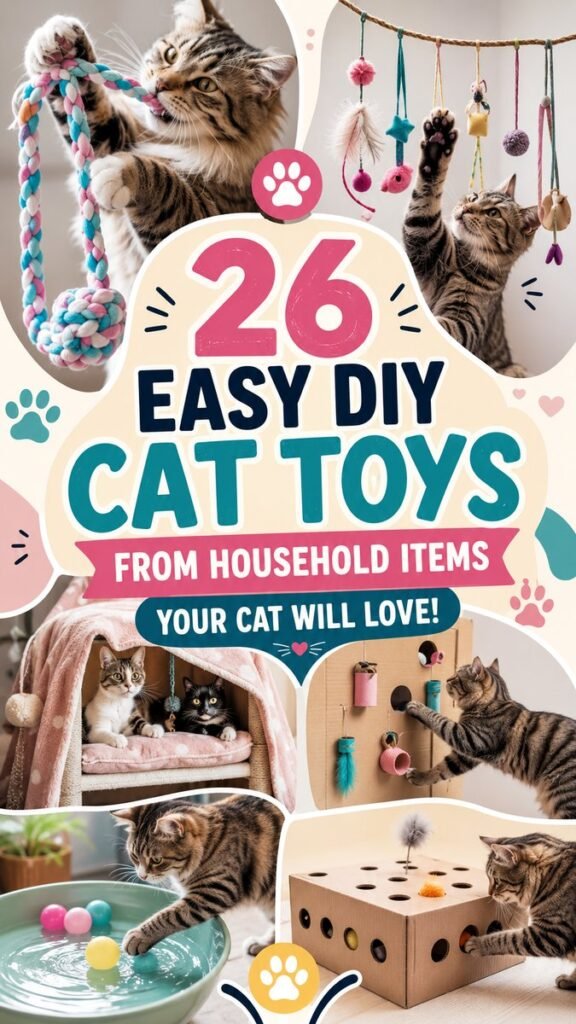
Keeping a cat entertained does not have to mean buying a new toy every time your furry friend gets bored. With a few simple household materials, you can create engaging DIY cat toys that encourage chasing, batting, pouncing, pawing, and exploring. The ideas shown here combine colorful fabric, cardboard, feathers, soft materials, and everyday objects to turn ordinary items into playful enrichment.
DIY cat toys are especially appealing because they can be inexpensive, customizable, and easy to refresh. A braided fabric toy can become an interactive tug-and-chase game, while a cardboard puzzle can give a curious cat something interesting to investigate. Even a simple blanket fort can create a cozy space for hiding and playful ambushes.
Key Takeaways
- Turn safe household materials into creative cat enrichment activities.
- Use movement, texture, and curiosity to make homemade toys more engaging.
- Cardboard boxes and fabric can become surprisingly versatile play tools.
- Rotate toys instead of leaving every option available at once.
- Inspect homemade toys regularly for loose pieces, fraying, or damage.
Why DIY Cat Toys Are Worth Trying
Cats naturally enjoy activities that let them stalk, chase, pounce, swat, and investigate. A homemade toy does not need to be complicated to support those behaviors. What matters most is creating opportunities for movement and curiosity.
DIY projects also make it easy to vary the experience. One day, your cat might enjoy batting at hanging fabric strips. Another day, a cardboard box with openings may provide a more interesting challenge. Changing the shape, texture, movement, or location of a toy can make familiar materials feel new again.
Important: The best homemade cat toys are simple, sturdy, and supervised. Avoid materials that splinter, unravel easily, contain toxic substances, or have tiny detachable pieces that could become a swallowing hazard.
1. Braided Fabric Cat Toys
Old fabric scraps can be transformed into colorful braided toys with very little effort. The braided design shown in the inspiration offers multiple textures and a shape that is easy for a cat to grab and bat around.
Choose clean fabric that does not shed excessively. Cut several strips, knot one end securely, braid the strips together, and finish with another firm knot. Keep the design straightforward rather than adding beads, buttons, bells, or other small decorations.
Make It More Interesting
Drag the finished toy slowly across the floor, pause occasionally, and let your cat decide when to pounce. Interactive play can be more exciting when the toy changes direction and speed instead of moving constantly.
2. Hanging Fabric and Feather Toys
Hanging toys can create an engaging visual display while giving cats something to reach toward. The colorful strips, feathers, soft shapes, and dangling pieces shown in the image demonstrate how varied textures can encourage pawing and batting.
A simple hanging toy can be made from sturdy fabric strips attached to a secure horizontal support. If feathers are used, check them frequently and remove the toy if pieces begin coming loose. These toys are best used during supervised play rather than left unattended.
Create Movement
Place the hanging elements at different lengths so they move independently. A gentle breeze or a person moving the toy can create motion that catches a cat’s attention. Make sure hanging materials cannot become wrapped around a cat’s body or neck.
Cardboard Cat Toys for Curious Cats
Cardboard is one of the most useful materials for homemade cat enrichment. It is easy to cut, reshape, and recycle, making it ideal for simple puzzles and activity stations. The image features cardboard structures with holes that allow cats to reach inside and investigate hidden objects.
3. Cardboard Paw Puzzle
Start with a clean cardboard box. Create several openings that are large enough for your cat’s paw to enter comfortably. Place a safe toy inside or behind the openings, allowing your cat to work out how to reach it.
The goal is not to make the puzzle difficult. Instead, create a simple challenge that rewards curiosity. Some cats will enjoy batting at an object through one opening, while others may prefer exploring several compartments.
Keep the Puzzle Safe
Remove staples, tape, plastic pieces, sharp edges, and loose cardboard fragments. Check every opening for rough edges before giving the box to your cat. Replace the project when it becomes heavily scratched, wet, or damaged.
4. Cardboard Treat and Toy Box
A shallow cardboard box can also become a simple activity station. Cut a few openings across the top or sides and place lightweight toys where your cat can see or smell them. This encourages reaching, batting, and investigation.
If you use treats, keep portions appropriate for your cat’s normal diet. You can also skip food entirely and use a favorite toy as the reward. The objective is to make your cat interact with the box rather than simply stare at it.
Why This Matters
Good DIY cat toys are not about complexity. They are about creating safe opportunities for cats to move, investigate, and make choices.
- Vary textures such as fabric, cardboard, and soft materials.
- Encourage short bursts of chasing and pawing.
- Let your cat interact at its own pace instead of forcing play.
5. A Cozy Blanket Fort for Cats
Not every DIY cat project needs to be a traditional toy. A blanket fort can provide a cozy play and resting area while also creating opportunities for hiding and exploration. The image shows a soft fabric-covered structure with cats relaxing inside.
Use a stable frame or furniture arrangement that cannot easily collapse. Drape a clean blanket over part of the structure while leaving plenty of open space for ventilation and easy entry and exit.
A fort can become even more engaging when you place a lightweight toy nearby. Some cats enjoy watching from inside and reaching out when something passes by the entrance.
6. Fabric Strip Play Station
Long strips of fabric can be attached to a safe play area to create movement and visual interest. Choose pieces that are securely fastened and inspect them often for fraying.
Use different lengths and textures to create variety. Soft cotton strips, fleece pieces, and other sturdy fabric scraps can provide different sensations as your cat bats at them.
Pro Tip: Toy rotation can make a small collection feel much bigger. Put some toys away for a few days, then bring them back later. Familiar objects can regain interest when they are not constantly available.
7. Simple Water Play With Floating Balls
The image also shows a shallow basin of water with lightweight floating balls. This can provide a different kind of sensory activity for cats that are comfortable around water.
Use a stable, shallow container placed on a surface that can tolerate splashes. Add only a small amount of clean water and choose large floating objects that cannot be swallowed. Always supervise this type of activity.
Some cats may enjoy touching the floating objects with a paw and watching them move across the water. Others may have no interest at all, which is perfectly normal. Let your cat choose whether to participate.
8. DIY Toys That Encourage Hunting Behavior
Many of the projects in this collection work because they imitate aspects of play that cats naturally find interesting. A moving fabric strip can resemble something being chased. A feather can attract attention through movement and texture. A cardboard opening can create the feeling of searching for something hidden.
You can build a simple play routine around these ideas without buying specialized equipment. Move a toy, pause, let your cat approach, and then change direction. Giving your cat moments to watch and plan can make the interaction more engaging.
Mix Active and Quiet Activities
A balanced homemade toy collection can include both energetic activities and quieter enrichment. Braided toys and moving wands can encourage active play, while cardboard boxes and blanket forts provide opportunities to investigate, hide, and rest.
This variety is useful because cats have different personalities. A playful kitten may immediately investigate dangling toys, while a more cautious adult cat may prefer a quiet cardboard box placed in a familiar area.
How to Make DIY Cat Toys Safer
Safety should always come before creativity. Homemade projects can be excellent enrichment, but they need regular inspection. Cats can chew, scratch, pull, and tear materials apart surprisingly quickly.
- Choose clean, non-toxic, cat-safe materials.
- Avoid loose strings, ribbons, elastic, and tiny detachable decorations.
- Remove toys immediately if they become damaged or heavily frayed.
- Supervise toys that contain feathers, strings, water, or movable components.
- Make sure cardboard edges are smooth and free from sharp pieces.
- Keep hanging toys positioned so they cannot become wrapped around the cat.
- Store interactive toys safely when supervised play is finished.
Watch Your Cat’s Preferences
The most successful DIY cat toy is often the one your individual cat naturally chooses. Pay attention to whether your cat prefers chasing, batting, hiding, climbing, exploring, or quietly investigating. You can then adjust your homemade projects around those preferences.
If your cat loses interest in a particular project, do not assume the idea failed. Try changing the location, introducing a different texture, or using the toy during a short interactive session. Sometimes a small change is enough to renew curiosity.
Easy DIY Cat Toy Ideas to Try Today
With the visual inspiration in mind, you can build a small homemade enrichment collection from materials already around the house. Try starting with one or two projects instead of making everything at once.
- Braided fabric toy: Turn sturdy fabric scraps into a simple grab-and-chase toy.
- Hanging fabric display: Combine secure strips and safe soft elements for supervised batting.
- Cardboard paw puzzle: Cut openings into a box and hide a lightweight toy inside.
- Blanket fort: Create a cozy hideaway with a stable structure and soft blanket.
- Floating-ball activity: Offer a shallow water play setup for cats that enjoy it.
- Cardboard activity box: Add different openings to encourage reaching and exploration.
At a Glance
- Household materials can become creative cat enrichment.
- Cardboard is especially useful for simple interactive puzzles.
- Fabric toys offer variety through texture and movement.
- Rotate activities to keep familiar toys interesting.
- Always inspect homemade toys and supervise higher-risk activities.
Conclusion: Make Playtime More Creative With DIY Cat Toys
DIY cat toys are a fun way to turn everyday household materials into engaging enrichment. From colorful braided fabric and hanging play elements to cardboard puzzles, blanket forts, and floating-ball activities, there are plenty of simple ideas to explore.
The real advantage is flexibility. You can experiment with different textures, shapes, movements, and play locations while paying attention to what your cat enjoys most. You do not need an elaborate project or expensive supplies to make playtime more interesting.
Start with a simple cardboard puzzle or braided fabric toy, supervise the first few play sessions, and inspect everything regularly. With a little creativity and a safety-first approach, ordinary household items can become exciting additions to your cat’s daily enrichment routine.