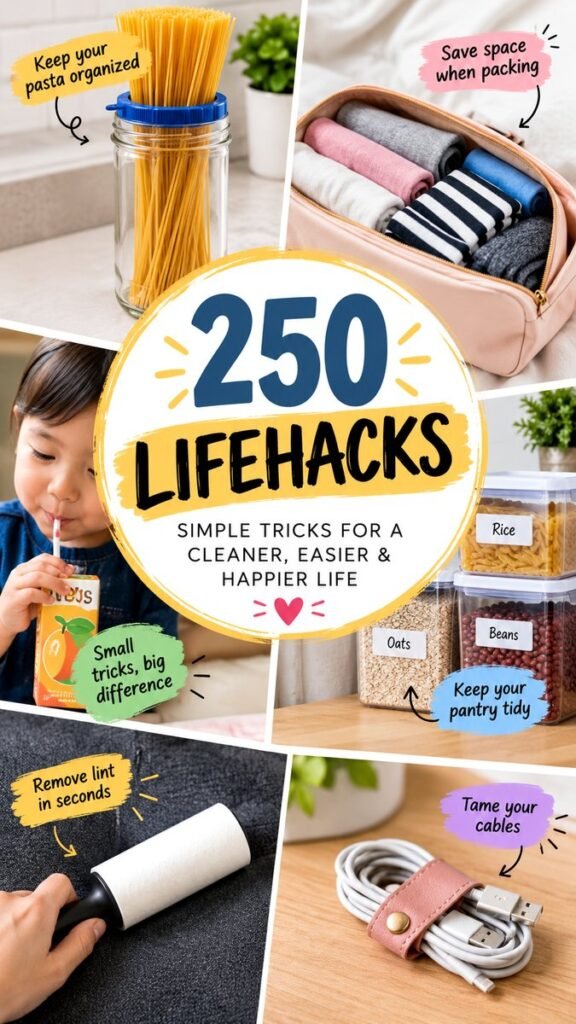
Simple DIY tips and tricks can make everyday routines feel easier, more organized, and far less frustrating. The best life hacks often do not require expensive products or complicated projects. Instead, they use ordinary household items in clever ways to solve small problems around the home, while traveling, organizing, cleaning, and managing daily essentials.
From keeping pasta neatly stored to making more room in a suitcase, organizing pantry staples, controlling charging cables, and quickly removing lint from clothing, these practical ideas are all about finding smarter ways to handle familiar tasks. A few small changes can save space, reduce clutter, and help your home run more smoothly.
Key Takeaways
- Use everyday containers and household items in more practical ways.
- Organize dry foods to keep cabinets and counters looking tidy.
- Roll clothing to make better use of suitcase and storage space.
- Use simple tools to keep lint, cords, and small household clutter under control.
- Choose DIY solutions that are easy to repeat and convenient for everyday life.
Why Everyday DIY Tips and Tricks Matter
Many household frustrations come from tiny problems. A drawer becomes tangled with charging cords. Pantry ingredients are difficult to identify. Clothes take up too much room when packing. Loose spaghetti is awkward to store. These may not seem like major issues individually, but solving them can make daily routines noticeably more convenient.
DIY tips and tricks are useful because they encourage you to look at ordinary objects differently. A container can become a storage solution, a simple strap can keep cables together, and a basic lint roller can quickly refresh fabric. The goal is not to create complicated crafts. It is to find practical solutions that fit naturally into your routine.
Important: The most useful life hacks are the ones that solve a real problem without creating another one. Prioritize simple, safe, reusable solutions that save time, space, or effort.
Smart Storage Ideas for the Kitchen
The kitchen is one of the easiest places to benefit from clever organization. Dry ingredients, pasta, grains, beans, and other pantry staples can quickly make shelves look crowded when they remain in mismatched packages. Clear containers can make the contents easier to see while creating a more consistent appearance.
Keep Pasta Neat and Easy to Reach
Long pasta can be surprisingly awkward to store because opened packages are often too tall for some shelves and too fragile to stack. A tall, clean container can provide a more stable storage option while keeping strands together.
Choose a food-safe container that is tall enough for the pasta you normally buy. Keep the container dry and use a secure lid to help protect the contents. If you regularly store different varieties, labeling each container can make meal preparation faster.
- Use a tall container for long pasta varieties.
- Keep the container in a cool, dry pantry area.
- Label containers when storing several similar ingredients.
Create a More Organized Pantry
Clear pantry containers are especially useful for ingredients such as rice, oats, beans, and small pasta shapes. When the contents are visible, it is easier to see what you have before making a shopping list or preparing dinner.
For a cleaner pantry, group similar foods together. Place grains in one area, baking ingredients in another, and frequently used staples where they are easy to reach. Consistent labeling can also reduce the time spent searching through shelves.
A Simple Pantry Reset
- Remove items from one shelf at a time.
- Group similar ingredients together.
- Transfer suitable dry goods into clean containers.
- Add simple labels when helpful.
- Return frequently used foods to the easiest-to-reach positions.
Make Packing Easier With Simple Clothing Hacks
Travel organization is another area where small changes can have a big impact. Clothing can quickly fill a suitcase, especially when bulky folding methods leave unused gaps between items. Rolling clothes is a simple alternative that can help you arrange more pieces efficiently.
Roll Clothes Instead of Folding Everything
Lay each lightweight garment flat, fold it into a compact shape, and roll it firmly from one end to the other. Place the rolled pieces side by side inside the suitcase rather than creating one large stack.
This approach can make it easier to see individual garments without disturbing the entire suitcase. It is particularly convenient for casual shirts, lightweight tops, pajamas, and similar items that are easy to roll.
Pro Tip: Pack by category rather than simply filling every available space. Keep similar clothing together so you can find what you need quickly and avoid unpacking your entire bag.
Use Small Sections to Control Suitcase Clutter
Instead of treating a suitcase as one large storage area, divide it mentally into sections. Keep tops together, bottoms together, and smaller accessories in a separate area. This makes the contents easier to manage throughout a trip.
For short trips, planning outfits in advance can reduce overpacking. Choose versatile pieces that can be combined in several ways. When every item has a purpose, your suitcase becomes easier to organize and lighter to manage.
Keep Charging Cables Under Control
Charging cables are small, useful, and remarkably easy to lose or tangle. A few cables placed in a drawer can quickly become a frustrating knot. A simple reusable strap can keep each cable neatly coiled and ready to use.
Create a Simple Cable Organization System
Start by separating cables according to their purpose. Keep phone charging cables together, computer accessories in another group, and less frequently used cords in a separate container.
Coil each cable loosely instead of wrapping it tightly around your hand or bending it sharply. Secure the coil with a small reusable strap. This keeps the cord contained while making it easy to identify when needed.
- Store cables by device or purpose.
- Use reusable straps instead of disposable ties whenever possible.
- Avoid sharp bends that can place unnecessary stress on cords.
- Label similar-looking cables to make identification faster.
Why This Matters
Good organization is less about having more storage and more about giving frequently used items a predictable place. When cables, pantry foods, clothing, and household tools have designated locations, everyday tasks become quicker and less stressful.
- Less time searching for everyday items.
- Fewer tangled cords and crowded storage areas.
- A simpler routine that is easier to maintain.
Refresh Clothing Quickly With a Lint Roller
A lint roller is a small tool that can make a noticeable difference when clothing, upholstery, or other fabric surfaces collect lint, hair, dust, or loose fibers. Keeping one somewhere convenient means you can quickly freshen an outfit before leaving the house.
Make Lint Removal Part of Your Routine
Run the roller gently across the fabric using short, controlled passes. Pay extra attention to darker materials, where loose fibers tend to be more visible. A quick pass before leaving home can help clothing look cleaner and more polished.
You can also keep a lint roller near a wardrobe, entryway, or laundry area. The best storage location is one where you will naturally remember to use it.
Small Tool, Big Convenience
The real value of a simple cleaning tool is accessibility. If it is hidden away in a crowded cabinet, it may not be used. Keep frequently needed tools visible or within easy reach so small maintenance tasks become part of your normal routine.
Make Daily Routines More Efficient
Life hacks work best when they fit the way you already live. Instead of adopting dozens of complicated systems, choose a handful of ideas that address your biggest sources of clutter or inconvenience.
For example, if your pantry is difficult to navigate, start there. If packing is always stressful, focus on clothing organization. If your desk is filled with tangled cables, create a dedicated cable system. One successful change often makes it easier to identify the next improvement.
Choose Solutions You Will Actually Maintain
An organization method only works if it is easy enough to repeat. A system that takes several minutes to restore every evening may eventually be abandoned. Simple containers, labels, straps, and designated storage spots are useful because they require little effort once established.
Think about the action you perform most often. If you use something every day, store it where it is immediately accessible. If something is used occasionally, it can live in a less prominent location. This simple principle keeps high-traffic areas from becoming cluttered.
More DIY Tips and Tricks to Try
Once you begin looking for practical solutions, you will notice opportunities throughout the home. The same basic principles can be applied to closets, kitchens, desks, bathrooms, laundry rooms, and travel bags.
- Group similar household items so they are easier to find.
- Use clear storage when visibility helps you remember what you own.
- Label containers when several ingredients or supplies look alike.
- Keep everyday tools close to the areas where they are used.
- Reuse suitable household items when they provide a safe and practical storage solution.
- Declutter before adding more organizers so you are only storing what you need.
A useful DIY trick does not need to look complicated. In fact, the simplest ideas are often the easiest to remember and maintain. Focus on convenience, accessibility, and making your existing space work harder for you.
How to Build Your Own Life Hack Collection
Instead of trying every idea at once, create a small personal collection of DIY tips and tricks that solve problems you regularly encounter. Keep notes on ideas that genuinely improve your routine, then test them one at a time.
Start With Your Biggest Daily Frustrations
Notice what repeatedly slows you down. Is your pantry difficult to organize? Do your clothes take up too much suitcase space? Are charging cables always tangled? Does lint appear on your favorite dark clothing?
These frustrations are clues. Once you identify them, look for a solution that uses items you already have or can obtain easily. The best DIY tips are practical because they fit naturally into your existing routine.
Keep Experimenting With Simple Improvements
Organization is not a one-time project. Your needs change, your household changes, and the way you use your space can change over time. Give yourself permission to adjust a system when it stops working.
Try a different container, move an item closer to where it is used, or simplify a storage method that has become too complicated. Small improvements can add up to a much more comfortable daily environment.
Quick Points
- Store pasta and dry goods in practical, clearly labeled containers.
- Roll suitable clothing to make packing and organizing easier.
- Secure charging cables neatly to prevent unnecessary tangles.
- Keep a lint roller accessible for quick fabric touch-ups.
- Choose simple systems that are easy to maintain every day.
Conclusion
The most effective DIY tips and tricks are not necessarily the most elaborate. They are the small ideas that make ordinary tasks easier, reduce clutter, save useful space, and help you stay organized without adding unnecessary work.
Whether you are arranging pantry staples, packing a suitcase, organizing charging cables, or keeping clothing looking fresh, a little creativity can transform the way you use everyday items. Start with one problem that bothers you most, try a simple solution, and build from there.
Remember: A better-organized life does not require perfection. A few practical changes that save time and reduce everyday friction can make a surprisingly meaningful difference.
Keep exploring simple DIY tips and tricks, test the ideas that fit your routine, and save the ones you want to revisit when you need a little inspiration.
Tags
DIY Tips DIY Tricks Life Hacks Home Organization Storage Ideas Cleaning Hacks Organization Tips Easy Home Hacks