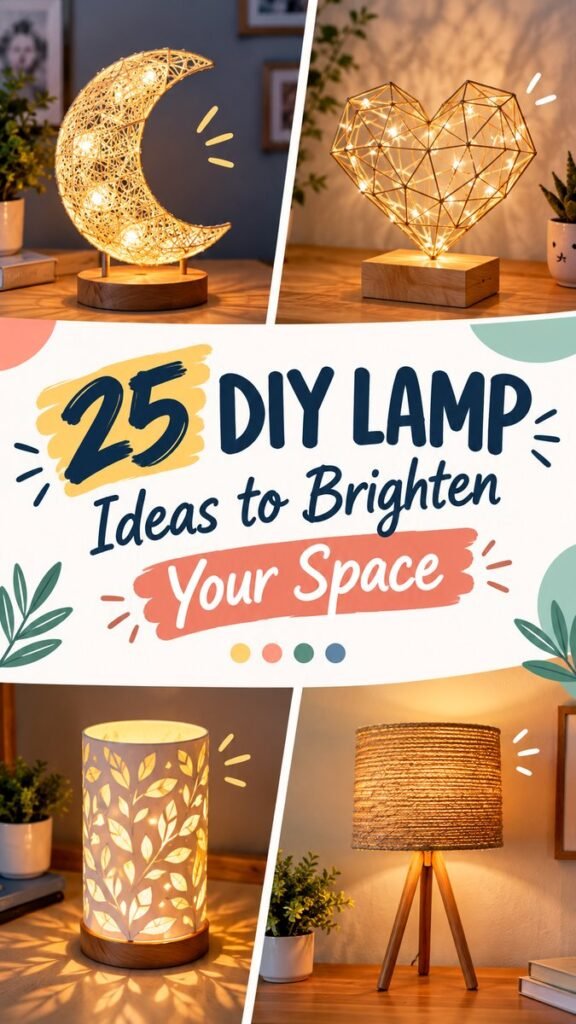
Lighting can completely change the feeling of a room, and a creative lamp DIY project is one of the easiest ways to make that transformation personal. A handmade lamp can become more than a source of light. It can serve as a decorative focal point, add warmth to a bedroom, create a cozy reading corner, or bring texture and character to an otherwise simple space. The ideas featured here showcase just how many directions you can take a DIY lamp project, from glowing geometric shapes and moon-inspired designs to botanical shades and rustic rope lamps.
Key Takeaways
- DIY lamps can combine practical lighting with personalized home decor.
- Wire, paper, rope, wood, and decorative shades can create very different visual effects.
- Warm-toned lighting is especially effective for creating a comfortable, inviting atmosphere.
- Simple lamp structures can be customized to suit bedrooms, living rooms, offices, or reading areas.
- Choose lighting components carefully and prioritize safe construction around electrical parts.
25 DIY Lamp Ideas to Brighten Your Space
The beauty of a lamp DIY project is that you do not need to settle for a standard store-bought design. A handmade light can reflect your favorite colors, materials, shapes, and decorating style. The collection of ideas shown here offers inspiration for creating statement pieces that feel artistic while still being useful in everyday spaces.
Some designs focus on sculptural shapes, such as illuminated hearts and curved moon forms. Others use familiar materials in unexpected ways, including woven rope, translucent paper, and perforated decorative surfaces. Even a simple arrangement of round paper shades can become an impressive floor lamp when several elements are stacked vertically.
Important: The most successful DIY lamp projects balance appearance with function. Think about where the lamp will sit, how much light you need, and how the materials will interact with the light before choosing your final design.
1. Create a Sculptural Geometric Lamp
Geometric lamps are a wonderful choice when you want your lighting to feel modern and artistic. A lightweight framework made from wire or similar craft materials can be shaped into angular forms, then paired with small lights to create an eye-catching silhouette.
A heart-shaped design is particularly effective as a decorative accent. When illuminated, the structure becomes a glowing piece of wall or tabletop decor. You can keep the design symmetrical and polished or embrace a more handmade appearance with overlapping lines and irregular details.
How to Make the Look Work
- Start with a simple outline that is easy to support.
- Use lightweight materials so the finished lamp remains manageable.
- Place small lights inside or along the structure for an even glow.
- Keep the base stable if the lamp is designed for a tabletop.
For a bedroom, a soft geometric lamp can provide decorative lighting without overwhelming the rest of the room. Pair it with neutral bedding, natural wood, or subtle textiles for a balanced look.
2. Bring a Moon-Inspired Glow Indoors
A rounded moon-style lamp can instantly become the focal point of a nightstand, shelf, desk, or reading nook. The inspiration shown in the design collection uses a softly glowing spherical form to create an atmospheric effect rather than harsh overhead illumination.
This type of DIY lamp works particularly well when you want your room to feel calm and cozy. A textured or translucent surface diffuses the light, making the fixture feel softer than a bare bulb. A simple wooden or sculptural stand can also turn the lamp into a decorative object when it is switched off.
For an especially inviting result, consider using a warm LED light source. The gentle illumination can complement wood furniture, woven accessories, neutral walls, and other cozy bedroom decor.
3. Make a Botanical Cutout Lamp
Nature-inspired lighting is another beautiful direction for a lamp DIY project. A cylindrical shade with leaf-shaped cutouts can cast decorative patterns onto nearby walls and surfaces, creating visual interest even when the room itself is simply decorated.
The effect comes from the relationship between the shade and the light. Instead of only illuminating the area directly around the lamp, openings in the surface allow light to escape in patterned shapes. This can produce attractive shadows across a table or wall.
Choose a Pattern That Matches Your Room
Leaf motifs are only one possibility. You can experiment with stars, circles, abstract shapes, geometric lines, or other simple patterns. For a minimalist room, repeated shapes with plenty of open space can look sophisticated. For a playful bedroom, more varied patterns can create a cheerful accent.
When working with a lamp shade, always consider the material and the heat produced by the light source. LED bulbs are generally a practical choice for many decorative applications because they produce less heat than traditional incandescent bulbs, but the fixture should still be assembled according to the lighting component manufacturer’s safety instructions.
4. Try a Rustic Rope Lamp
If your decorating style leans toward rustic, natural, farmhouse, or cozy interiors, a rope-wrapped lamp can be an excellent project. The texture of natural-looking cord creates a warm visual contrast against smooth walls and wooden furniture.
A simple tripod base can make the lamp feel especially contemporary while maintaining its handmade character. Wooden legs combined with a textured rope shade create a relaxed material palette that works beautifully in living rooms, bedrooms, offices, and reading corners.
Pro Tip: Texture can make a simple lamp look much more sophisticated. Combining two or three complementary materials, such as wood, rope, and fabric, often creates more visual depth than using one material throughout the entire project.
5. Build a Statement Floor Lamp With Paper Shades
One of the most approachable ideas in the collection is the use of several round paper lantern-style shades arranged vertically. Instead of using one shade, stacking multiple illuminated forms creates a dramatic floor lamp with a strong visual presence.
This approach is useful when you want to fill an empty corner without adding bulky furniture. The repeated circular shapes draw the eye upward and can soften the hard edges often found around entertainment units, shelving, or modern furniture.
You can also experiment with different shade sizes. Larger shades toward the bottom can create a grounded appearance, while evenly sized spheres provide a more structured and symmetrical look.
6. Turn DIY Lighting Into Bedroom Decor
A bedroom lamp should do more than provide illumination. It can help establish the mood of the entire room. Soft decorative lighting is especially useful beside a bed, on a dresser, or in a quiet reading area where bright overhead lighting may feel too intense.
When planning a bedroom lamp DIY project, consider the colors already present in your space. Natural wood works well with earthy palettes, while white or translucent materials can complement minimalist interiors. Colorful wire, painted bases, or patterned shades can be used when you want the lamp itself to become an accent piece.
Think About the Light, Not Just the Lamp
The appearance of the lamp during the day is important, but the nighttime effect is what ultimately determines whether the project feels successful. Look at how light spreads through the shade and where shadows fall. A beautiful fixture can become even more interesting when its illumination creates subtle patterns on the surrounding wall.
If the lamp is intended for reading or detailed tasks, make sure it provides enough usable light for that purpose. Decorative accent lighting and task lighting serve different roles, and sometimes the best room design uses both.
7. Experiment With Shape and Silhouette
One of the strongest themes across creative DIY lighting is the power of silhouette. A lamp does not have to be complicated to look impressive. A recognizable outline, unusual curve, or unexpected proportion can make a fixture stand out.
Try sketching several shapes before beginning your project. Hearts, moons, circles, arches, cylinders, diamonds, and abstract forms can all become starting points for a handmade lamp. Consider whether the shape will look attractive from across the room as well as up close.
Keep the Base Stable
For tabletop and floor lamps, stability matters as much as appearance. A wide or weighted base can help prevent an unusually shaped shade from tipping. If the design is tall or top-heavy, test its stability before placing it in a frequently used area.
Why DIY Lamps Work So Well in Small Spaces
Lighting is one of the most useful decorating tools in a small room because it can change atmosphere without taking up much floor space. A compact tabletop lamp can add personality to a shelf or bedside table, while a narrow floor lamp can brighten a corner without requiring a large piece of furniture.
DIY designs also allow you to customize proportions. Instead of searching for a lamp that perfectly fits an awkward corner, you can design a shade, stand, or base around the available space.
Why This Matters
- Lighting influences how warm, spacious, or relaxing a room feels.
- A textured or patterned shade can add decorative interest without extra wall art.
- A handmade fixture can be customized to coordinate with existing furniture and colors.
Choosing Materials for a Lamp DIY Project
The materials you choose will influence both the style and the behavior of the finished lamp. Wire can create delicate sculptural forms, paper can diffuse light beautifully, rope introduces texture, and wood adds warmth and structure.
Before purchasing supplies, think about how each material will respond to heat, weight, bending, and light exposure. Use components intended for lighting wherever electrical parts are involved, and follow the instructions supplied with sockets, cords, switches, bulbs, and other electrical hardware.
A Simple Material Planning Checklist
- Choose the overall shape and size of the lamp.
- Select a shade material that suits the intended lighting effect.
- Plan a stable base or support structure.
- Choose a suitable LED light source for the fixture.
- Test the design before adding delicate decorative details.
How to Personalize Your DIY Lamp
The easiest way to make a DIY lamp feel original is to customize its details. Change the color of the base, alter the shape of the shade, combine different textures, or introduce a pattern that reflects the rest of your decor.
For a cozy bedroom, natural textures and warm neutrals can create a relaxed atmosphere. For a colorful creative space, experiment with brighter shades and playful geometric forms. A minimalist interior may benefit from a monochromatic lamp with a clean silhouette.
You can also use the same basic lamp structure to create several different designs. Once you understand how the frame, shade, and light source work together, changing the outer decorative layer can completely transform the finished piece.
Safety Tips for Handmade Lighting
Creative lighting should always be approached with safety in mind. Decorative materials should never interfere with electrical connections, ventilation, or components that require specific installation conditions. Use LED bulbs where appropriate and select components that are compatible with one another.
- Follow the manufacturer’s instructions for electrical components.
- Do not overload sockets, cords, or power sources.
- Keep flammable craft materials away from unsuitable heat sources.
- Inspect cords and connections for damage before use.
- Make sure floor and tabletop lamps are stable before placing them in living areas.
A beautiful DIY lamp should also be practical. Take a few extra minutes to check the finished construction, especially if you are using lightweight materials or creating a tall structure.
Where to Display Your Handmade Lamp
A creative lamp can work in almost any room. Place a small sculptural design on a nightstand for a decorative bedroom accent, use a rope lamp beside a sofa for cozy evening light, or position a tall multi-shade design in an empty corner to create a statement.
Tabletop lamps are also useful on desks, consoles, dressers, and shelves. Decorative spherical lamps can add a softer glow to reading corners, while patterned shades can create attractive shadows on nearby walls.
When choosing a location, look at the lamp from several angles. A sculptural design may be intended to be seen from the front, while a perforated shade can look particularly striking when its projected pattern is visible on the wall behind it.
At a Glance
- Use geometric shapes for a modern statement lamp.
- Try translucent surfaces for a soft, diffused glow.
- Add cutout patterns to create decorative shadows.
- Combine rope and wood for a cozy, textured design.
- Customize size, color, and materials to suit your room.
Final Thoughts on DIY Lamp Ideas
A lamp DIY project is a simple way to combine creativity, function, and personal style. The possibilities are much broader than a traditional lampshade. You can sculpt wire into a glowing shape, transform paper into a soft lantern, use botanical cutouts to create patterned shadows, or wrap natural rope around a simple frame for a warm rustic finish.
The best design is the one that fits both your room and your lifestyle. Start with a shape you genuinely like, choose materials that complement your existing decor, and think carefully about the quality and direction of the light. Even a straightforward design can become a beautiful focal point when the proportions, texture, and illumination work together.
Whether you are refreshing a bedroom, decorating a living room corner, or simply looking for a creative weekend project, these DIY lamp ideas offer plenty of inspiration. With thoughtful planning and safe lighting components, a handmade lamp can turn an ordinary space into a warmer, more inviting one.