Blank walls can completely change the feel of a room, and wall murals DIY projects offer a creative way to turn an ordinary surface into a memorable focal point. You do not need an elaborate renovation to make a statement. With thoughtful planning, a few simple materials, and a design that suits your space, a plain wall can become a beautiful feature that adds warmth, texture, personality, and visual interest.
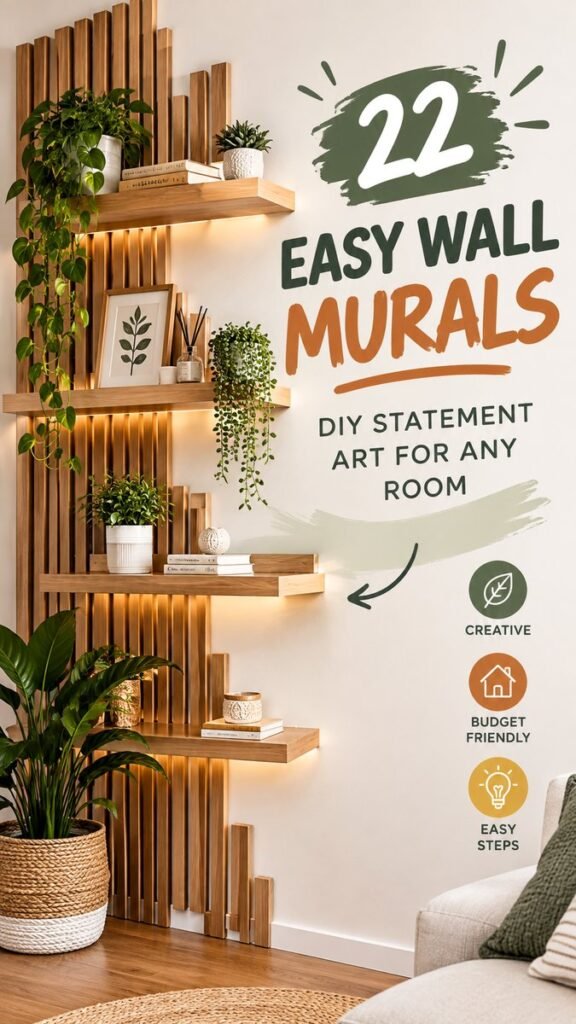
DIY wall murals can take many forms. You might paint an oversized botanical pattern, create geometric shapes, combine several earthy tones, or build a dimensional wall using wood accents. The inspiration here highlights how natural materials, greenery, warm neutrals, and carefully arranged wall décor can work together to create a stylish statement wall.
Key Takeaways
- Choose a mural style that complements the room instead of competing with it.
- Use natural colors and materials to create a calm, welcoming atmosphere.
- Plan your layout before painting, cutting, or attaching anything to the wall.
- Combine artwork with shelves, plants, or décor for extra depth.
- Keep the design balanced so the wall feels intentional rather than crowded.
- Start with a manageable section if you are new to DIY wall projects.
Why DIY Wall Murals Make a Big Impact
A statement wall can influence the entire atmosphere of a room. Instead of decorating every wall with separate pieces, a mural gives you the opportunity to create one strong visual moment. This can make a living room feel more finished, give a bedroom a personalized touch, or add character to a home office.
One of the biggest advantages of a DIY wall mural is flexibility. You can choose colors that already appear in your furniture, flooring, cushions, curtains, or accessories. This makes it easier to create a cohesive room without replacing everything you already own.
DIY also gives you room to experiment. A mural does not have to look like traditional artwork. It can be a collection of simple shapes, a painted arch, abstract brushstrokes, botanical forms, or a combination of painted and three-dimensional elements.
Important: The most successful statement walls are not necessarily the most complicated. A simple design with strong proportions, a thoughtful color palette, and plenty of breathing room can have more impact than an overly detailed mural.
Choosing the Right Wall Mural DIY Style
Before reaching for a paintbrush, think about the mood you want the room to have. Your mural should support the purpose of the space and work naturally with the existing décor.
Botanical and Nature-Inspired Murals
Botanical designs are a natural choice for rooms that already feature houseplants, wood, woven textures, or earthy accessories. Large leaves, simple branches, vines, and abstract foliage can introduce a relaxed organic feeling without making the room look overly busy.
You can keep a botanical mural understated by using one or two related shades. Soft green, muted olive, warm beige, and earthy brown work especially well with natural wood. For a more dramatic effect, use a darker background and lighter botanical shapes.
Geometric Wall Murals
Geometric murals are ideal if you prefer a modern or structured look. Arches, circles, rectangles, blocks, and curved lines can be combined to create a custom composition.
Painter’s tape can help produce crisp edges, while a pencil and measuring tape make it easier to establish proportions before adding color. You can also deliberately leave some shapes imperfect for a softer handmade appearance.
Abstract Painted Murals
Abstract wall art is one of the most approachable options for beginners because it does not require precise drawing skills. Broad brushstrokes, organic curves, layered shapes, and blocks of color can create an artistic effect with relatively simple techniques.
Try limiting yourself to three or four colors. A restrained palette helps the mural feel intentional and makes it easier to coordinate the wall with furniture and accessories.
Wood and Mixed-Material Statement Walls
A mural-inspired wall does not have to rely entirely on paint. The inspiration for this décor style shows how wooden elements can create a dramatic vertical feature while shelves and plants add function and softness.
Wood slats, reclaimed-looking boards, floating shelves, framed prints, and greenery can be arranged to form a dimensional focal wall. This approach is particularly effective when you want texture as well as color.
How to Plan a DIY Statement Wall
Good planning can make a DIY wall mural much easier. Start by looking at the entire room rather than focusing only on the empty wall. Consider where the main furniture sits, where natural light enters, and which decorative objects will remain on the wall.
- Measure the wall. Record the height and width so you understand how much space your design needs.
- Choose a focal area. Decide whether the mural will cover the entire wall or only part of it.
- Study the existing colors. Pull inspiration from flooring, furniture, textiles, and accessories already in the room.
- Sketch your idea. A simple paper sketch can reveal whether the composition feels balanced.
- Test your colors. Paint small samples before committing to the full wall.
- Mark the layout. Use light pencil marks, measuring tools, or painter’s tape to establish the main shapes.
- Work gradually. Build the design in layers instead of trying to complete everything at once.
Creating a Warm, Natural Color Palette
Color is one of the easiest ways to make a wall mural feel connected to the rest of your interior. Natural palettes are especially versatile because they pair well with wood, greenery, woven baskets, neutral upholstery, and simple decorative objects.
Consider combinations such as sage with cream, terracotta with warm white, olive with beige, or muted brown with soft green. These combinations can create a cozy atmosphere while still feeling contemporary.
If the room already contains several strong colors, simplify the mural palette. If the furniture is mostly neutral, the wall can become an opportunity to introduce a more noticeable accent.
Expert Insight
- Repeat at least one color from the mural elsewhere in the room.
- Use lighter tones to keep a small room feeling open.
- Use deeper shades strategically when you want more visual drama.
Adding Shelves, Plants, and Decorative Layers
A painted mural can look beautiful by itself, but adding carefully selected décor can give the wall more dimension. Floating shelves are particularly useful because they combine decoration with practical storage.
Place a few books, small planters, framed botanical artwork, ceramics, or other simple objects on the shelves. Avoid filling every available space. Leaving some open areas allows the mural and wall structure to remain visible.
Plants can also soften strong architectural lines. Trailing greenery works beautifully around shelves, while taller plants can anchor the lower portion of the wall. Natural woven planters can reinforce an earthy, relaxed design.
Pro Tip: Think of your statement wall as a composition rather than a collection of decorations. Vary the height, size, and texture of objects while maintaining a consistent color story.
Easy DIY Wall Mural Ideas for Different Rooms
Living Room
In a living room, use the mural to define the main seating area. An abstract arrangement behind a sofa can act as oversized artwork, while a wood accent wall can create a warm backdrop for shelving and plants.
Keep the surrounding furniture relatively simple if the mural has a strong pattern. This prevents the room from feeling visually crowded.
Bedroom
A bedroom mural can create a calm focal point behind the bed. Soft arches, organic shapes, subtle foliage, or muted earthy colors can help establish a relaxing atmosphere.
For a minimalist bedroom, consider a restrained design with plenty of negative space. The goal is to enhance the room rather than overpower it.
Home Office
A home office gives you more freedom to experiment with graphic designs. A simple geometric mural can visually define the workspace and make the background more interesting for everyday use.
Choose colors that feel energizing without becoming distracting. Muted greens, warm neutrals, and understated accent colors can work well in a productive environment.
Entryway
An entryway mural can make a small area feel intentional and memorable. Because entryways are often compact, a partial mural or simple oversized shape may be more effective than a full-wall design.
Simple Materials for a DIY Wall Mural
The exact supplies depend on the design you choose, but many wall mural DIY projects can begin with a straightforward collection of materials.
- Interior wall paint in your chosen colors
- Paint brushes and suitable rollers
- Painter’s tape for clean geometric edges
- Pencil and measuring tape for planning
- Level for keeping lines and shelves aligned
- Drop cloth or protective covering for the floor
- Wood boards or slats for dimensional designs
- Wall-safe hardware for shelves and décor
- Small planters and greenery for a natural finishing touch
Always choose materials that are appropriate for your wall surface and follow the manufacturer’s directions for paint, adhesives, hardware, and other installation products.
How to Keep a DIY Mural Looking Professional
A polished result often comes down to preparation rather than expensive materials. Clean the wall before painting, repair obvious imperfections, and allow each layer of paint to dry properly. Rushing can lead to uneven coverage and messy edges.
For geometric designs, spend extra time measuring. Small inconsistencies can become more noticeable when shapes repeat across a large wall. For abstract designs, step back regularly and view the entire composition from different angles.
If you are incorporating shelves or wood elements, think carefully about spacing. Repeating similar distances between objects creates visual rhythm, while varying heights and sizes keeps the arrangement interesting.
Common DIY Wall Mural Mistakes to Avoid
One common mistake is choosing a design before considering the room. A mural may look fantastic in an inspiration photo but feel overwhelming when placed next to your own furniture and lighting.
Another mistake is using too many colors. If every part of the mural has a different shade, the wall can quickly lose its sense of cohesion. A smaller palette usually creates a more sophisticated result.
It is also easy to underestimate negative space. Empty sections of the wall are not wasted space. They give the eye somewhere to rest and help the important elements stand out.
Finally, avoid adding too many accessories after completing the mural. Step back and assess the wall first. Add only the pieces that improve the overall composition.
Make the Design Your Own
The best DIY wall murals are personal. Use inspiration as a starting point, then adapt the idea to your home, taste, and available space. You can change the colors, simplify the shapes, add natural textures, or combine painted areas with shelving and greenery.
For a budget-friendly approach, start with paint and a few existing decorative pieces. If you love the result, you can gradually introduce additional shelves, wood accents, artwork, or plants.
Important: A statement wall does not need to cover every inch of the surface. A thoughtfully designed partial mural can create just as much visual impact while using less material, less time, and fewer supplies.
At a Glance
- Pick a design that matches your room’s existing style.
- Build a simple palette around natural or complementary colors.
- Plan measurements and placement before starting.
- Layer plants, shelves, artwork, and textures carefully.
- Leave enough negative space for a clean finished look.
Conclusion: Turn a Blank Wall Into a Statement
Wall murals DIY projects are a wonderful way to refresh a room without committing to a complete makeover. Whether you choose painted shapes, botanical artwork, earthy tones, wood slats, floating shelves, or a combination of these ideas, the right statement wall can give your space a distinctive personality.
The key is to begin with a clear vision and keep the design connected to the rest of your room. Focus on proportion, color, texture, and balance rather than trying to include every idea at once. A few intentional details can transform a blank wall into a feature that feels warm, creative, and completely at home.
Use these ideas as inspiration for your next decorating project, experiment with a style that reflects your personality, and enjoy the process of creating something unique. Your wall does not have to be perfect to make an impression. It simply needs to feel like yours.
Tags
Wall Murals DIY DIY Wall Decor Statement Wall DIY Home Decor Wall Art Ideas Accent Wall Ideas DIY Room Makeover Natural Home Decor