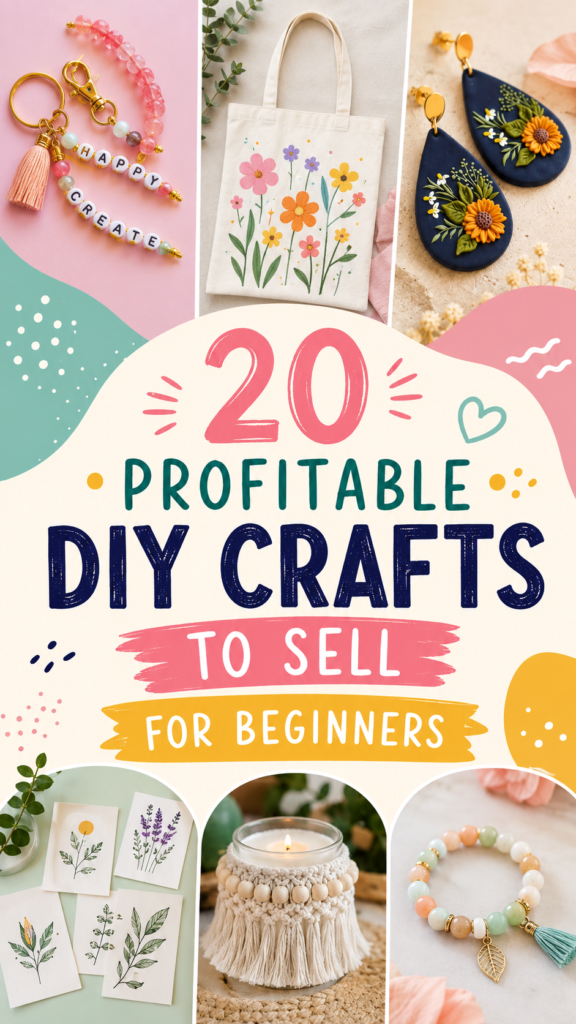
DIY crafts ideas can be more than a fun way to spend an afternoon. With a little creativity, simple materials can become attractive handmade products, thoughtful gifts, or small items to offer at craft fairs and online. The projects featured here show just how many directions a beginner can explore, from colorful beaded accessories and handmade keychains to decorated tote bags, floral artwork, statement earrings, and cozy home decor.
The best part is that you do not need to begin with complicated techniques. Many profitable DIY crafts start with approachable skills that can be practiced and improved over time. By choosing attractive designs, keeping material costs under control, and adding a personal touch, even simple projects can feel special and gift-worthy.
Key Takeaways
- Start with simple DIY crafts that are easy to practice and personalize.
- Beaded accessories and keychains are small, flexible projects for beginners.
- Floral tote bags and botanical art offer plenty of room for creative designs.
- Statement earrings can turn simple components into eye-catching handmade pieces.
- Keep your materials, time, packaging, and finishing details in mind when pricing crafts.
- Build a recognizable style by repeating colors, motifs, or design themes across projects.
Why DIY Crafts Are Great for Beginners
Starting a handmade craft business can feel overwhelming when you imagine needing a large inventory or advanced equipment. Fortunately, many beginner-friendly crafts are much simpler. Small accessories, paper goods, decorated textiles, and handmade home accents can often be created in manageable batches.
Small projects are especially useful when you are learning. You can test different color combinations, practice your finishing techniques, and discover which designs people respond to without committing to a huge amount of material.
The smartest beginner strategy is to start narrow rather than trying to make everything at once. Choose one or two DIY craft ideas, learn how to make them consistently, and experiment with variations. Once you understand what works, you can gradually expand your collection.
1. Personalized Beaded Keychains
Beaded keychains are a natural starting point for anyone looking for easy DIY crafts to sell. They are compact, colorful, and highly customizable. The image inspiration includes playful letter beads, colorful stones, charms, metallic components, and decorative details that make each piece feel personal.
You can create designs around names, initials, favorite colors, short words, or simple themes. Mixing different bead shapes and finishes can also give the same basic construction several distinct looks.
How to Make the Idea More Appealing
- Combine two or three complementary colors.
- Add one memorable charm or focal bead.
- Offer personalized letter options.
- Keep the hardware neat and secure.
- Create several coordinated color themes instead of random combinations.
Personalization is particularly useful because it transforms a small accessory into something that feels designed for a specific person.
2. Handmade Beaded Bracelets
Beaded bracelets are another approachable project with plenty of creative potential. Soft pastel beads, small charms, leaf-shaped accents, and colorful tassels can create a delicate handmade aesthetic. You can also explore minimalist designs with fewer beads and a more understated finish.
One advantage of bracelets is the ability to create collections. Instead of making every piece completely different, develop a small range with a shared color palette. This makes your handmade collection look intentional and gives customers several options to choose from.
When designing bracelets, think about balance. A single decorative charm can become the focal point, while smaller beads provide supporting color and texture.
3. Floral Painted Tote Bags
A plain canvas tote can become a completely different product with a cheerful handmade design. The floral tote shown in the visual uses colorful flowers, green stems, and playful botanical details to create a bright, artistic appearance.
This type of DIY craft gives beginners an opportunity to develop a recognizable visual style. You might focus on wildflowers, simple leaves, colorful daisies, fruit-inspired illustrations, or abstract botanical patterns.
Simple Design Ideas
- Sketch the basic composition before adding permanent color.
- Choose a limited palette so the finished design looks cohesive.
- Leave some open space rather than filling every section.
- Repeat a few flower shapes to create visual consistency.
- Make sure the final details are clean and easy to recognize from a distance.
Floral tote bags can also be adapted to seasons, occasions, or personal interests. That flexibility makes them an excellent project for experimenting with different collections.
4. Botanical Art Prints
Botanical artwork is another beautiful option for DIY crafts ideas. The pictured collection features small illustrated plant and flower designs arranged across individual cards or prints. This style works well because it combines simplicity with a handmade feel.
Beginners do not need to create extremely complicated illustrations. Simple stems, leaves, tiny flowers, and repeating botanical patterns can look polished when they are arranged thoughtfully.
Try creating several coordinated illustrations rather than relying on one design. A small collection can include different plants while maintaining similar line work, proportions, and colors.
Ways to Build a Botanical Collection
- Create individual flower illustrations.
- Design small botanical greeting cards.
- Combine several plants into one larger composition.
- Experiment with monochrome and soft pastel palettes.
- Turn favorite illustrations into coordinated stationery designs.
5. Handmade Statement Earrings
The navy floral earrings in the image demonstrate how a small accessory can become a striking handmade statement piece. Their teardrop shape, raised floral details, leaves, and bright flower centers create contrast and visual interest.
Statement earrings are ideal for creative experimentation because the basic silhouette can remain the same while the decoration changes completely. Try different floral arrangements, color combinations, textures, or seasonal themes.
For wearable crafts, finishing quality matters just as much as the decorative design. Clean edges, secure components, comfortable proportions, and carefully attached findings can make a handmade accessory feel much more refined.
6. Decorative Candle Holders
A decorative candle holder can add warmth and texture to a handmade collection. The inspiration shown here features a cozy container decorated with neutral macramé-style fibers and wooden bead details.
This project demonstrates the value of texture. Even when the color palette is simple, layered fibers, knots, fringe, and natural-looking materials can make a home decor item visually interesting.
For beginners, neutral designs can be particularly versatile. They can work with many interior styles and provide a calm alternative to brightly colored crafts.
7. Personalized Gift Accessories
Not every profitable DIY craft needs to be a large standalone product. Small handmade accessories can become excellent gift additions. Keychains, bracelets, charms, decorated cards, and small fabric items can all be personalized for birthdays, celebrations, thank-you gifts, or everyday surprises.
Think about what makes an ordinary item feel personal. Initials, favorite colors, simple motifs, meaningful words, or coordinated packaging can make a basic craft more memorable.
Expert Insight
A handmade product becomes easier to remember when it has a consistent visual identity. Repeating a signature color palette, floral motif, charm style, or packaging detail can help several different DIY products feel like part of the same collection.
How to Choose the Best DIY Craft to Sell
With so many DIY crafts ideas available, choosing your first project can be difficult. Instead of selecting an idea only because it looks attractive, consider how practical it is to make repeatedly.
Consider Material Costs
Before committing to a craft, make a basic list of the materials it requires. Include the main supplies as well as smaller components such as clasps, findings, backing cards, ribbons, packaging, or decorative elements.
Low-cost materials can be useful for beginners because they allow you to experiment without putting too much money into your first collection.
Think About Production Time
A craft may look simple but take much longer than expected. Make one complete item from start to finish and record approximately how long it takes. This helps you understand whether the project is practical to make in batches.
If one design takes too long, simplify it. You can keep the attractive focal detail while reducing unnecessary steps.
Look for Personalization Opportunities
Personalization can give a simple craft more character. Names, initials, color choices, motifs, and small variations allow buyers to feel involved in the design.
However, keep personalization manageable. Offering a few clear choices is usually easier than allowing unlimited custom combinations.
Creating a Cohesive Handmade Collection
If you plan to sell multiple DIY crafts, think beyond individual products. A collection can be much more appealing when the pieces share a visual theme.
For example, you could build a botanical-inspired collection featuring floral tote bags, plant illustrations, flower earrings, beaded bracelets with leaf charms, and matching gift accessories. Each item would be different, but the shared nature-inspired aesthetic would connect them.
Color is another easy way to create consistency. Choose a small palette and use variations of those colors throughout your projects. This can make product photos, packaging, and promotional graphics feel more polished.
Tips for Making Beginner Crafts Look More Professional
- Keep edges, knots, painted lines, and attachments neat.
- Use consistent proportions when making multiple pieces.
- Remove visible glue, loose threads, or excess material.
- Choose complementary colors rather than adding too many unrelated shades.
- Photograph finished crafts in clean, bright settings.
- Use simple packaging that supports the handmade character of the product.
- Make a few prototypes before producing a larger batch.
Remember that professional-looking handmade products are often defined by small finishing details. A simple craft with clean construction can feel more valuable than a complicated design that looks rushed.
Finding Your Own Crafting Style
One of the most exciting parts of making DIY crafts is discovering what feels uniquely yours. You may begin by following simple patterns, but experimentation can gradually lead to a recognizable style.
Pay attention to the projects you enjoy making most. If you naturally gravitate toward flowers, explore botanical designs. If you love colorful accessories, experiment with beads and charms. If texture catches your attention, explore macramé, fabric, fibers, or layered materials.
Your style does not need to be complicated. A consistent approach to color, shape, subject matter, or texture can be enough to make your work recognizable.
Turning Crafting Into a Repeatable Routine
Once you find a DIY craft that you enjoy, create a simple workflow. Gather your materials before beginning, prepare several components at once, and organize finished pieces separately from unfinished work.
Batching similar tasks can make crafting more efficient. For example, you might prepare all your bead combinations first, assemble the hardware next, and complete finishing touches afterward.
A repeatable routine also makes it easier to notice where you are spending too much time. If one step repeatedly slows you down, look for a simpler technique or adjust the design.
Quick Points
- Start small and master one craft before expanding.
- Personalization can make simple accessories feel special.
- Use coordinated colors to build a recognizable collection.
- Prioritize neat finishing details and consistent quality.
- Test your ideas before making them in larger quantities.
Conclusion: Start Creating Your Own DIY Craft Collection
These DIY crafts ideas show that beginner-friendly projects can have plenty of creative potential. Beaded keychains, bracelets, botanical artwork, floral tote bags, statement earrings, decorative candle holders, and personalized accessories all offer opportunities to practice useful skills while developing an individual style.
You do not need to master everything at once. Pick one project that genuinely interests you, gather a manageable selection of supplies, and make a few prototypes. Experiment with colors, patterns, textures, and personalization until the design feels like your own.
As your confidence grows, you can turn your favorite designs into coordinated collections. The goal is not simply to make more crafts, but to create pieces that look thoughtful, consistent, and worth sharing. Whether you are crafting for fun, preparing handmade gifts, or exploring DIY crafts to sell, starting with simple ideas can open the door to much bigger creative possibilities.
Tags
DIY Crafts Ideas Crafts to Sell Beginner Crafts Handmade Crafts DIY Accessories Craft Business Ideas Creative DIY Projects Handmade Gift Ideas