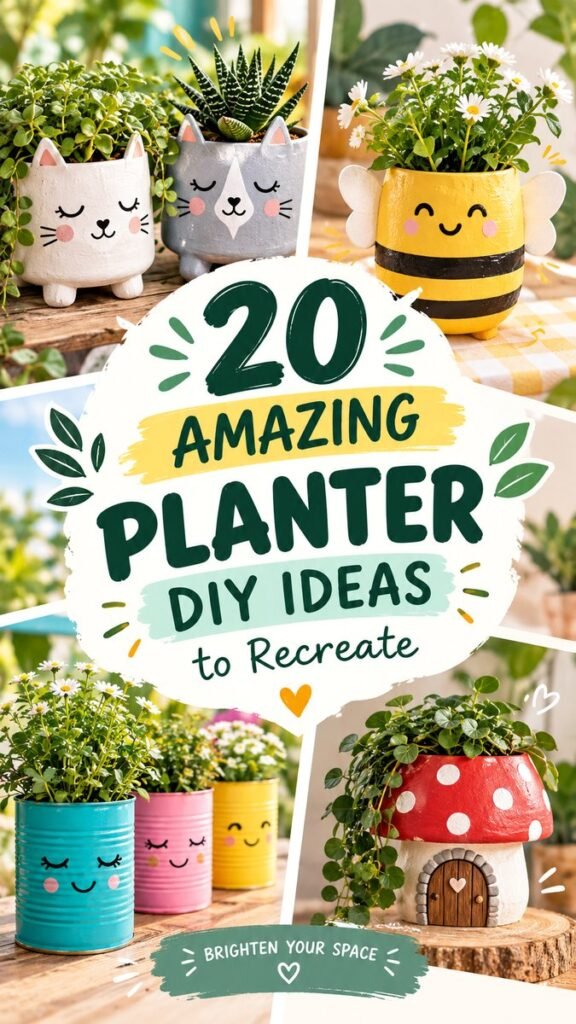
DIY planters are one of the easiest ways to bring more personality, color, and creativity into a home or garden. Instead of settling for ordinary pots, you can transform simple containers into cheerful plant displays with paint, patterns, playful faces, and imaginative shapes. The ideas featured here show just how much character a planter can add, whether you are decorating a sunny windowsill, refreshing a balcony, styling a patio, or creating a colorful corner indoors.
From cute cat-inspired pots and bright painted cans to whimsical mushroom designs and cheerful animal-inspired containers, these DIY planter ideas prove that plant decor does not have to be complicated. A little creativity can turn an everyday container into something that feels completely personal.
Key Takeaways
- Repurpose simple containers to create inexpensive DIY planters.
- Use paint, patterns, and small details to give ordinary pots personality.
- Choose planter designs that complement the size and style of your plants.
- Mix playful planters with greenery for an inviting home decor display.
- Group several colorful planters together to create a stronger visual impact.
- Keep drainage, plant needs, and container stability in mind before planting.
Why DIY Planters Make Great Home Decor
Plants already add texture and natural beauty to a room, but the container can completely change the way that greenery looks. A plain pot creates a simple backdrop, while a handmade planter can become part of the decor itself. This is especially useful when you want your plants to feel coordinated with a colorful, playful, or creative interior.
DIY planters also offer a practical way to reuse containers that might otherwise be thrown away. Cans, jars, old containers, basic pots, and other sturdy objects can often be refreshed with a coat of paint and a few decorative details. The result is a plant display that feels more personal than a mass-produced pot.
Important: The best DIY planter is not only attractive. It should also give the plant enough room, allow excess water to escape, and remain stable once filled with soil and greenery.
20 DIY Planter Ideas to Inspire Your Next Project
The visual style of these planter ideas centers on cheerful colors, expressive details, and creative shapes. You do not need to reproduce any particular design exactly. Instead, use the concepts as inspiration and adapt them to the containers, plants, and materials you already have.
1. Cute Cat Planters
Cat-shaped planters are an adorable choice for small indoor plants and succulents. Start with a simple rounded container and add painted ears, closed eyes, whiskers, and a tiny nose. A soft white, gray, cream, or pastel finish can create a calm look, while brighter colors make the planter more playful.
2. Cheerful Bee Planters
A bee-inspired planter can instantly make a plant display feel sunny and fun. Yellow paint, black stripes, a friendly face, and simple wing shapes are enough to establish the theme. Pair the finished planter with flowering greenery for a lively arrangement.
3. Painted Tin Can Planters
Painted cans are among the simplest DIY planter projects. Clean and prepare the container, then give it a bright finish in a color that works with your room. Add a simple face, stripes, dots, or another easy pattern for extra personality.
4. Polka Dot Planters
Polka dots are an easy way to make a basic planter more eye-catching. Choose a strong base color and add contrasting dots in different sizes. This technique works particularly well on rounded containers and can be adapted to almost any color combination.
5. Mushroom-Inspired Planters
A mushroom-shaped planter creates a whimsical focal point. A rounded red top with white spots can provide the recognizable look, while the lower section can be decorated with small architectural details. Add a trailing plant to soften the shape and create a miniature garden feel.
6. Happy Face Planters
Sometimes a simple expression is all you need. Paint closed eyes, curved smiles, rosy cheeks, or other friendly features onto a plain pot. This idea is particularly effective when several planters are displayed together, with each one having a slightly different expression.
7. Colorful Container Planters
Bright colors can turn a group of ordinary containers into a cheerful display. Try turquoise, pink, yellow, orange, or green, or select a smaller palette of complementary shades. Keeping the shapes similar while varying the colors can create a neat and intentional arrangement.
8. Character-Inspired Planters
Give your planters personality by turning them into simple characters. Large eyes, expressive eyebrows, smiles, and playful mouths can transform a plain container without requiring complicated artistic skills. Keep the facial features bold and simple so they remain easy to recognize.
9. Pastel Planters
For a softer look, use pastel shades such as pale pink, mint, light blue, cream, or soft yellow. Pastel DIY planters work beautifully with small leafy plants and can blend easily into bedrooms, kitchens, offices, and cozy reading spaces.
10. Patterned Planters
Patterns can make a simple planter look much more decorative. Consider stripes, checkerboards, dots, waves, hearts, leaves, or geometric shapes. If you are new to painting, painter’s tape can help create cleaner lines and simple repeating designs.
11. Mini Planters for Small Plants
Small containers are perfect for compact plants and can be arranged along a shelf, desk, windowsill, or kitchen counter. Because they require less material, mini planters are also useful for experimenting with new colors and decorative techniques.
12. Flower-Friendly Planters
Let the plant become part of the design by choosing a planter that complements its flowers. A bright yellow container can emphasize cheerful blooms, while a neutral pot can allow colorful flowers to take center stage. Think of the planter and plant as one complete display.
13. Upcycled Household Containers
Look around your home for sturdy objects that could be given a second life as planters. Repurposing containers is an easy way to create something unique while reducing waste. Before using an item, make sure it is clean, stable, and suitable for holding soil and moisture.
14. Two-Tone Planters
Two-tone designs are simple but stylish. Paint the upper and lower sections in different shades, or create a contrasting band around the middle. This approach works particularly well when you want a modern look without adding lots of decorative details.
15. Nature-Inspired Designs
Leaves, flowers, insects, and simple botanical shapes can make a planter feel connected to the plant growing inside it. You can paint small motifs around the outside or use one large botanical design as a focal point.
16. Whimsical Garden Planters
For outdoor spaces, embrace playful designs that feel at home among flowers and greenery. Bright colors, friendly faces, unusual shapes, and imaginative details can turn a small corner of the garden into a memorable display.
17. Matching Planter Sets
Instead of decorating just one pot, create a coordinated set. Use the same colors or patterns across several containers, then vary the size or facial details. A matching group can make a collection of plants look more organized without making every piece identical.
18. Statement Planters
A larger decorative planter can become the focal point of a room or patio. Keep the surrounding decor relatively simple so the colorful container and its greenery have enough space to stand out.
19. Painted Character Cans
Small painted cans can become especially charming when several are grouped together. Give each container its own color and expression, then fill them with plants that have different leaf shapes or textures. The combination creates a playful miniature collection.
20. Personalized Planters
The final idea is to make the planter completely your own. Add initials, favorite colors, simple illustrations, patterns, or decorative details that match your personality. A handmade planter does not need to be perfect. Its charm often comes from the fact that it feels personal.
Why This Matters
A DIY planter can serve two purposes at once: it supports a healthy plant while also acting as a decorative object. Choosing the right combination of color, shape, texture, and greenery can make even a small plant display feel intentional and finished.
How to Make a DIY Planter Look Polished
You do not need advanced crafting skills to create an attractive planter. The most important part is preparing the surface and keeping the design simple enough to execute neatly.
- Choose a suitable container. Look for something sturdy enough to hold soil and a plant without tipping.
- Clean the surface. Remove dirt, dust, grease, and labels before decorating.
- Plan the design. Decide on your colors, patterns, and decorative elements before applying paint.
- Build the color gradually. Several light coats can create a cleaner finish than one heavy coat.
- Add details last. Faces, dots, stripes, leaves, and other small elements are easier to control after the base color is finished.
- Allow everything to dry properly. Give decorative materials enough time to set before adding soil or placing the planter in its final location.
Pro Tip: Pick the plant before finalizing the planter size. A beautiful container will work much better when its proportions match the plant and its growing space.
Choosing Plants for Creative DIY Planters
The plant you choose can completely change the appearance of a handmade planter. Compact leafy plants can create a full, lush look, while trailing plants can soften the edges of unusual containers. Flowering plants bring extra color and can work especially well with cheerful painted designs.
Succulents and other compact plants are often visually effective in smaller decorative pots because their shapes remain easy to see. Plants with trailing foliage can work beautifully in taller or whimsical containers because the leaves spill over the sides.
Before planting, consider the plant’s light, watering, drainage, and space requirements. Decorative appeal is important, but the container should still support the basic needs of the plant.
Easy Ways to Personalize Your Planters
One of the best things about DIY planters is the freedom to change the design to suit your space. You can use a consistent color palette for a coordinated room or mix several bright shades for a more energetic display.
- Add simple faces for a friendly, playful appearance.
- Use dots or stripes when you want an easy beginner-friendly pattern.
- Try botanical illustrations for a natural decorative theme.
- Combine matte and glossy finishes for subtle contrast.
- Use different planter heights to create visual variety.
- Group matching colors together for a cohesive display.
Where to Display DIY Planters
Creative planters are versatile enough for almost any area where plants can thrive. A sunny windowsill can become a colorful mini garden with several small pots. A desk can benefit from one compact planter, while a shelf can accommodate a coordinated collection of different sizes.
In outdoor areas, colorful planters can add personality to balconies, patios, porches, and garden corners. Consider arranging them at different heights so each design remains visible. A large statement planter can anchor the display, while smaller containers add detail around it.
For indoor displays, pay attention to the relationship between the planter colors and the surrounding decor. If the room already has strong colors, a simpler planter may create balance. In a neutral room, bright DIY planters can provide a welcome pop of color.
DIY Planter Ideas for Beginners
If you are new to crafting, start with a design that does not require complicated shapes or detailed painting. A solid color followed by dots, stripes, or a simple face is enough to create a noticeable transformation.
Once you are comfortable with basic painting, experiment with layered colors, character designs, botanical motifs, and more unusual containers. The goal is not perfection. A handmade planter should feel creative, cheerful, and suited to your own style.
It can also be helpful to make several small projects rather than trying to complete one elaborate planter immediately. This gives you a chance to test different paint combinations and decorative techniques while building confidence.
At a Glance
- Choose sturdy containers with appropriate drainage.
- Keep colors and patterns consistent with your decor.
- Use simple faces, dots, and stripes for beginner projects.
- Match the planter size to the plant.
- Group colorful planters for a stronger visual display.
Final Thoughts on DIY Planters
DIY planters are a simple way to combine gardening and creativity. A basic container can become a colorful character, a cheerful animal-inspired pot, a patterned planter, or a whimsical garden accent with only a few thoughtful details.
The most appealing projects often balance practical planting needs with a strong visual idea. Think about the plant first, choose a container that suits it, and then let your creativity take over with color, patterns, shapes, and personality.
Whether you make one small planter for your desk or create an entire collection for your home, these projects offer plenty of room to experiment. Start with materials you already have, keep the first design simple, and build from there. Your next favorite plant display might begin with an ordinary container waiting for a creative makeover.