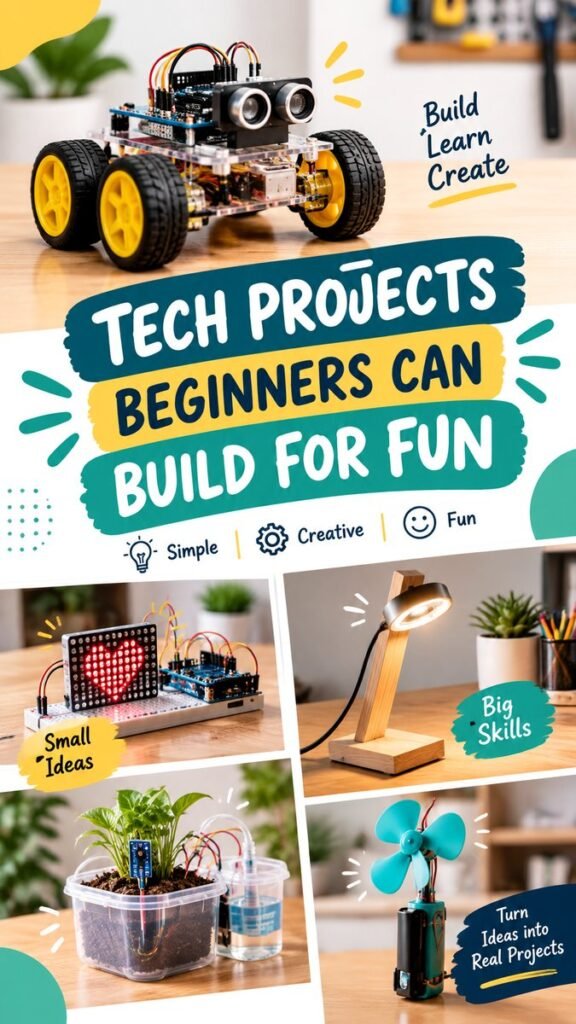
DIY tech projects are a fun way to turn curiosity into something you can actually see, test, and use. From small electronic gadgets and LED displays to miniature robots, smart plant projects, homemade lamps, and creative desktop devices, beginner-friendly technology projects offer plenty of room to experiment. You do not need to start with a complicated invention. A simple circuit, a few components, and a willingness to test ideas can be enough to create something exciting.
Key Takeaways
- Start with small DIY tech projects that have simple, visible results.
- Use projects to practice basic electronics, wiring, sensors, motors, and LEDs.
- Beginner robotics projects can make technology learning more interactive.
- Creative gadgets can combine practical functions with attractive design.
- Testing and troubleshooting are valuable parts of the learning process.
- Customize finished builds to make each project your own.
Why DIY Tech Projects Are Great for Beginners
DIY tech is especially appealing because it combines creativity with hands-on learning. Instead of only reading about how electronics work, you can connect components, observe what happens, make adjustments, and immediately see the result. That process makes technical concepts easier to understand and more memorable.
Beginner projects also remove the pressure to create something perfect on the first attempt. A small robot that moves, an LED display that lights up, or a simple sensor-based gadget can provide a satisfying first milestone. Once one project works, it becomes much easier to imagine what you could build next.
Important: The most valuable part of a DIY tech project is not simply getting the finished gadget to work. Learning how components interact, identifying mistakes, and improving the design builds practical problem-solving skills that can be used in future projects.
18 DIY Tech Ideas to Inspire Your Next Build
A good beginner project should feel achievable while still giving you something interesting to explore. The ideas below are inspired by common maker-style projects featuring electronics, simple automation, lighting, movement, and creative gadgets.
1. Mini Robot Car
A small wheeled robot is an excellent introduction to DIY technology. A basic build can combine a small controller, motors, wheels, wiring, and a simple sensor system. Start with movement and direction before adding more advanced features.
2. LED Display Project
LEDs are among the easiest electronic components to make visually interesting. Try creating simple patterns, symbols, or animations with an LED display. This type of project is useful for learning how programmed signals can create changing visual effects.
3. DIY Desk Lamp
A homemade desk lamp can combine electronics with woodworking or simple craft techniques. Experiment with the shape of the stand, the position of the light, and the overall finish. A functional object can make a particularly rewarding beginner project.
4. Automatic Plant Watering System
A plant watering project introduces the idea of sensors and automation. A moisture sensor can detect changes in soil conditions and trigger a suitable response. The project can be kept simple at first, then expanded as your confidence grows.
5. Mini USB Fan
A small homemade fan is a practical way to explore motors, power connections, switches, and lightweight mechanical parts. Its compact size also makes it suitable for a desk or study workspace.
6. Simple Light Sensor
Create a project that responds to changes in brightness. A light sensor can be used as the foundation for an automatic night light or another responsive gadget. This is a useful introduction to the relationship between physical conditions and electronic output.
7. Electronic Reaction Game
Turn basic electronics into a game by creating a system that responds to buttons, lights, or timing. A simple reaction challenge can make learning about inputs and outputs feel more playful.
8. LED Mood Light
Build a small decorative light with adjustable colors or patterns. A mood light is a creative way to experiment with LEDs while producing something that can add personality to a bedroom, office, or hobby space.
9. Distance Sensor Gadget
Distance sensors can make a beginner project feel surprisingly smart. Use one to detect nearby objects and trigger a light, sound, or movement. The concept is also useful as a starting point for more advanced robotics.
10. Mini Alarm System
A simple alarm project can introduce switches, sensors, indicators, and basic programming logic. Keep the design focused on harmless demonstrations such as detecting when a door or container is opened.
11. Smart Desk Indicator
Create a small desktop gadget that uses lights or a display to show a selected status. It could become a study indicator, timer companion, or simple reminder device depending on the components you have available.
12. Temperature Display
A temperature-based project is another accessible introduction to sensors. Pair a suitable temperature sensor with a small display to create a gadget that shows changing environmental readings.
13. Mini Traffic Light
A miniature traffic light is a classic electronics practice project because it clearly demonstrates sequences and timing. Use several LEDs to recreate a simple cycle and experiment with different timing patterns.
14. Motion-Activated Light
A motion-responsive light combines sensing with a visible result. When movement is detected, the system can activate a small light for a chosen period. This is a practical example of how sensors can make ordinary objects more responsive.
15. Electronic Dice
An electronic dice project can use buttons and LEDs to create a random number display. It is a fun way to practice inputs, outputs, timing, and simple programming logic.
16. Mini Weather Display
Combine a few beginner-friendly sensors with a small screen to create a compact information display. Depending on the components available, it can show measurements such as temperature or humidity.
17. Programmable Night Light
A programmable night light lets you experiment with brightness, timing, and different lighting patterns. Give the enclosure a creative shape to turn a simple circuit into a decorative handmade gadget.
18. Custom Tech Gadget
Once you have tried a few smaller builds, combine the ideas you enjoyed most. A custom gadget might include LEDs, a sensor, a motor, buttons, or a small display. The goal is to create something that reflects your own interests and growing skills.
Why This Matters
Beginner DIY tech becomes much easier when you treat every project as a series of small experiments. Start with one function, make it work, then add another feature. This approach keeps projects manageable while giving you plenty of opportunities to learn.
Essential Skills to Practice
You do not need advanced engineering knowledge to begin. Focus on a handful of foundational skills and improve them gradually.
- Basic wiring: Learn how to make secure, organized connections.
- Simple circuits: Understand how power moves through basic components.
- Inputs and outputs: Explore how buttons and sensors can control lights, motors, or displays.
- Basic programming: Learn how simple instructions can make hardware respond.
- Troubleshooting: Check connections, power, component orientation, and code when something does not behave as expected.
Pro Tip: Keep a small project journal. Write down what you connected, what worked, and what changed after each test. Even a few notes can make troubleshooting much faster on your next build.
How to Make DIY Tech Projects More Fun
The best beginner projects leave room for personalization. Once the basic function works, think about the appearance and user experience. Change the enclosure, add labels, rearrange the components, or create a cleaner cable layout. A functional project can become a genuinely creative piece when you add your own design choices.
Try setting small challenges for yourself. Instead of attempting to build a complicated smart device immediately, choose one simple goal. For example, make an LED turn on, then make it respond to a button, then add a sensor. Each step introduces a new idea without making the entire project overwhelming.
Beginner-Friendly Project Tips
- Choose a project with one clear main function.
- Gather and organize components before starting.
- Test individual parts before combining the entire system.
- Keep wiring neat so problems are easier to identify.
- Make changes one at a time when troubleshooting.
- Document successful experiments for future projects.
- Prioritize safe, low-voltage beginner electronics and follow the instructions for every component you use.
Turning Small Builds Into Bigger Ideas
One of the most exciting parts of DIY tech is how one small project can lead naturally to another. A simple LED circuit can become a responsive light. A motorized car can become a sensor-controlled robot. A plant moisture project can inspire a broader home automation experiment.
Think of each build as a building block rather than a finished destination. You can reuse concepts, improve old projects, and combine components in new ways. Over time, the collection of small experiments becomes a practical foundation for more ambitious maker projects.
At a Glance
- Start small and build confidence through quick wins.
- Use LEDs, sensors, motors, and displays to create interactive projects.
- Customize the appearance once the basic function works.
- Troubleshooting is part of learning, not a sign of failure.
- Let each finished project inspire the next one.
Conclusion: Start Building, Testing, and Creating
DIY tech does not have to begin with an ambitious invention. A small robot, glowing LED display, homemade lamp, sensor project, or tiny motorized gadget can be enough to start developing real hands-on skills. The most important step is choosing an idea that makes you curious enough to pick up the components and begin.
Keep your first projects simple, celebrate small successes, and treat mistakes as useful information. With every circuit you test and every gadget you improve, you gain a better understanding of how technology works. Before long, those simple beginner experiments can become the foundation for creative projects that are uniquely yours.