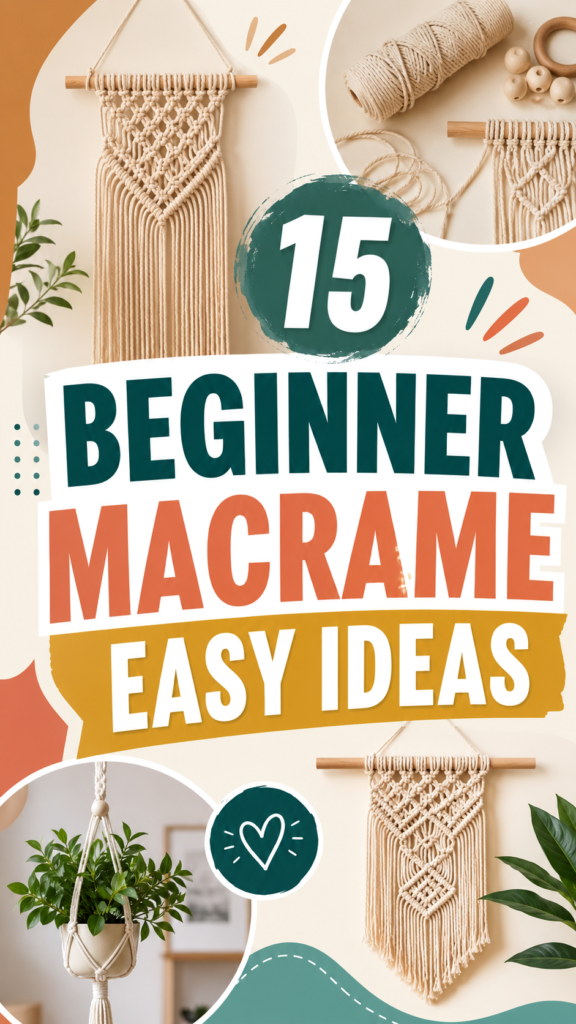
Macrame is one of those crafts that looks intricate and impressive, yet many designs are surprisingly approachable when you start with the right knots. The ideas featured here showcase the warm, natural beauty of beginner macrame, from decorative wall hangings to simple plant holders and other handmade accents. With cotton cord, a wooden dowel, and a little patience, you can create pieces that bring texture and personality into your home.
Key Takeaways
- Begin with simple macrame knots before moving to detailed patterns.
- Cotton cord and a smooth wooden dowel are versatile choices for beginners.
- Wall hangings are an easy way to practice repeating knot patterns.
- Plant hangers can turn basic macrame skills into useful home decor.
- Natural fibers and neutral tones create a relaxed, cozy look.
- Small practice projects can help build confidence before larger designs.
Why Macrame DIY Is Perfect for Beginners
Macrame is created by tying and arranging cords into decorative patterns. Unlike crafts that require specialized equipment, basic macrame can be started with only a few simple supplies. That makes it especially appealing if you want a relaxing DIY project without investing in a large collection of tools.
The designs shown in this collection have a distinctly natural and handmade character. Cream-colored cord, wooden elements, leafy plants, and soft neutral surroundings work together to create a calm boho-inspired aesthetic. The finished pieces can add visual interest to an otherwise simple room without overwhelming the space.
Important: The secret to successful beginner macrame is not tying complicated knots immediately. Focus on learning a few foundational knots, keeping your tension consistent, and repeating simple patterns. Clean repetition often creates a more polished result than a complicated design made too quickly.
15 Beginner Macrame Ideas to Try
If you are looking for easy macrame ideas, there are plenty of ways to turn basic knots into attractive home accessories. You can use the same fundamental techniques in different combinations to create wall art, plant hangers, small decorations, and practical handmade pieces.
1. Simple Macrame Wall Hanging
A basic wall hanging is an excellent first project. Start by attaching several equal lengths of cord to a wooden dowel. Once the cords are secured, practice repeating simple knots across the row. Gradually introduce diagonal sections or alternating patterns to create a more decorative shape.
The long loose strands at the bottom give a classic macrame appearance. You can leave them straight for a minimalist finish or carefully comb and shape them into a soft fringe.
2. Layered Knot Wall Art
Once you are comfortable with basic knots, try creating a wall hanging with several layers. Vary the placement of your knots so the design moves from a dense center into longer hanging strands. This technique produces the dimensional appearance often associated with handmade macrame decor.
Keep the color palette simple if you want a natural look. A single shade of cotton cord can make even a detailed pattern feel clean and contemporary.
3. Beginner Plant Hanger
A macrame plant hanger is both decorative and functional. Several cords can be joined near the top, separated into groups, and knotted at intervals to create a supportive basket for a lightweight plant pot.
This is also a useful project for practicing symmetry. Try to keep the knots at similar heights so the finished hanger sits evenly when suspended.
4. Mini Macrame Wall Decor
You do not need a large dowel or dozens of cords to enjoy macrame. A miniature wall hanging is a quick way to experiment with different patterns while using less material. Small pieces can be displayed individually or arranged together as a decorative collection.
5. Geometric Macrame Design
Geometric patterns can be made by changing the direction and placement of repeated knots. Diamond shapes, diagonal lines, and symmetrical sections are particularly effective in macrame because the cords naturally create strong visual lines.
For a beginner-friendly approach, sketch a simple pattern on paper before starting. You do not need to map every knot. A basic outline can help you understand where each section should begin and end.
6. Long Fringe Wall Hanging
If you love the relaxed look of fiber art, focus on a design with generous fringe. The knotting can remain relatively simple while the long strands create plenty of texture.
After completing the knots, use a comb or your fingers to separate the fibers. Trim the ends only after the strands are arranged, since this makes it easier to achieve a neat shape.
7. Macrame Plant Shelf Accent
Macrame can also be combined with simple wooden elements to create decorative storage or display pieces. A small shelf accent with hanging cord details can introduce handmade texture while providing space for a small plant or lightweight decorative object.
When creating functional macrame projects, make sure the knots and attachment points are secure and choose materials appropriate for the weight being supported.
8. Simple Diamond Pattern
The diamond is one of the most recognizable shapes in macrame. It can be created through repeated diagonal knotting and works beautifully as a central feature in a wall hanging.
For your first attempt, make one large diamond rather than trying to fill the entire design with multiple shapes. Once the pattern becomes comfortable, you can add smaller diamonds around it.
9. Boho-Inspired Macrame Decor
Natural macrame fits especially well with boho, minimalist, rustic, and relaxed interior styles. Pair a handmade wall hanging with wooden furniture, woven baskets, greenery, and soft neutral textiles for a cohesive look.
You can also create contrast by displaying pale macrame against a slightly darker wall. The texture of the cord becomes the main decorative feature without requiring bright colors.
10. Beginner Macrame Garland
A macrame garland is a fun alternative to traditional wall art. Small knotted sections can be spaced along a cord and finished with short fringes. This type of project works well for shelves, creative corners, or decorative displays.
11. Textured Hanging Panel
For a more substantial piece, combine several rows of knots to create a textured panel. The key is repetition. Instead of trying to invent a complicated pattern, repeat one or two simple sections across the width of the project.
This approach is ideal for beginners because you can concentrate on consistent spacing and tension while still achieving a sophisticated finished appearance.
12. Macrame Keychain
A small keychain can be a useful practice project because it requires only a small amount of cord. It gives you an opportunity to learn how tightly different knots need to be pulled without committing to a large wall hanging.
Once you understand the basic pattern, you can experiment with different cord thicknesses or add simple wooden beads for extra texture.
13. Decorative Macrame Ring
Macrame wrapped around a circular frame creates a softer alternative to a traditional rectangular wall hanging. Begin with a simple ring and attach cords evenly around the edge. Use repeating knots to build a symmetrical design toward the center.
This style works particularly well when you want to combine geometric structure with the organic appearance of natural fibers.
14. Layered Plant Holder
If you enjoy bringing greenery into your home, consider making a plant holder with layered knot sections. The cords can create a visually interesting structure around the pot while allowing the leaves to become the focal point.
Choose a lightweight container for beginner projects and check that the finished knots are secure before hanging the plant.
15. Custom Macrame Wall Art
After practicing several beginner projects, combine your favorite elements into a custom wall hanging. You might use a central diamond, diagonal rows, long fringe, and a simple wooden dowel.
The beauty of DIY macrame is that the finished design does not have to be identical to a pattern. Change the length of the fringe, adjust the width, or repeat a knot more often to make the project feel personal.
Expert Insight
A polished macrame project depends heavily on consistency. Before starting a large piece, make a small sample using the same cord and knots. This lets you see how tightly the cord behaves and helps you estimate the spacing you want.
- Keep your working cords organized so they do not become tangled.
- Check your spacing regularly instead of waiting until the end.
- Use a firm anchor while knotting to make repeated patterns easier.
Essential Supplies for Easy Macrame Projects
One reason macrame is such an approachable DIY craft is the short supply list. Most beginner projects can be started with a few basic materials.
- Cotton macrame cord: Choose a manageable thickness that is comfortable to knot.
- Wooden dowel: A smooth dowel provides a simple support for wall hangings.
- Scissors: Sharp scissors make it easier to cut clean, even strands.
- Measuring tape: Useful for cutting cords to consistent lengths.
- Comb or brush: Helpful for separating fibers and creating soft fringe.
- Optional beads: Wooden beads can add subtle texture to selected projects.
Basic Macrame Knots to Learn First
You do not need to master every macrame technique before beginning. A small collection of foundational knots can take you surprisingly far.
Lark’s Head Knot
This knot is commonly used to attach cords to a dowel, ring, or other support. Learning how to make it evenly is useful because many wall hanging designs begin with multiple cords secured along a horizontal base.
Square Knot
The square knot is a versatile foundation for countless macrame projects. Repeating it across several cords creates structured sections that can be combined with diagonal or alternating patterns.
Diagonal Knotting
Diagonal knotting is useful when you want to create V shapes, diamonds, zigzags, and other geometric details. It may feel awkward initially, but practicing on a small number of cords makes the technique easier to understand.
Pro Tip: Do not pull every knot as tightly as possible. Aim for controlled, even tension. When neighboring knots have similar tension, your pattern will look cleaner and your finished macrame will hang more naturally.
How to Make Beginner Macrame Projects Look Polished
Simple projects can look professional when you pay attention to a few finishing details. Start by cutting your cords carefully. Uneven starting lengths can make a symmetrical design difficult to achieve.
Keep your work flat and inspect each section as you progress. If one knot looks noticeably different, correct it early rather than hoping the difference will disappear later.
Fringe is another area where a little extra care makes a major difference. Separate the fibers slowly, smooth them downward, and trim the ends only when you are satisfied with the overall shape.
Choosing the Right Macrame Style for Your Home
The neutral, natural appearance of macrame makes it easy to incorporate into many rooms. A long wall hanging can add texture above a console or seating area, while a smaller piece can work on a narrow wall or shelf.
For a calm minimalist effect, stick with natural cord and simple geometric patterns. If your room already contains plenty of texture, a smaller macrame accent may provide enough handmade character without making the space feel busy.
For a more relaxed boho look, combine macrame with greenery, woven textures, natural wood, and other handcrafted elements. The combination of soft fibers and organic materials creates visual warmth without relying on complicated decoration.
Common Beginner Mistakes to Avoid
- Starting too large: A small project is easier to manage while learning.
- Using inconsistent tension: Uneven knots can distort the pattern.
- Cutting cords too short: Measure carefully and allow enough material for knotting.
- Ignoring symmetry: Check both sides of your design as you work.
- Rushing the fringe: Take time to separate and trim the fibers carefully.
- Trying too many knots at once: Master a few foundational techniques before adding complexity.
Easy Ways to Personalize Your Macrame DIY
Once you understand the basic structure, personalization becomes one of the most enjoyable parts of macrame. Adjust the size of your project, change the length of the fringe, or experiment with the spacing between knot sections.
You can also combine materials thoughtfully. Natural wood pairs beautifully with cotton cord, while small beads can add an understated decorative detail. If you prefer a contemporary look, keep the design simple and let the texture of the cord provide the visual interest.
Color is another easy way to change the personality of a project. Natural cream tones create the relaxed look shown throughout these ideas, while muted colors can give the same patterns a more modern or playful character.
At a Glance
- Start with a small wall hanging or plant holder.
- Practice consistent tension before attempting detailed patterns.
- Natural cotton cord creates an easy neutral aesthetic.
- Wooden dowels and rings make simple, attractive supports.
- Finish with carefully separated and trimmed fringe.
Conclusion: Start Your Macrame DIY Journey
Macrame DIY is a creative way to make beautiful home decor while learning a practical craft at your own pace. The beginner ideas in this collection show how a few cords and simple knots can become textured wall art, plant hangers, decorative accents, and personalized handmade pieces.
You do not need to create an elaborate design on your first attempt. Choose one simple project, gather your cord and wooden support, and focus on learning the basic movements. As your confidence grows, you can experiment with diamonds, diagonal patterns, layered sections, longer fringe, and custom designs.
The best part of beginner macrame is progress you can see. Every row of knots adds texture and character, and even a simple design can become a meaningful handmade addition to your space. Save your favorite idea, gather a few supplies, and start with a pattern that feels achievable.
Whether you are decorating a cozy corner, refreshing a blank wall, or simply looking for a relaxing creative project, these easy macrame ideas are a wonderful place to begin. Keep the first project simple, enjoy the process, and let each new knot teach you something for the next one.
Tags
Macrame DIY Beginner Macrame Macrame Ideas Macrame Wall Hanging Macrame Projects Boho Home Decor DIY Home Decor Fiber Art