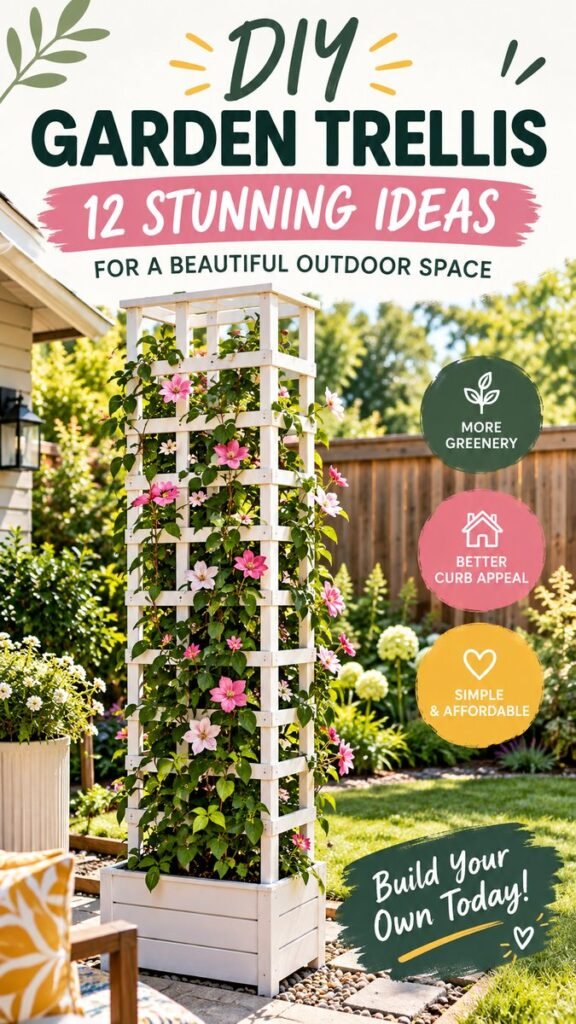
A DIY garden trellis is one of the easiest ways to give an outdoor space more height, structure, and personality. A simple wooden frame can turn an ordinary garden corner into a beautiful focal point while giving climbing plants a place to grow. Whether you want to support flowering vines, climbing roses, or other trailing greenery, a well-planned trellis can make a backyard feel fuller and more inviting without requiring a complicated project.
The featured garden design combines a tall white wooden trellis with lush green foliage and cheerful pink flowers, creating a fresh cottage-style look. Its vertical shape makes excellent use of limited space, while the open framework allows plants to weave naturally through the structure. This is a great source of inspiration if you are looking for affordable garden projects that can improve the appearance of a patio, backyard, walkway, or small planting area.
Key Takeaways
- A garden trellis adds height and visual interest to outdoor spaces.
- Vertical growing can make a small garden feel more layered and spacious.
- Wooden trellises can be painted to complement your garden style.
- Climbing plants can transform a simple frame into a lush living feature.
- Good placement and sturdy construction help create a long-lasting garden display.
Why Add a DIY Trellis to Your Garden?
A trellis does much more than provide support for climbing plants. It introduces vertical lines into a garden, helping break up flat areas and creating a stronger sense of design. This can be especially useful when a yard has plenty of open ground but lacks height or architectural interest.
A DIY trellis also gives you control over the size, shape, color, and placement. Instead of searching for a ready-made structure that fits a particular space, you can create a design that works around your garden beds, patio furniture, fence, wall, or walkway.
One of the biggest advantages of a trellis is that it allows you to grow upward rather than simply outward. This makes vertical gardening a smart choice for compact spaces and gives climbing plants a defined area to fill.
Create More Greenery Without Using More Ground Space
When garden space is limited, vertical structures can make a noticeable difference. A tall trellis provides a growing surface above the soil, allowing vines and climbing plants to occupy an otherwise unused area. The result can be a garden that feels richer and more layered without adding a large planting bed.
Even a narrow trellis can become an attractive feature when covered with healthy foliage. Place one near a patio, along a garden path, beside a wall, or at the edge of a planting area to introduce another level of greenery.
12 Stunning DIY Garden Trellis Ideas
There are countless ways to adapt the basic trellis concept. The goal is not to reproduce one exact design, but to use the structure as inspiration for a garden feature that suits your space and personal style.
- Classic White Wooden Trellis: Paint a simple wood frame white for a bright, timeless appearance that pairs beautifully with colorful flowers and green foliage.
- Tall Privacy Trellis: Use a taller structure to create a softer visual barrier around a patio or seating area while supporting climbing greenery.
- Wall-Mounted Trellis: Attach a lightweight trellis near an exterior wall to encourage vines to grow vertically without taking up much floor space.
- Flower-Filled Garden Trellis: Surround the structure with flowering climbers for a romantic focal point filled with seasonal color.
- Entryway Trellis: Place two matching trellises around a garden entrance or pathway to create a welcoming transition between outdoor areas.
- Corner Trellis: A corner design can make use of an awkward section of the yard while turning it into a decorative planting feature.
- Planter Box Trellis: Combine a raised planter with a vertical frame for a compact setup that works well on patios, decks, and small yards.
- Rustic Wood Trellis: Leave natural wood exposed for a relaxed garden look that works especially well with informal landscaping.
- Modern Grid Trellis: Use evenly spaced horizontal and vertical boards to create a clean geometric design that complements contemporary outdoor spaces.
- Fence Trellis: Add a decorative trellis section to an existing fence to break up a large flat surface and provide climbing support.
- Small Patio Trellis: Choose a compact vertical frame for balconies, patios, or other areas where every inch of space matters.
- Flowering Privacy Screen: Arrange several trellis panels together to create a larger green backdrop that becomes more beautiful as the plants mature.
Choosing the Right Trellis Design
The best DIY trellis depends on the location, the plants you want to grow, and the overall appearance you want to achieve. Before building, take a moment to consider how much vertical space is available and how wide the structure should be.
Think About Height and Width
A tall narrow trellis creates a strong vertical statement and works well beside walls, patios, and narrow garden beds. A wider panel can provide more room for vines to spread and may be better suited to a fence or large planting area.
Leave enough room around the structure for the plant to grow comfortably. Remember that a small plant may eventually become much larger once established, so avoid designing only for its current size.
Match the Trellis to Your Outdoor Style
Color can dramatically change the appearance of a garden trellis. White creates a crisp, bright effect similar to the featured design. Natural wood gives the garden a warmer and more rustic feel, while darker finishes can create a stronger contrast against light flowers and foliage.
You can also vary the spacing between boards. Wider openings produce a lighter, more open appearance, while a tighter grid creates a stronger architectural effect and can offer more visual screening.
Expert Insight
A beautiful trellis should support the plant without overwhelming it. Keep the framework visually simple so the leaves and flowers remain the star of the garden. When choosing materials, think about both appearance and strength, especially if the structure will eventually carry dense growth.
Materials for a Simple DIY Garden Trellis
A basic wooden trellis can be made from straightforward materials. The exact supplies depend on the size and style of the project, but the concept is simple enough to customize for different gardens.
- Straight wooden boards or garden lattice pieces
- Exterior-friendly screws or suitable fasteners
- A measuring tape and pencil
- A saw for cutting boards to size
- Outdoor paint or stain if a finished color is desired
- Basic tools for assembling and securing the structure
For a beginner-friendly project, keep the design uncomplicated. A rectangular frame with evenly spaced horizontal slats can create a polished look without requiring elaborate joinery. The featured style shows how repeated horizontal and vertical lines can produce an attractive garden structure with a clean silhouette.
How to Plan Your DIY Trellis
Start by choosing the exact spot where the trellis will live. Consider sunlight, access for watering, nearby structures, and how the finished design will look from the main viewing areas of your garden.
- Measure the space: Determine the approximate height and width that will fit comfortably in the chosen location.
- Select your design: Decide whether you prefer a simple grid, decorative frame, narrow panel, or larger privacy-style structure.
- Prepare the materials: Cut and organize the pieces before assembly so the building process is easier.
- Assemble the frame: Create a sturdy outer structure before adding the internal support pieces.
- Finish the surface: Paint or stain the wood if desired, using products appropriate for outdoor use.
- Position it securely: Make sure the completed trellis is stable and appropriate for the location before training plants onto it.
Pro Tip: Think about the mature size and weight of your climbing plants before choosing the trellis structure. A delicate frame may look attractive at first, but vigorous growth can eventually require much stronger support.
Pairing Climbing Plants With Your Trellis
The right plant can completely change the appearance of a garden trellis. Flowering vines can introduce seasonal color, while leafy climbers create a softer green backdrop. Roses and other climbing flowers can produce a romantic garden effect, especially when trained through a light-colored wooden structure.
When choosing a plant, consider its growth habit and the amount of support it needs. Some climbers naturally wrap, twine, or attach themselves to structures, while others may need gentle guidance as they grow.
Give Plants Room to Grow
A common mistake is trying to fill every opening immediately. Young plants may look sparse when first placed near a trellis, but healthy growth can gradually cover the framework. Give the plant room to develop instead of crowding several varieties into a small area.
As growth progresses, guide stems through the openings when appropriate and keep an eye on areas where the plant becomes especially dense. This helps maintain the shape of the display while keeping the trellis visually balanced.
Where to Use a DIY Trellis
A trellis can be useful in far more places than a traditional flower bed. Its vertical form makes it an adaptable feature for many outdoor layouts.
- Backyard gardens: Add height and structure to planting areas.
- Patios: Create a decorative green backdrop near outdoor seating.
- Garden paths: Frame a walkway with climbing plants and flowers.
- Fence lines: Break up plain fencing with greenery and texture.
- Small gardens: Make better use of vertical space where ground area is limited.
- Outdoor entertaining areas: Add a natural-looking backdrop around seating and dining spaces.
Simple Ways to Make Your Trellis Stand Out
You do not need an elaborate structure to create a memorable garden feature. Small design decisions can make a basic trellis look intentional and polished.
Try painting the structure in a color that contrasts gently with the surrounding foliage. Add a planter at the base to create a layered planting arrangement, or position several matching structures together for a more substantial garden display.
Another effective approach is to repeat materials elsewhere in the yard. For example, a white trellis can coordinate with light garden furniture, while natural wood can complement raised beds, fences, or outdoor seating. Repeating a finish helps the garden feel cohesive rather than randomly decorated.
Common DIY Trellis Mistakes to Avoid
A little planning can prevent many common problems. Avoid placing a trellis where it blocks an important walkway or interferes with access to plants that need regular care.
It is also important not to overlook stability. A trellis covered with mature foliage can experience considerably more wind resistance than an empty frame. Make sure the structure is appropriately secured for its intended location and expected plant growth.
Finally, avoid choosing a design purely because it looks attractive in a photograph. Your garden has its own dimensions, sunlight conditions, plants, and maintenance needs. The best trellis is one that looks good while also functioning well in your specific space.
Why This Matters
- A trellis should complement the garden rather than compete with the plants.
- Planning for mature growth makes the structure more practical over time.
- Good placement can turn a simple support frame into a major outdoor focal point.
Create a Beautiful Backyard With Vertical Gardening
Vertical gardening is a simple way to make an outdoor space feel more dynamic. Instead of keeping every plant close to ground level, a trellis introduces height and creates different layers of foliage, flowers, and structure.
The featured white trellis demonstrates how effective this approach can be. Bright flowers stand out against the white framework, while surrounding greenery creates a soft transition into the rest of the backyard. A nearby seating area, garden containers, and lawn help complete the relaxed outdoor atmosphere.
You can recreate the same overall feeling without copying the exact design. Choose a trellis shape that fits your yard, select plants that suit your growing conditions, and use finishes that coordinate with your existing outdoor decor.
At a Glance
- Use vertical space to add greenery and garden height.
- Choose a trellis size that fits the available area.
- Select climbing plants according to their growth habits.
- Secure the structure properly before plants become established.
- Coordinate the trellis finish with your existing outdoor style.
Conclusion: Make Your Garden Grow Up
A DIY trellis can be a small project with a surprisingly big visual impact. By adding height, supporting climbing plants, and creating a defined focal point, a simple wooden structure can make a backyard, patio, or garden bed feel more finished and inviting.
The beauty of DIY garden trellis projects is their flexibility. You can keep the design simple and affordable, customize the dimensions to fit your space, choose a color that complements your landscape, and let flowers and foliage provide the finishing touch. Whether you are refreshing a small garden corner or planning a larger backyard makeover, vertical growing offers an easy way to add character without taking over the available ground space.
Start with a practical design, choose sturdy materials, and think ahead about how your plants will grow. With a little planning, your trellis can become more than plant support. It can become one of the most eye-catching features in your outdoor space. 🌿
Tags
DIY Trellis Garden Trellis DIY Garden Ideas Vertical Gardening Climbing Plants Backyard Ideas Budget Garden Projects Outdoor Decor