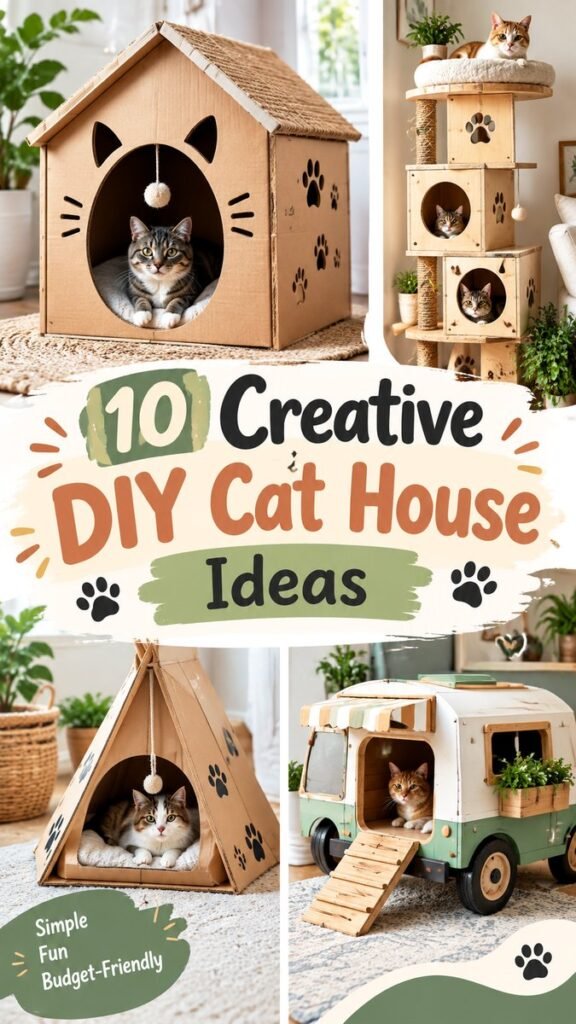
Creating a DIY cat house is a fun way to give your cat a cozy place to nap, hide, play, and explore without relying on expensive store-bought furniture. The ideas featured here show just how creative a homemade cat house can be, from simple cardboard hideaways and playful cat towers to imaginative little shelters that become part of your home decor. Whether you want a quick weekend project or an ambitious piece of cat furniture, there are plenty of ways to turn basic materials into a comfortable retreat your cat will enjoy.
Key Takeaways
- A DIY cat house can be simple, creative, and budget-friendly.
- Cardboard is a versatile material for temporary or decorative cat shelters.
- Multiple levels can turn a basic cat house into an entertaining cat tower.
- Soft bedding and familiar toys can make a new hideaway more inviting.
- Design the entrance and interior around your cat’s size and habits.
- Decorative details can help homemade cat furniture blend with your room.
Why DIY Cat Houses Are So Appealing
Cats naturally appreciate spaces where they can retreat and feel comfortable. A small enclosed shelter can provide a quiet spot away from everyday household activity, while an open structure can encourage climbing, watching, and exploring. Making one yourself also gives you the freedom to choose the size, shape, materials, and appearance.
The visual ideas in this collection highlight several approaches to the same basic concept. Some designs use cardboard boxes stacked into playful structures, while others resemble miniature homes or decorative furniture. There are also ideas that combine hiding areas with climbing surfaces, creating a more interactive environment rather than a simple sleeping box.
One of the biggest advantages of a DIY cat house is flexibility. You do not need to reproduce a complicated design exactly. Instead, use the basic idea as inspiration and adjust it to suit your available space, your crafting skills, and your cat’s personality.
10 Creative DIY Cat House Ideas
1. Classic Cardboard Cat House
A cardboard cat house is one of the easiest places to begin. A sturdy box can quickly become a private little den with a carefully cut entrance. The examples shown use simple openings and playful paw-print details to transform ordinary cardboard into something that looks intentionally designed.
For an even more attractive result, consider adding a pitched roof, layered cardboard panels, or a small decorative awning. Keep the interior simple and comfortable with a washable blanket or small cushion.
2. Stacked Cat House Tower
If your cat enjoys climbing, think vertically. Several sturdy boxes can be arranged at different heights to create a compact DIY cat tower. Each section can serve a different purpose, such as sleeping, hiding, observing, or playing.
Openings can be placed on alternating sides so the structure feels more interesting and gives your cat different routes through the tower. Before using a stacked design, make sure every section is securely connected and the overall structure cannot easily tip.
3. Cardboard Cat Condo
A cardboard cat condo combines several enclosed spaces into one larger project. The inspiration shown features multiple compartments, making the structure feel like a miniature apartment building designed specifically for cats.
This approach works especially well when you have several cats or when one cat enjoys having multiple places to retreat. You can make each compartment slightly different, giving the finished piece more visual character while keeping the construction relatively straightforward.
4. Cozy Cat Tent
A triangular cat tent creates a completely different look from a traditional box. Its simple shape provides an enclosed resting area while maintaining an airy, playful appearance. This type of shelter can be made from cardboard panels or other suitable craft materials.
Adding a soft cushion inside immediately turns the structure into a comfortable nap zone. A small hanging toy can also make the entrance more interesting, provided the toy is secure and appropriate for your cat.
5. Miniature Cat Cottage
For a decorative project, consider designing a DIY cat house that resembles a tiny cottage. A rounded or arched entrance, textured exterior, and carefully chosen decorative details can make the shelter look like a miniature feature in the room.
This style is particularly appealing when you want cat furniture to complement your existing decor. Neutral materials can create a natural appearance, while small accents can add personality without overwhelming the room.
6. Multi-Level Cat Playground
Why stop at a sleeping space? A larger DIY cat house can become a miniature playground with tunnels, openings, ramps, and separate rooms. The maze-inspired concept shown in the collection demonstrates how cardboard can be arranged into an engaging exploration area.
A design like this encourages your cat to move between different spaces instead of simply entering one enclosed box. You can create a simple version with a few connected sections or expand the concept as your materials and available floor space allow.
7. Cat House With Climbing Posts
Combining a cat house with scratching and climbing features can make the project more useful. A vertical structure can include enclosed boxes at different levels along with sturdy scratching surfaces.
Natural-looking materials such as rope-wrapped posts can give the finished furniture a warm appearance. The key is to make sure the posts and platforms are securely attached so your cat can climb confidently.
8. Camper-Inspired Cat House
For something playful and unexpected, create a miniature vehicle-inspired cat house. The camper-style idea shown turns a cat shelter into a whimsical piece of furniture, complete with an entrance and a small ramp.
This design can be simplified depending on your crafting experience. The goal does not have to be perfect realism. A recognizable shape, a comfortable interior, and a safe entrance are enough to create a fun conversation piece.
9. Window-Side Cat Retreat
A cat house positioned near a window can become an especially attractive resting spot. Many cats enjoy watching activity outside, so placing a comfortable hideaway near a suitable window can combine relaxation with visual stimulation.
Keep the structure stable and avoid blocking access to the window or creating a situation where your cat could become trapped. A low, sturdy design can work particularly well in smaller rooms.
10. Personalized Decorative Cat Hideaway
The final idea is to personalize a basic shelter with decorative details that match your home. Simple paw prints, geometric shapes, cutout windows, or painted accents can completely change the appearance of a plain cardboard box.
Personalization is also where you can get creative with colors and textures. A neutral base with a few carefully chosen accents can create a stylish DIY cat house that feels intentional rather than temporary.
Why This Matters
The most successful DIY cat house is not necessarily the most elaborate one. A simple shelter can be just as appealing when it provides a comfortable, quiet space and is designed around the way your cat actually uses its environment.
Choosing Materials for a DIY Cat House
Cardboard is popular because it is lightweight, inexpensive, easy to cut, and simple to customize. It also makes experimentation easy. If your first design is too small or the layout does not work as expected, you can modify it without the commitment associated with a large furniture project.
For more permanent structures, sturdy wood or appropriately selected panels can create a durable cat house. However, heavier materials require more careful construction. Every surface should be smooth, stable, and free from exposed sharp edges, loose fasteners, or other hazards.
Fabric can be used for cushions, covers, or soft interiors. Choose materials that can be cleaned easily, especially if the cat house will be used regularly. Removable bedding is useful because it allows the sleeping area to be refreshed without rebuilding the entire shelter.
How to Plan Your DIY Cat House
Start With the Space
Before cutting anything, decide where the finished cat house will go. Measure the available floor area and consider the height of nearby furniture, shelves, and windows. A vertical design may work beautifully in a small corner, while a wide cardboard maze may need a much larger open area.
Think About Your Cat’s Habits
Watch how your cat behaves before choosing a design. A cat that loves hiding may prefer a compact enclosed house with one entrance. A curious climber may enjoy multiple levels and platforms. A cat that likes stretching out may need a larger horizontal resting surface.
Entrance size matters too. The opening should be large enough for comfortable entry and exit without making the shelter unnecessarily exposed. If you are building for a growing cat, leave enough room for future comfort.
Sketch Before You Build
A quick sketch can prevent many construction problems. Draw the front, side, and top views, then mark the entrances, shelves, connecting sections, and approximate dimensions. For a multi-level design, think about how each component will connect before cutting your materials.
Keeping the first version relatively simple is often helpful. You can always add decorative details or additional sections after the main structure is stable.
Important: Stability and safety should always come before appearance. Check that the finished DIY cat house remains steady during normal movement and that there are no loose pieces, sharp edges, unstable platforms, or materials that could become a hazard.
Easy Ways to Make a Cardboard Cat House Look Better
A plain cardboard box can look surprisingly stylish with a few simple changes. Start by keeping the main shape clean and symmetrical. Then add small decorative elements rather than covering every surface.
- Cut a distinctive arch, circle, or cat-ear-shaped entrance.
- Add simple paw-print cutouts or painted accents.
- Use a contrasting roof to create visual interest.
- Add a soft cushion or folded blanket inside.
- Connect multiple boxes to create a larger cat condo.
- Use neutral tones if you want the structure to blend with home decor.
Decorative details should remain secondary to function. A beautifully decorated cat house is still most successful when your cat can enter, turn around, rest comfortably, and leave without difficulty.
Making a DIY Cat House More Fun
Once the basic shelter is finished, you can introduce elements that encourage exploration. A small opening between two connected boxes can create a tunnel. A low ramp can connect levels. A scratching surface can add another activity to a climbing structure.
Even simple changes can create variety. Place a soft bed in one compartment and leave another open for exploring. If your cat enjoys watching the room from above, create a stable upper platform. If hiding is more appealing, focus on enclosed spaces with cozy bedding.
Avoid overcrowding the structure with decorations and toys. Cats need enough open space to move naturally, and excessive hanging elements can become distracting or potentially unsafe.
Keeping Your Homemade Cat House Comfortable
Comfort is an important part of making a DIY cat house inviting. A soft, washable blanket can transform a basic cardboard shelter into a cozy resting place. Choose bedding that fits the interior without making the entrance difficult to access.
Keep an eye on the condition of cardboard structures. Cardboard can soften, bend, or become damaged over time, particularly when exposed to moisture. Replace worn sections when necessary instead of trying to extend the life of a structure that has become unstable.
For larger cat towers and wooden structures, periodically check joints, platforms, scratching posts, and connections. A few minutes of inspection can help keep the furniture secure as your cat continues to use it.
DIY Cat House Ideas for Different Skill Levels
Beginner Projects
Start with a single cardboard box, cut an entrance, add bedding, and decorate the exterior. This approach requires minimal planning and lets you learn how your cat responds to a homemade shelter.
Intermediate Projects
Try connecting several boxes or creating a two-level condo. You can experiment with different entrances, tunnels, roofs, and decorative panels while keeping the basic construction manageable.
Advanced Projects
If you enjoy woodworking or detailed crafting, consider building a larger cat tower with multiple platforms, enclosed compartments, scratching areas, and ramps. These projects require more attention to stability and construction, but they offer much more room for customization.
Pro Tip: Build the functional structure first and decorate second. This makes it easier to identify weak points, adjust the dimensions, and make sure the finished cat house works well before spending time on decorative details.
How to Encourage Your Cat to Use the New House
Not every cat immediately investigates a new piece of furniture. Give your cat time to discover the DIY cat house naturally. Place it somewhere comfortable and familiar rather than forcing your cat inside.
A familiar blanket or toy can make the interior feel more inviting. You can also position the shelter near an area your cat already enjoys, such as a favorite resting location. Once your cat begins using it, avoid moving it frequently unless necessary.
Remember that cats have individual preferences. One cat may immediately curl up inside a small box, while another may prefer sitting on top of a tower or watching from an open platform. Designing with flexibility in mind makes it easier to accommodate those differences.
At a Glance
- Best simple material: Sturdy cardboard
- For small spaces: Vertical cat houses and towers
- For playful cats: Multi-level designs and tunnels
- For cozy cats: Enclosed houses with soft bedding
- For decor lovers: Personalized cottage and themed designs
Final Thoughts on DIY Cat House Ideas
A DIY cat house can be as simple or imaginative as you want. The collection of ideas here shows how everyday materials and a little creativity can become charming spaces for cats to hide, sleep, climb, and explore. You do not need a complicated design to create something worthwhile. A thoughtfully planned cardboard shelter can be just as appealing as an elaborate multi-level cat condo.
Start with your cat’s habits, the space available in your home, and the materials you already have. Focus on stability, comfortable access, and easy maintenance before adding decorative touches. From a simple cardboard hideaway to a playful tower or miniature cottage, there is plenty of room to make the project your own.
Most importantly, treat the project as an opportunity to create a space that fits both your cat and your home. With a practical design, a comfortable interior, and a few personal touches, your homemade cat house can become a favorite little retreat. Save these DIY cat house ideas for inspiration and choose a design that makes your next crafting project both creative and useful.
Tags
DIY Cat House Cat House Ideas DIY Cat Furniture Cardboard Cat House Cat Condo Homemade Cat House Cat Playground Pet DIY Projects